 2min preview
The Influence of the Moors in Spain
📝 Transcript
Córdoba once had streetlights centuries before London or Paris—yet most of us barely mention it in European history. In this episode, we drop into a night-time walk through Moorish Spain, where lit streets, running water, and open libraries quietly rewired the continent.
By day, those same Andalusian streets led into workshops, gardens, and study circles that blended cultures the way a skilled cook layers flavors. In cities like Córdoba, Toledo, and Seville, Muslims, Christians, and Jews argued over Aristotle, refined surgical techniques, and redesigned farmland so that dry hillsides produced oranges, rice, and sugarcane. Algebra wasn’t just theory here; it settled inheritances, divided profits, and planned irrigation canals. Architects experimented with horseshoe arches, intricate stucco, and geometric tilework that turned walls into textbooks of symmetry. Meanwhile, scholars translated Greek and Arabic works side by side, cross-checking meanings like careful editors. What emerged from this daily collaboration was less a single civilization and more a shared toolkit—one that students and builders from northern Europe quietly began to borrow, copy, and adapt.
Merchants arriving from Christian kingdoms didn’t just bring wool and silver; they left with new crops, instruments, and ideas that would quietly reshape their homelands. A visitor to an Andalusian city could hear medical debates in one courtyard, poetry in another, and legal arguments next door, like tabs open on the same intellectual browser. Waterwheels creaked along riverbanks, feeding orchards of citrus, pomegranates, and olives that turned export farming into a science. Paper workshops multiplied, making books cheaper and note‑taking a habit, so that even modest schools could handle knowledge in bulk.
Subscribe to read the full transcript and listen to this episode
Subscribe to unlockSubscribe for $1.99/month to unlock the full episode.
From this course
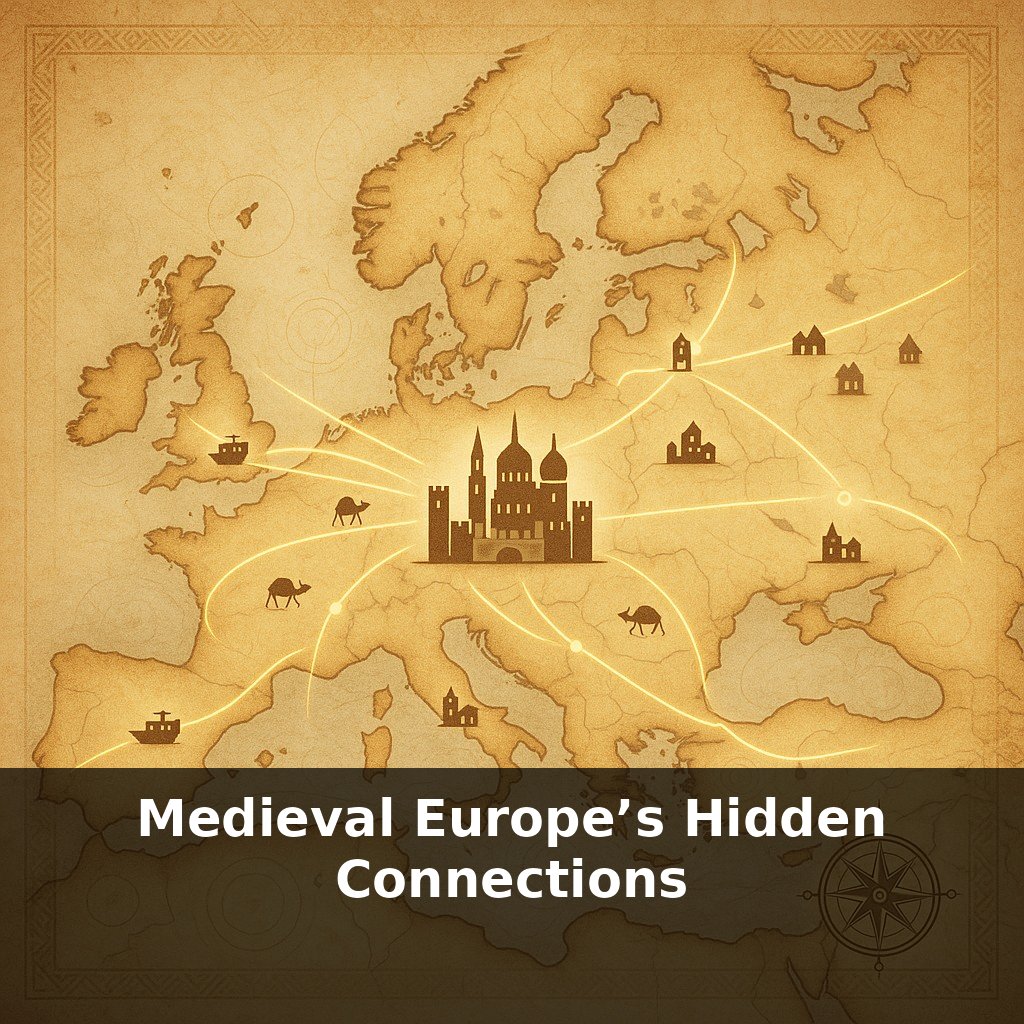
Medieval Europe’s Hidden Connections
7 episodesUnlock all episodes
Full access to 7 episodes and everything on OwlUp.
Subscribe — $1.99/monthLess than a coffee ☕ · Cancel anytime