A medieval merchant steps into a bustling fair, clutching a list of prices from cities he’s never seen. He hasn’t traveled there—but his partners have, scattered across rival kingdoms. Somehow, this web of strangers trades like a single, coordinated business. How?
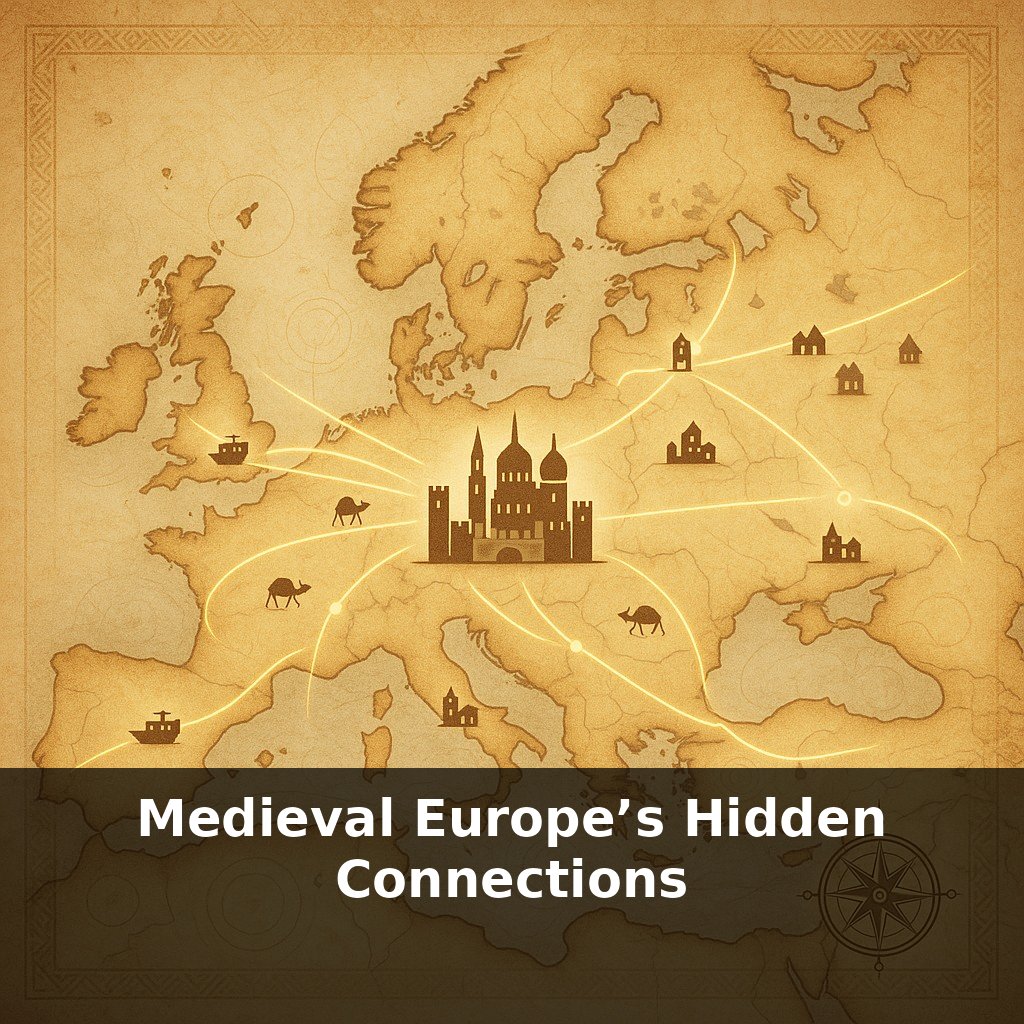
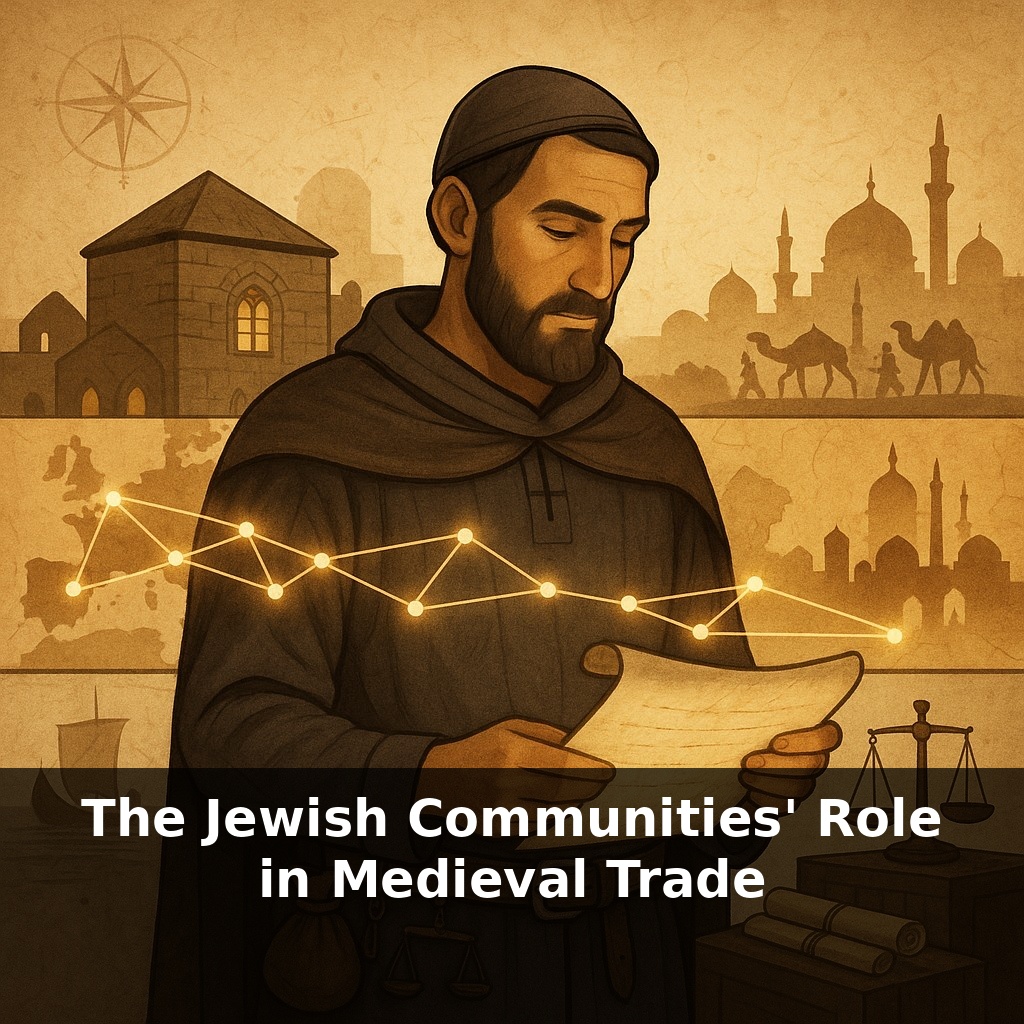
By the 9th century, one of the most unlikely “logistics networks” in Eurasia was being run out of synagogues, back rooms, and dockside warehouses. Dispersed Jewish communities—stretching from the Rhineland to Baghdad—began to function less like isolated minorities and more like branches of the same family firm.
A tax farmer in Muslim Egypt could send a shipment toward Christian Sicily, confident that a cousin’s contact in Genoa would know how to sell it, hedge the currency risk, and relay the profits. Their real advantage wasn’t muscle or fleets, but information: letters, coded notes, and shared legal formulas that traveled faster and more reliably than most merchants could.
In this episode, we’ll follow those quiet corridors of trust and see how “outsiders” ended up wiring the inside of medieval trade.
Geniza fragments from medieval Cairo show how far this network reached: letters mention wool from England, pepper via India, even rumors about Mongol advances. A merchant in Fustat might learn about a coinage change in southern France before most locals there grasped its impact. Because these traders crossed Latin, Arabic, and Slavic worlds, they noticed when one region’s glut was another’s shortage. It wasn’t just goods moving: techniques in bookkeeping, ship design, and even legal clauses hopped borders along with cargo, subtly reconfiguring how Christians and Muslims did business with each other.
In practice, this web of communities worked at three levels: language, law, and credit. Language came first. Sources like Ibn Khordadbeh describe Radhanite brokers who could switch between Arabic in Basra, Romance dialects in Provence, and Slavic tongues along the Danube. That wasn’t a party trick; it let them read tax edicts, bargain with ship captains, and decode local rumors without relying on potentially hostile intermediaries. A single family might divide skills: one brother trained in Arabic accounts in Fatimid Egypt, another in Latin charters in the Rhineland.
Law was the second layer. Jewish merchants could move between courts: rabbinic, Islamic, and Christian. A contract drawn up in Hebrew in Fustat might refer to norms taken from Muslim commercial law because that’s what a qadi would recognize if things went wrong in Alexandria. The same partners might also prepare a Latin notarial copy for use in an Italian port. Over time, that constant legal “translation” helped spread common clauses—such as standardized penalties for late delivery or formulas for partnership—across religious frontiers.
Credit was the glue. Instead of shipping only coins, they moved obligations. A trader leaving North Africa for Sicily might carry a bill promising payment in Pisa, issued by a cousin there. Moneychangers at places like the Champagne Fairs learned to treat these Hebrew- and Latin-written notes as reliable claims, even when they disliked the people behind them. That reliability rested on reputation inside the communities: fail to honor a bill in one port, and letters from Salonika to Kraków could quietly mark you as unsafe to trust.
Their status as religious outsiders paradoxically helped here. Because they were rarely full citizens of any kingdom, they could be perceived—however inaccurately—as less tied to one ruler’s agenda. Muslim governors used them to place orders in Christian lands; Christian princes relied on them for access to spices moving through Islamic ports. A single error in judgment could bring collective punishment, so families became experts at reading political weather: knowing when a new bishop meant rising danger, or when an Ottoman decree signaled fresh opportunity farther east.
A single letter from Alexandria might ask a cousin in Pisa to reroute pepper through an unexpected port because of “winds” that aren’t meteorological at all—code for a tense new bishop or a tax hike. Another note might quietly mention a groom “fond of numbers,” signaling a proposed marriage that also plugs a skilled bookkeeper into the family firm. Think of how a modern VPN node quietly updates routing tables when a path becomes risky: traffic shifts, but the user barely notices.
Concrete traces show this in action. Some Geniza letters reference Venetian ship designs by nickname, hinting that Jewish investors helped test or finance hull tweaks before they spread. Iberian records mention not just loans, but tutoring contracts—Sephardi accountants hired to teach Italian apprentices “the new method” of keeping ledgers. After 1492, lists of relocated households in Salonika pair street addresses with warehouse capacities and typical cargoes, as if communities were reassembling a shattered supply chain city by city, quay by quay.
Future work here is less about dust and scrolls, more about pattern‑hunting. As scattered contracts go online, historians can test hunches: did certain families specialize like modern supply‑chain firms—one “warehousing” risk, another “shipping” credit? Economists might model how trust survives expulsions the way ecologists track forests after fires. Even policymakers could mine these traces to see which regulations actually nudged cooperation across borders, rather than choking it.
Conclusion
Follow these threads forward and new questions appear: how did these habits echo in early stock markets, or in today’s remittance corridors? Your challenge this week: scan a modern receipt, bank app, or tracking screen and ask, “Who had to trust whom for this to work?” You may glimpse faint fingerprints of those medieval brokers.