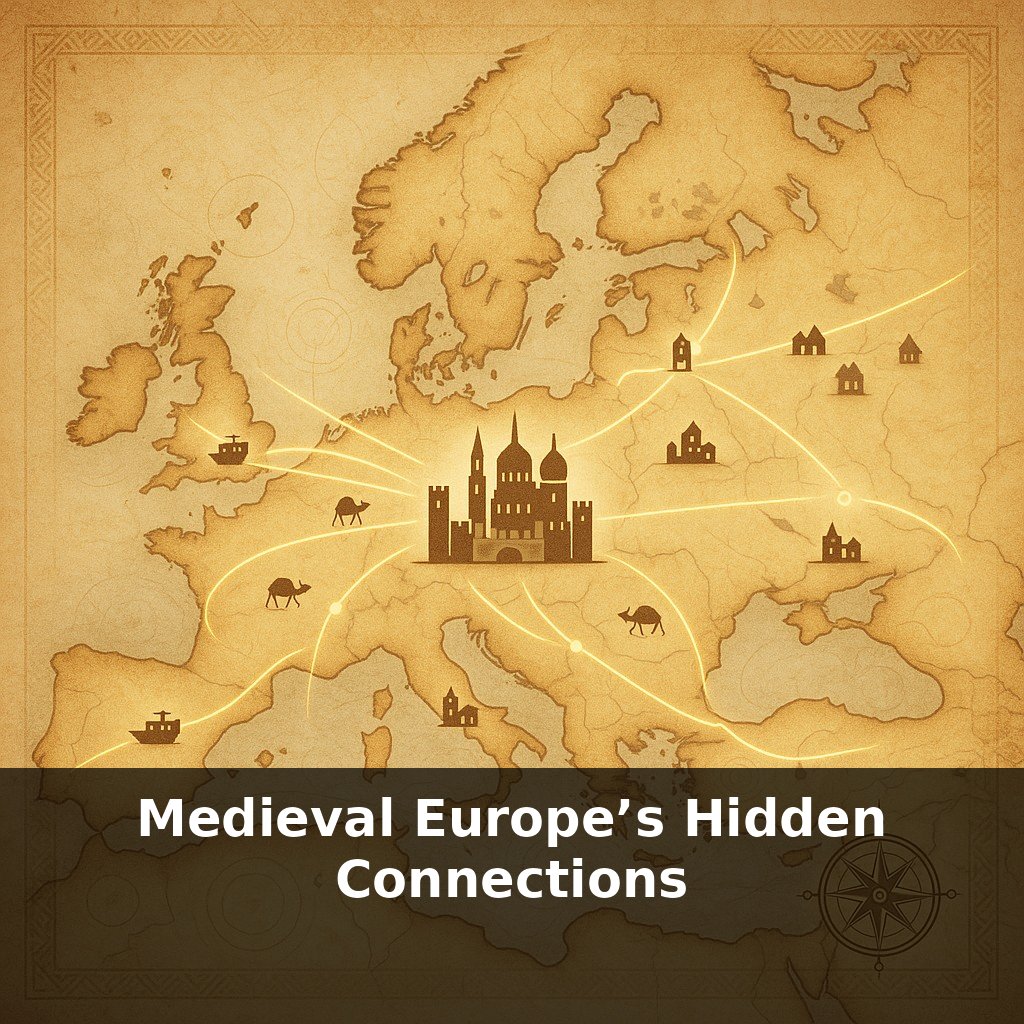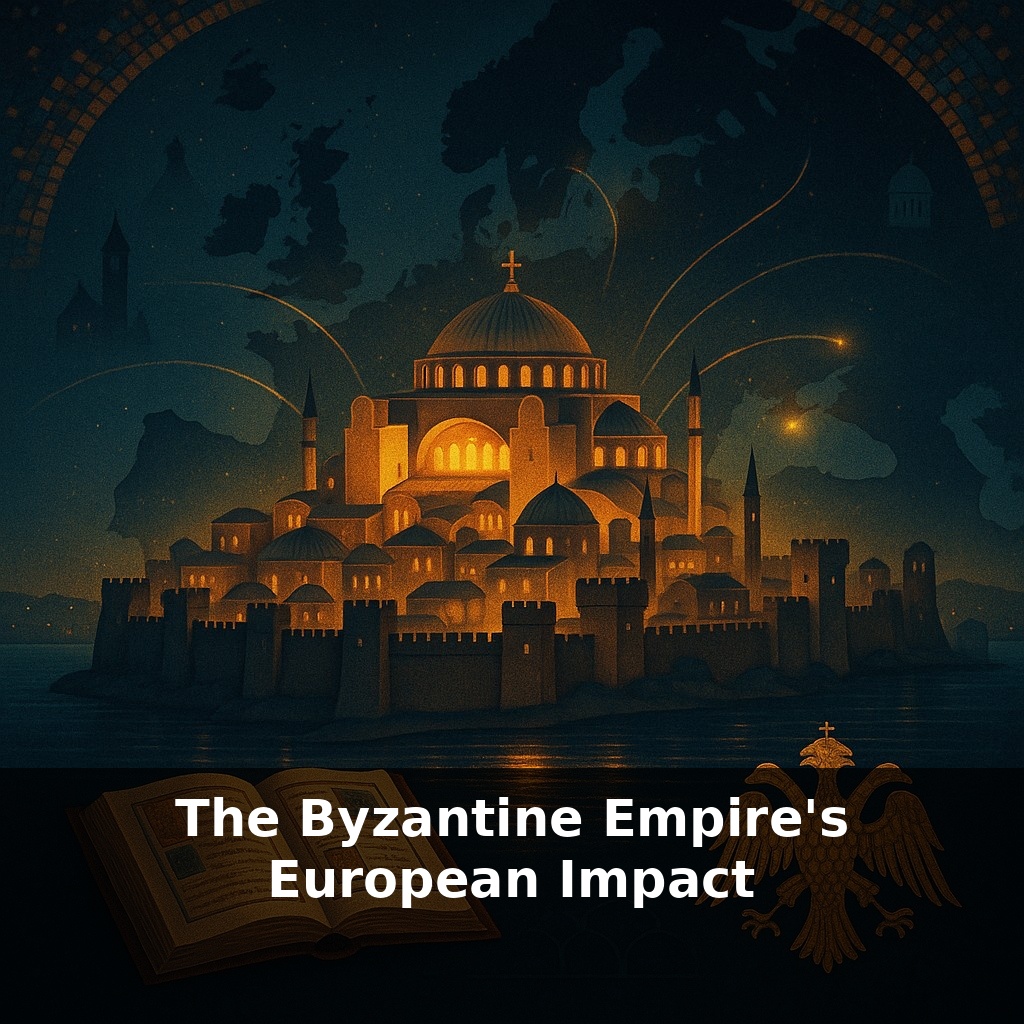
For a thousand years, Europe’s most influential city wasn’t Paris or Rome—it was Constantinople, a capital many Europeans never even saw. Tonight, we’ll walk into its shimmering streets and trace how this distant empire quietly rewired the lives of people across Europe.
Byzantium’s influence often hid in plain sight, tucked into ordinary objects and quiet rituals. Open a legal textbook in Bologna around 1200, and you’d find students arguing over Justinian’s laws, copied from manuscripts that had crossed the Adriatic like trusted recipes. Step into a village church in Serbia or Bulgaria, and you’d see priests chanting in Slavic, using an alphabet first crafted by missionaries shaped in Byzantine schools. Even the glitter of Venetian coins in a merchant’s palm echoed eastern models, their weight and purity calibrated with a precision Italian traders had studied, borrowed, then branded as their own. In an age when borders shifted like sand, this empire’s patterns—of law, worship, art, and money—spread quietly, the way a single spice, once rare, can end up transforming kitchens thousands of miles away.
Monks hunched over desks in smoky scriptoria became unlikely power-brokers, copying Greek texts whose authors they would never meet and whose ideas would outlive every dynasty in Europe. Traders docking in Black Sea harbours carried home not just silk and grain, but new contracts, coinage standards, even architectural tricks for lifting a dome without it collapsing like a bad soufflé. Pilgrims and envoys returned from the east with stories of glittering rites and intricate diplomacy that western rulers quietly mined for inspiration, the way a shrewd baker borrows a rival’s technique while insisting the recipe is entirely their own.
In this world of borrowed recipes and quiet imitation, the empire’s greatest export wasn’t silk or spices—it was know-how. Start with architecture. When western builders first tried stone vaults big enough to impress a king, they risked catastrophic collapse. Byzantine engineers had already spent centuries solving that problem, experimenting with hidden buttresses, clever weight-shifting, and brick patterns that acted like invisible ribs. Crusaders and Italian craftsmen walked through eastern churches, measured with their eyes, then went home and began pushing their own ceilings higher, their apses rounder, their interiors brighter. You can see the echo in San Marco in Venice, where imported columns, domes, and even mosaics turn a lagoon church into a faint western cousin of eastern sanctuaries.
Diplomacy, too, travelled west. While many Latin courts still treated foreign policy as glorified gift-exchange, Byzantine officials were running what we’d now recognise as a professional foreign office: specialised envoys, meticulous dossiers on neighbouring rulers, long games of marriage alliance and religious negotiation. Manuals like the tenth-century “De Administrando Imperio” laid out how to manage steppe nomads, Slavic princes, and Italian cities with a mix of trade privileges, titles, and subtle flattery. Western visitors didn’t just gape at the gold; they watched how deals were made. Over time, courts from Sicily to Hungary began to adopt similar habits: written treaties, ranked titles, calibrated ceremonies designed to signal status without starting wars.
Even theology became a channel of influence. Disputes over icons and the nature of Christ forced Byzantine thinkers to sharpen concepts and vocabulary that later Latin theologians quietly mined, especially once they could read Greek again through émigré teachers. Shared councils, even when they ended in stalemate, left behind dossiers of arguments, terms, and distinctions that shaped debates in Paris and Oxford centuries later.
Your challenge this week: follow one “Byzantine thread” in your own city. Visit a church, museum, or courthouse and look for a dome, a gold-ground image, a double-headed eagle, or a law code referencing Roman “civil law.” Treat it like a mini field investigation: find one object, trace its style or idea back a step, and ask, “Could this have passed through the eastern empire at some point?” You’re not trying to prove a grand theory—just training your eye to notice how ideas migrate, hide, and resurface in places that rarely mention where they came from.
Think about what never made it into the spotlight. While students in Paris parsed Latin summaries of Aristotle, monks in Thessaloniki and Mount Athos were still copying the full Greek texts, line by line. When those books finally crossed west after 1453, it was like a chef suddenly gaining access to the original pantry instead of cooking from second-hand notes. The same pattern shows up in money and writing. The hyperpyron didn’t just inspire one Venetian ducat; its consistent weight and gold content set expectations for what a “trustworthy” coin should feel like. Over time, that reliability helped merchants stretch their networks from the Aegean to the North Sea. And the script devised for Slavic missions didn’t stay liturgical. Cyrillic became the everyday tool for drafting royal charters in Kiev and commercial records in Novgorod, letting kings, bishops, and traders plug into a shared written world that still links millions of readers from Sofia to Siberia today.
Future implications ripple outward in quiet ways. As restorers fine‑tune methods on fragile domes and mosaics, they’re effectively beta‑testing techniques for cities in earthquake belts from Naples to Istanbul. Digitised sermon notes or marginal doodles may reveal how ordinary believers adapted high theology, like users “modding” official software. And as EU states revisit Orthodox roots, shared saints and feast days could become soft‑power bridges in debates over borders, identity, and minority rights.
By tracing these eastern threads, we start to see Europe less as a row of separate houses and more as apartments in a shared building, wired through hidden corridors. Follow the cables far enough—through domes, icons, charters, and codes—and the map of “western” history redraws itself, with unexpected doors opening onto rooms we never knew were connected.
Start with this tiny habit: When you open a news site or social media once a day, pause and quickly ask yourself, “What would this look like if it were happening in Constantinople around 1000 CE?” and name just one parallel (like shifting alliances, trade routes, or religious tensions). Then, type “Byzantine [specific topic from the episode, like ‘Venetian trade’ or ‘Justinian’s legal reforms’]” into your search bar and read just the first paragraph of a reputable article. If you’re already reading a European history reference today, quickly check how often Byzantium is mentioned on that page—no analysis, just notice it.