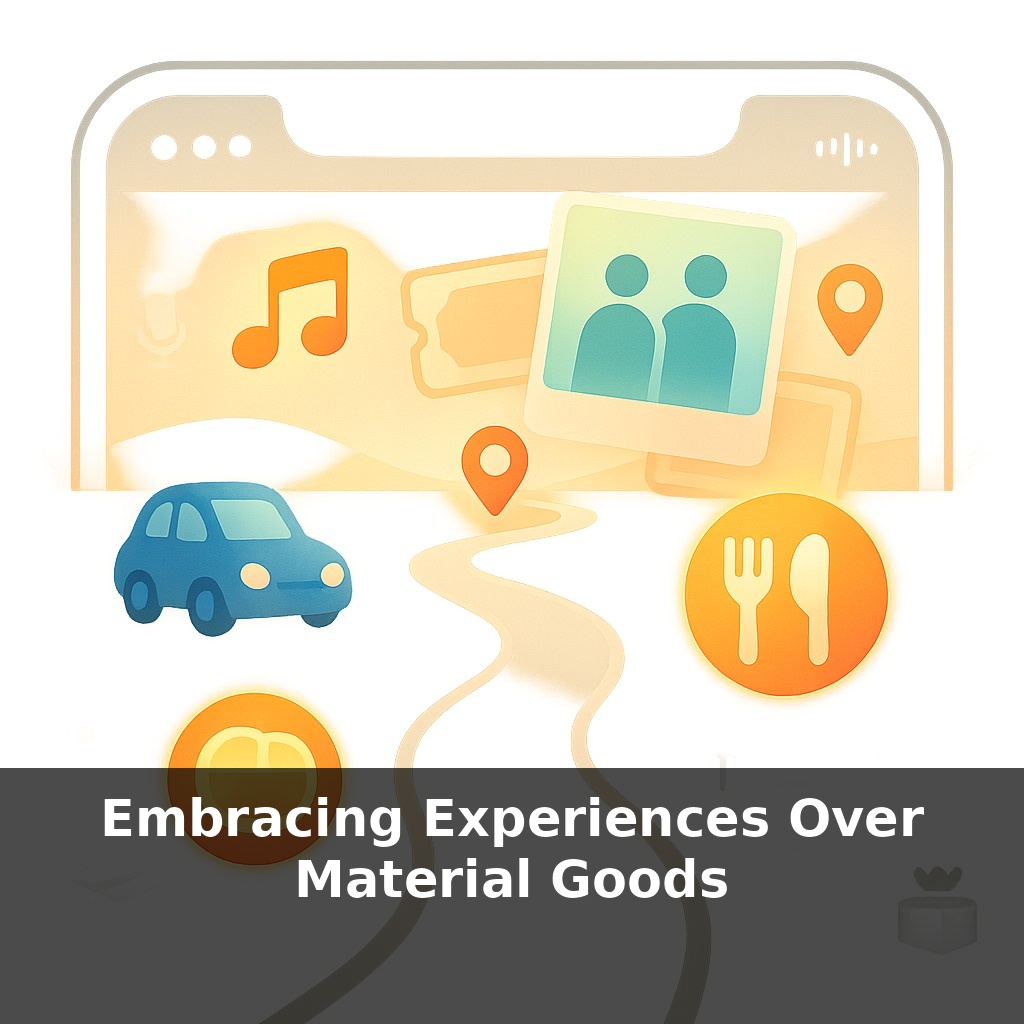
You’re more likely to remember a random weekend road trip than the last thing you bought online. One fades into the blur of “stuff”; the other becomes a story you tell. Today, we’re stepping into that gap between what we buy and what actually stays with us.
The research is clear: when people look back on their lives, they rarely say, “I wish I’d bought more stuff.” They talk about meals that ran late, trips that went wrong in all the right ways, skills they struggled to learn. Experiences age differently than objects. A new phone competes with the next model as soon as it’s unboxed; a weekend learning to surf doesn’t get replaced when a new version comes out. And unlike the chair in your living room, that awkward improv class or early-morning hike keeps quietly working on your identity, your confidence, your relationships. This is the quiet power behind the “experience economy”: we’re not just consuming events, we’re curating who we’re becoming, one decision at a time about where our money—and attention—actually go.
So where does minimalism meet all this? Not in owning nothing, but in choosing what you *own for a moment* instead of what you own forever. Research shows experiential spending delivers over three times more enduring satisfaction than buying things, yet most of our default budget still leaks into objects that quietly demand space, maintenance, and upgrades. Think about the last streaming concert, workshop, or day trip you almost booked but skipped—while a random gadget still made it into your cart. That tiny decision pattern, repeated over years, is how houses fill up while calendars stay strangely empty. Minimalism flips that ratio on purpose.
Here’s the quiet tension underneath all of this: your money already *wants* to become experiences—you’re just letting most of it get stuck in objects first.
Think about how a typical purchase actually plays out. You buy a new kitchen gadget. You get a brief spike of anticipation, a couple of early uses, then it drifts to the back of a cabinet. It still costs you—space, visual clutter, a little jolt of guilt every time you see it—but it no longer actively adds much to your days.
Now contrast that with, say, a weekend workshop in a skill you care about: photography, pottery, street dancing, public speaking. The anticipation starts before the event. During it, you’re generating stories, skills, and new connections. Afterward, it keeps paying out every time you use what you learned or bump into someone you met there.
Researchers call this “time-use value”: how much of your future time a purchase continues to enrich. A material item’s time-use value drops sharply unless you design your life around using it. Experiences often *grow* their time-use value as they ripple into your routines, friendships, even career moves.
That’s one reason experiential spending is so tightly tied to identity and well-being: you’re not just buying hours of fun, you’re changing how your future hours feel.
And then there’s the physical drag of stuff. The $39 billion self‑storage industry isn’t just about boxes in warehouses; it’s also the mental load of keeping track of what you own. Every extra category—camping gear you “might use someday,” clothes that “might fit again,” tech that’s “too good to toss”—adds micro‑decisions, cleaning, insurance, and quiet stress. Studies suggesting minimalist living can cut household costs by over 20% aren’t just about spending less at checkout; they’re about spending less on maintaining yesterday’s choices.
Experiences flip those ratios. They take up calendar space instead of floor space, and when they’re done, they leave traces in your skills and relationships instead of in your closets. That frees both money and attention to be re-invested into the next aligned choice, instead of endlessly servicing past ones.
Think of two friends with the same $300. One upgrades to the newest smartwatch; the other books a cheap flight to see an old friend and signs up for a local cooking class. A year later, the watch owner has traded their model for a newer one; the device is in a drawer, and the purchase is a faint blur on a credit card statement. The traveler now has a go‑to recipe they cook for guests, a closer friendship, and the confidence to plan the next trip solo.
This isn’t just about travel or “big” adventures. A $40 board game that’s pulled out every Friday, a monthly museum membership, or a recurring drop‑in dance session will quietly outcompete a shelf‑sitting décor piece at the same price. Companies understand this: that’s why brands like REI and Patagonia invest heavily in classes and community events, not just gear. They’re betting you’ll remember the climb, not the carabiner.
Here’s your challenge this week: every time you’re about to buy a non‑essential item over $20, pause and ask, “What experience of equal cost would I choose instead?” You don’t have to buy the experience yet—just write down the alternative. By the end of the week, review your list and circle three experiences you’d genuinely be excited to fund. Then, over the next month, redirect the money from at least two postponed object purchases into one of those circled experiences and actually schedule it on your calendar.
As more of life shifts into apps and feeds, expect a “moments portfolio” to matter as much as a financial one. Social platforms may start surfacing how you *spent* your months—skills learned, places explored, people helped—like a highlight reel of choices. Cities could respond too: fewer mega‑malls, more makerspaces, climbing gyms, night schools, pop‑up art labs. Your calendar becomes less a to‑do list, more a garden plan for the next season of your life.
Treat your money like a vote for the kind of days you want more of. A small re-route—one streaming subscription swapped for a monthly meetup, one gadget skipped for a lesson—quietly rewrites your default week. Over time, your bank history starts to look less like a shipping log and more like a trail map of skills, people, and places you’ve actually touched.
Before next week, ask yourself: “If I had the same $50 I’d usually spend on an impulse Amazon buy, what specific experience this week would actually leave me feeling more alive—coffee with a friend, a solo hike, a class, or a mini day trip—and when exactly will I do it?” “Looking back at the last three things I bought that weren’t essential, do I even remember using them—and what experience could I have ‘bought’ instead that I’d still be talking about today?” “Next time I feel the urge to browse or buy something online, what’s one experience-based alternative I can try in that exact moment—like texting a friend to plan something, exploring a free local event, or starting a small ‘experience fund’ with the money I almost spent?”