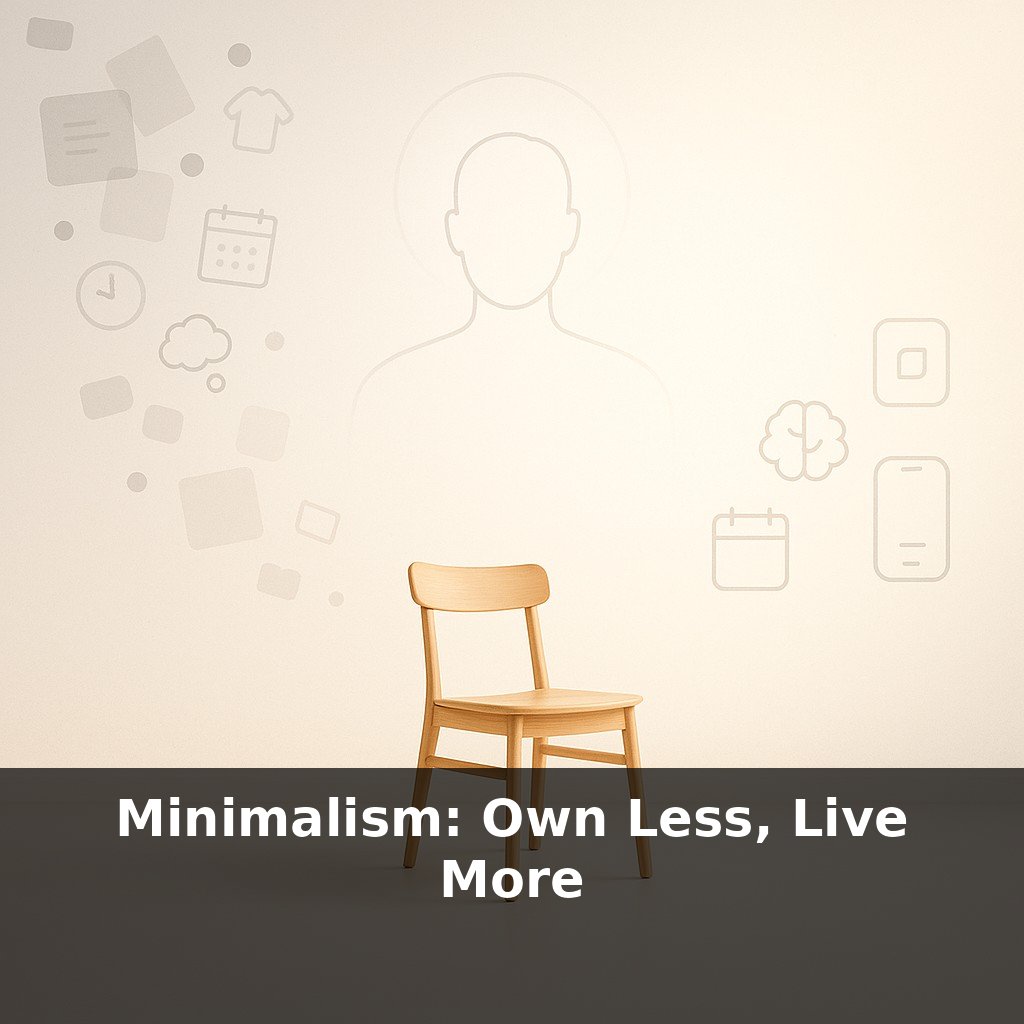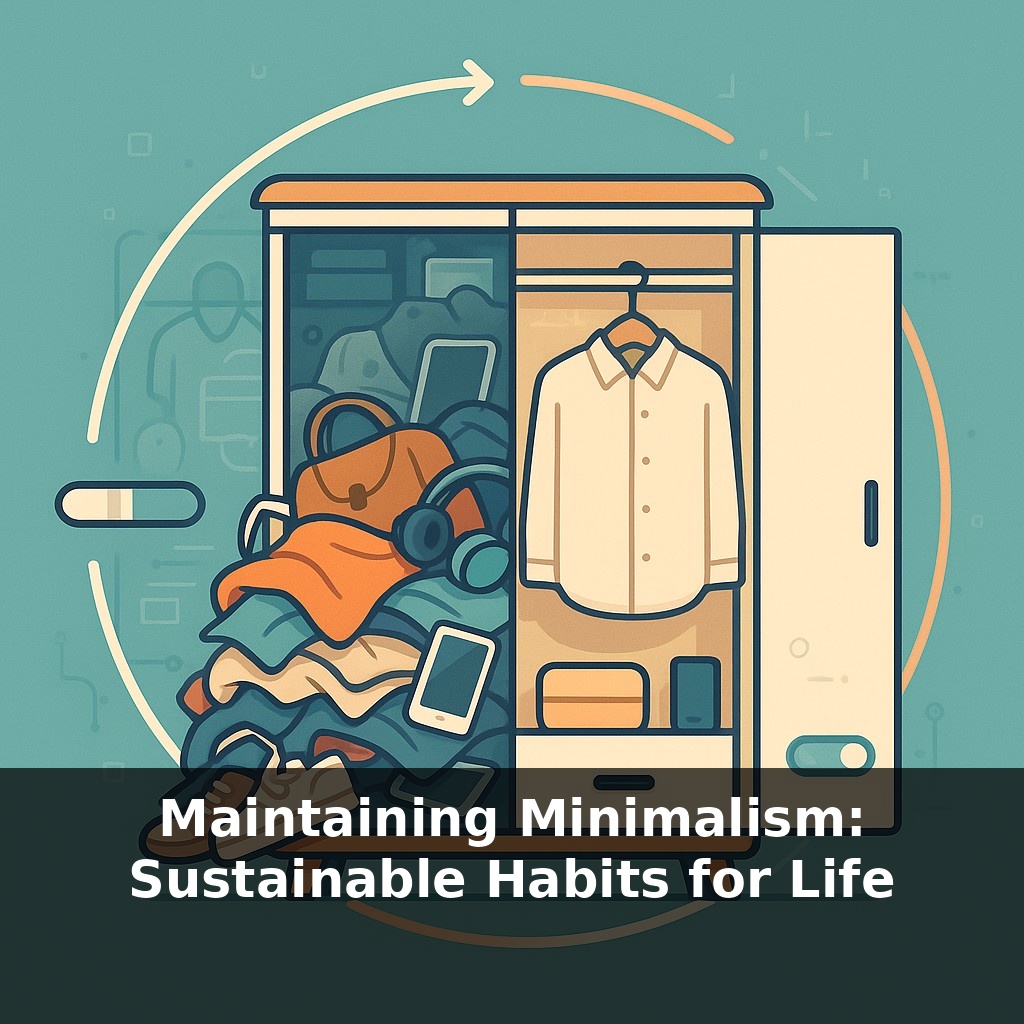
Americans now spend days each year just looking for lost stuff—yet closets keep filling up. You donate bags of clothes, feel lighter for a week, and then… the drawers are jammed again. How can owning less require ongoing effort? For Jane, filing her taxes required less paperwork than managing her closet.
That cycle—clear out, feel good, refill—sticks around because most approaches to minimalism treat it like a one-time event instead of an ongoing practice. The bags you dropped off last month were a sprint; what actually changes your life is the quiet, almost invisible system that runs in the background afterward. Research on habits and behavior shows that your future clutter is being decided in tiny moments: a late-night scroll that ends in “Add to cart,” a freebie you accept because it feels awkward to say no, a digital download you’ll “sort later.” Minimalism that lasts doesn’t rely on constant self-control; it rearranges the defaults so that owning less becomes the path of least resistance. In this episode, we’ll zoom in on the small, repeatable habits—and the guardrails around them—that quietly keep your space, calendar, and screen from overflowing again.
Think of today’s habits as quiet votes for the kind of life you’ll be living a year from now. The research is clear: people who stick with “owning less” don’t have more willpower; they have clearer rules and fewer decisions. They pre-decide things like, “I only buy clothes four times a year,” or “Every Friday, one drawer gets a five-minute reset.” Their spaces and screens still get messy, but not for long, because small cues nudge them back on course. In this episode, we’ll connect values to tiny actions, then show how to build in check-ins so your definition of “enough” can evolve as your life does.
Minimalism that actually lasts starts upstream—before the object, obligation, or notification ever enters your world.
The first lever is values translated into rules of thumb. Not vague ideas like “I value simplicity,” but specific filters you can apply in seconds. For example: - “I only buy tech that replaces at least one existing device.” - “I say yes to social plans only if I’d be happy doing them tomorrow night.” - “I keep one ‘backup’ of essentials, never three.”
These aren’t moral judgments; they’re shortcuts that reduce negotiation with yourself. The clearer the rule, the less energy you spend debating each opportunity.
Next comes shaping tiny, repeating behaviors around those rules. Habit science suggests you start by anchoring to routines you already have. After you close your laptop for the day, you archive or delete whatever emails you can see without scrolling. When you bring in a package, you immediately break down the box and recycle the inserts before using what’s inside. You’re not chasing a perfect system; you’re teaching your brain that “this is just what we do” whenever a certain situation appears.
Friction becomes your quiet ally here. Increase friction on inflow: unsubscribe from retailer emails, remove stored credit cards from browsers, keep shopping apps off your phone. Decrease friction on outflow: put a labeled donation bag in your closet, keep a “digital trash” folder on your desktop, store returning-a-purchase supplies (tape, printer ink, envelopes) together. The idea is to make it mildly annoying to acquire and almost effortless to release.
Over time, your sense of “enough” will shift. A new baby, a remote job, or caring for a parent may legitimately raise the amount of stuff or commitments you need. That’s why periodic check-ins matter more than rigid standards. Once a month, walk through one area—your kitchen, your calendar, or your phone—and ask: “If I were starting from zero today, would I add this back in?” If not, you’ve found maintenance clutter: things that snuck past your filters and are ready to leave.
None of this requires dramatic lifestyle changes. It’s a quiet reconfiguration of defaults so that maintaining less feels natural, not heroic.
Think of your values like sliders on a soundboard instead of a fixed on/off switch. When your career heats up, you might nudge the “time freedom” slider higher and “experimental hobbies” a bit lower, which changes what you’re willing to bring into your life. A parent with toddlers might keep duplicates of certain tools, while someone who just downsized might run stricter “one in, one out” rules—both are aligned if they match what matters most right now. Real people use this in surprisingly practical ways: some couples share one “future purchase” note on their phones where potential buys must sit for two weeks; others cap categories, not items (“12 mugs total,” “one shelf for board games”). Patagonia’s Worn Wear and Project 333 work because they offer a sandbox: clear rules, limited scope, and a safe place to experiment. You can borrow that spirit to run small, time-bound trials instead of permanent lifestyle declarations.
Cortisol spikes from visual overload today foreshadow something larger: a world where attention, not storage space, is the scarcest resource. As circular services grow—renting wardrobes, swapping gadgets, repairing by default—“new” may quietly become a niche taste. Smart homes might someday nudge you like a gentle coach: “You haven’t used this in 90 days—still worth its spot?” Your challenge this week: notice one area where an automated nudge could help future-you keep life light.
Instead of chasing a perfect number of possessions, think in seasons. Some seasons swell with gear, projects, commitments; others contract. Let your systems flex too: swap rules like a coach adjusting plays mid-game, not a referee handing out penalties. Over time, you’re not just curating stuff—you’re curating the kind of days you get to live.
Before next week, ask yourself: “Which 3 items I used this week actually made my day easier or calmer—and which 3 things I kept moving around (or cleaning around) without really using?” As you go through your normal routine tomorrow, pause once in the morning and once at night to ask, “What did I reach for automatically, and what just sat there taking up space on the counter, in my bag, or in my closet?” Before you buy anything non-essential this week, stop and ask, “A week from now, will this purchase still be making my life simpler, or will it just become something else I have to store, clean, or feel guilty about?”