Right now, billions of tiny decisions—likes, swipes, pauses—are quietly training social media to know you better than some of your friends do. In this episode, we’ll step inside that invisible feedback loop and ask: who’s actually shaping whom, here—you or the feed?
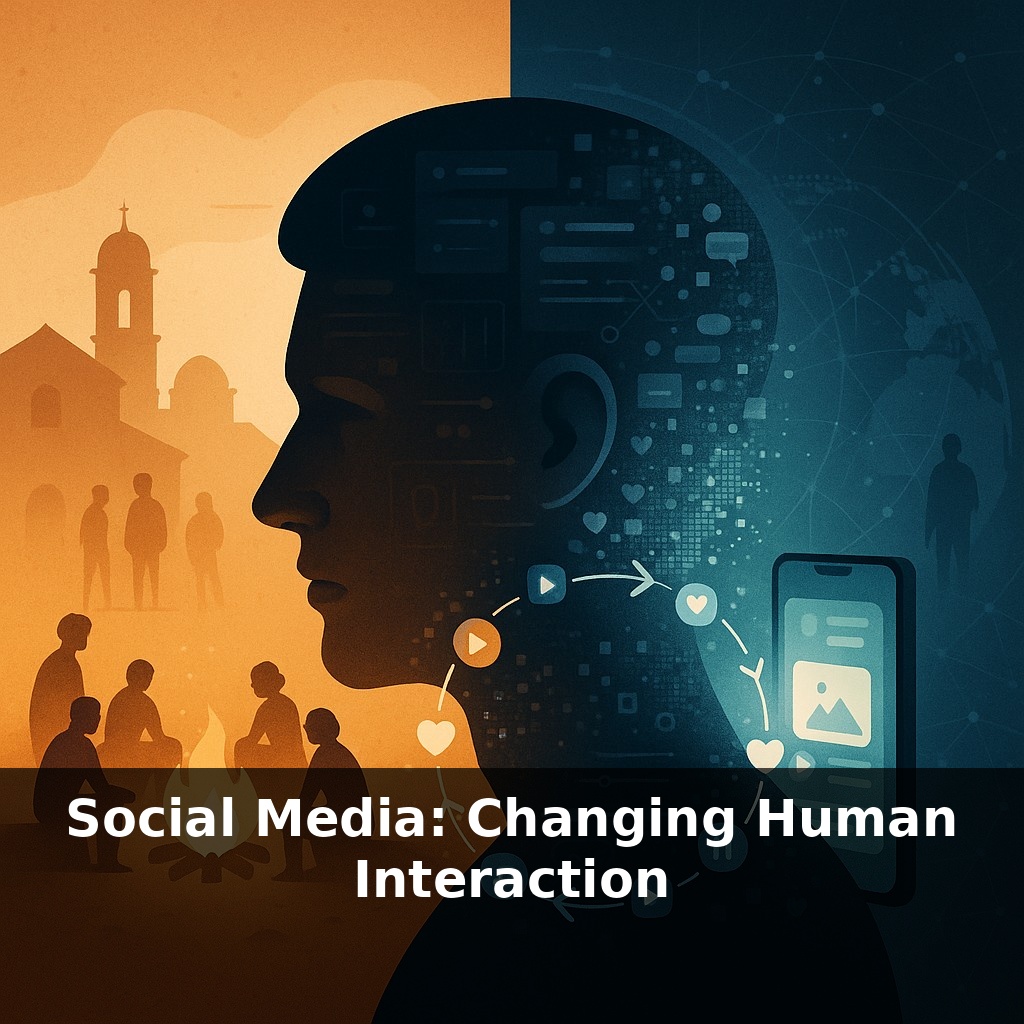
For most of human history, your “audience” was whoever could fit around a table, a campfire, or a town square. Today, with 4.95 billion people on social platforms, that audience can swell to millions in a few hours—and shrink back to silence just as fast. This isn’t just a bigger crowd; it’s a different kind of social environment, one where public and private, friend and stranger, news and rumor mix in the same scrolling space. In this episode, we’ll zoom out from your personal feed and look at how these spaces are rewiring interaction itself: how friendships start, how movements spread, how conflicts escalate, and how our sense of “normal” is negotiated in real time by likes, shares, and replies. Along the way, we’ll ask a harder question: are we adapting to these spaces, or are they quietly training us to fit their logic?
A typical day online now includes dozens of micro-encounters: a heart on a friend’s story, a comment in a fandom thread, a quick reply in a group chat, a silent lurk on a stranger’s rant. None of these feel monumental, yet they accumulate into a parallel social life that can feel as real—and sometimes more intense—than face‑to‑face contact. The scale is staggering: the average person juggles nearly seven platforms, each with its own unwritten rules, status signals, and “in jokes,” like drifting between neighboring countries that share a border but not a language. In this episode, we’ll track how that constant border-crossing shapes who we talk to, how we perform, and what we dare to say.
Scroll for a few minutes and you’ll see three big shifts in how we relate to one another.
First, expression has turned into performance. A joke that once died in a living room now competes with viral clips from around the world. People learn quickly which versions of themselves travel best: the sharper take, the prettier selfie, the more outraged reply. “Relatable” becomes a strategy, not just a feeling. That doesn’t make it fake, but it nudges us toward highlight reels and extremes. Teens, in particular, report feeling pressure to be “on brand” even with close friends, because any post can be screenshot, remixed, and judged far beyond its original audience.
Second, attention has become a visible currency. Likes, shares, and follower counts are no longer private guesses about status; they’re public scoreboard numbers everyone can see. That changes how we interpret other people. A stranger with 200 followers saying “this restaurant is terrible” feels very different from a creator with 2 million posting the same sentence. One is an opinion; the other feels like a verdict. For some, that visibility opens doors—small creators can build careers, marginalized communities can organize support. For others, especially those who go viral unintentionally, it can feel like being dragged under a spotlight you never asked for.
Third, proximity has been redefined. Group chats, fandom servers, and niche subreddits make it easy to find “your people” anywhere on the planet. A queer teen in a small town can get daily support from friends they’ve never met in person; a hobbyist can jump into a conversation with experts they once would only read in books. But this always-on closeness can blur boundaries. Work seeps into weekends through Slack DMs; family disputes spill into comment threads; ex-partners linger in feeds long after a breakup. Silence becomes ambiguous: did they not see it, are they busy, or are you being iced out?
All of this lands differently depending on age, culture, and personality. Some people treat platforms like a crowded café they drop into and out of. Others, especially heavy users, describe them more like a second home—comforting, exhausting, and hard to leave, even when the vibe turns toxic.
Think about three very different people opening the same app. A nurse on a night shift slips into a Facebook group where thousands of others swap stories about burnout and tiny wins; for her, those anonymous comments feel more honest than small talk at work. A high‑school musician posts a 12‑second riff on TikTok; by morning, a producer in another country has stitched it into a track and DMs an invitation to collaborate. Meanwhile, a new parent doomscrolls through polished family vlogs and quietly deletes the photo they were about to share, suddenly sure it’s not “good enough.”
These feeds don’t just reflect their lives; they redirect them. A single supportive thread can keep someone in school. A burst of angry replies can scare a local activist into silence. And a casual repost of a half‑checked claim can send neighbors to a protest—or a conspiracy forum—before anyone’s verified what’s true.
Social media’s next shift won’t just be more scrolling; it will feel more like stepping into shared rooms. As AR and VR mature, you might attend a friend’s concert as a floating avatar, glance at live comments hovering like fireflies, and still be sitting alone in your kitchen. Synthetic influencers and AI‑ghosted profiles will force a deeper question: not just “Is this true?” but “Is there even a person on the other side of this screen?”
In the end, these platforms act less like mirrors and more like sketchbooks: we keep drafting who we are, then watching which versions get circled in red by others. The next step isn’t logging off forever, but learning to edit. Who do you become when you stop chasing every notification ripple and treat your feed like a tool, not a verdict?
Before next week, ask yourself: When I scroll through Instagram, TikTok, or Twitter, which accounts or types of posts consistently leave me feeling drained, insecure, or angry—and what’s one concrete boundary I’m willing to set with those (mute, unfollow, or time-limit)? During my next in-person conversation, how can I deliberately change one small habit—like leaving my phone in my bag or waiting 3 extra seconds before responding—to make the interaction feel more like the deep, present connections I say I want? Tonight, as you think about your day, which moment of online interaction (a comment, DM, like, or share) genuinely added value or connection to your life, and how could you design more of *that* and less of the mindless checking the podcast warned about?