Experience the Ocean's Might — How Water Shapes Our Planet
📝 Transcript
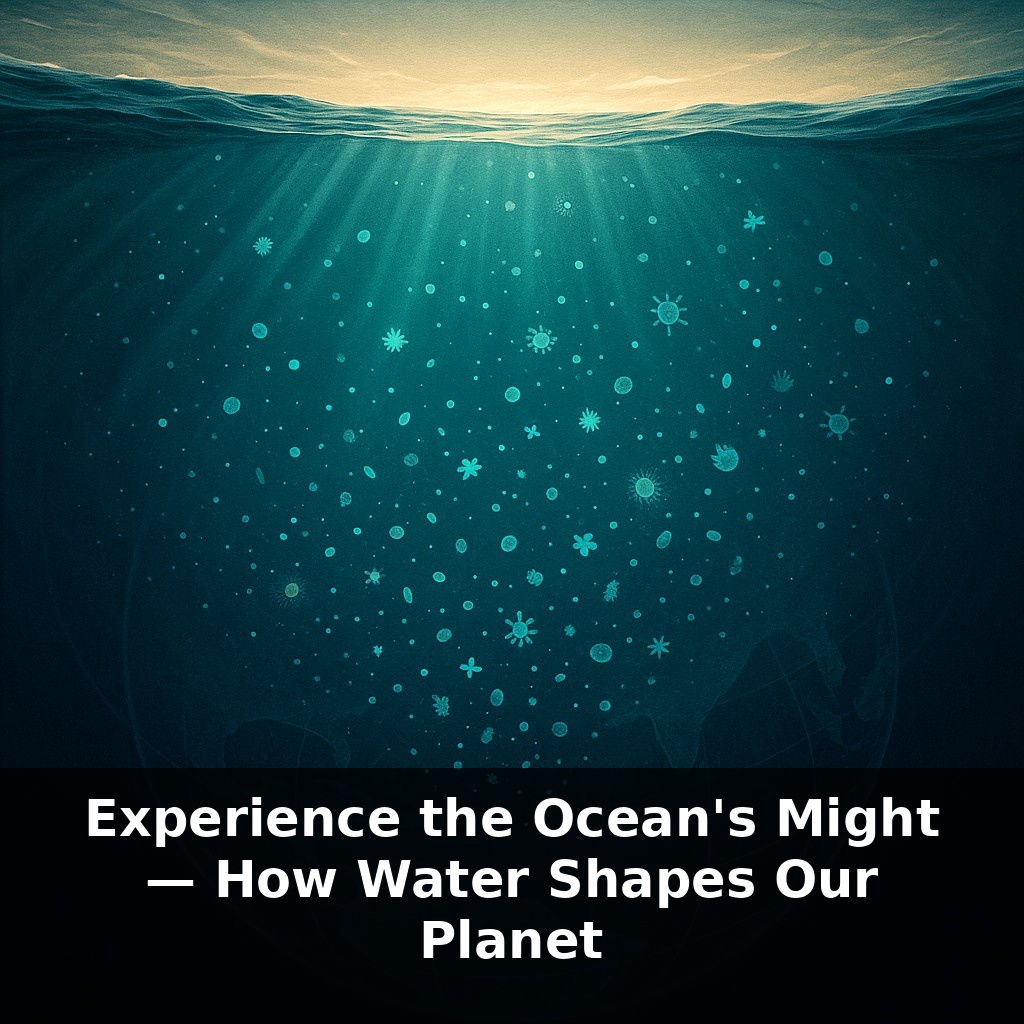
Right now, as you breathe, about half the oxygen entering your lungs was made by something you’ll never see from land: tiny ocean drifters, floating in sunlit waves. We talk about saving the planet, but here’s the twist—most of the planet is water we barely understand.
Those sunlit surface waters where drifters thrive are just the skin of a far larger system. Most of the ocean is dark, cold, and under crushing pressure, yet what happens there quietly steers our weather, our food systems, even the price of coastal homes. Warm currents move like invisible highways, redistributing heat around the globe; when they falter or shift, farmers feel it in their fields and cities feel it in their storm drains. The same water that cools a coral reef today may help fuel a hurricane months from now. And as we load the air with greenhouse gases, the ocean keeps taking in the excess heat and carbon, silently adjusting its chemistry and circulation. This isn’t just a backdrop to Earth’s story—it’s the main stage where climate, life, and human choices collide in ways we’re only starting to map.
From orbit, that “blue marble” view hides a restless engine. Water is constantly trading places—evaporating into clouds, falling as rain or snow, seeping into soil, then racing back through rivers to the sea. As it cycles, it picks up heat, pollutants, and nutrients, then delivers them back to the ocean like packages in a global delivery system. Down below, shifting temperatures and saltiness decide whether water will sink or rise, locking some regions into deep cold storage while others stay warm and storm-prone. Coastal communities feel every tweak to this system in their fisheries, floods, and even insurance bills.
Beneath that restless surface, three big “jobs” of the ocean quietly shape the world you live in: climate control, life support, and shock absorber.
First, climate control. When sunlight hits the planet, the ocean soaks up most of that incoming energy. Some of it warms surface waters, but much is shuffled downward, stored for years to centuries. This slow stockpiling helps prevent sudden jumps in global temperature. But there’s a trade-off: as extra heat piles in, surface waters stratify—layer like a cake—making it harder for deeper, cooler layers to mix upward. That weakened mixing can lock heat near the top, feeding marine heatwaves that bleach coral reefs and turbocharge storms.
Life support shows up in the sheer abundance of creatures that depend on this layered, moving water. Nutrients released when dead organisms decompose at depth don’t just sit there; they’re ferried back toward the light by upwelling zones along certain coasts and in the open ocean. Where that nutrient-rich water reaches the surface, you get blooms of microscopic life, then swarms of small fish, then the larger predators and commercial species people love to eat. Many of the world’s most valuable fisheries exist because of these narrow, dependable “nutrient elevators.” When currents shift, or warming suppresses upwelling, whole food webs and coastal economies wobble.
As a shock absorber, the ocean has been pulling carbon dioxide from the atmosphere and dissolving it into seawater. That chemical shift nudges pH downward, making it harder for corals, shellfish, and some plankton to build and maintain their shells and skeletons. It’s like raising the difficulty setting on their basic survival tasks. At the same time, sea level quietly responds to both melting land ice and the physical expansion of warming water, creeping higher along coasts that were built for a cooler time.
All of this feeds back into human decisions. Ports and shipping routes depend on predictable currents and storm tracks. Tourism leans on healthy reefs and beaches. Billions of people, especially in low-income coastal regions, rely on fish that in turn rely on the stability of deep processes they’ll never see.
Your challenge this week: pick one place where your life touches the ocean—seafood, beach travel, shipping, coastal weather—and trace it back two steps. Where did that fish grow up? What currents shaped that storm forecast? The goal isn’t to find perfect answers, but to feel how many invisible ocean processes are quietly underwriting your daily choices.
Stand on a quiet shore and you’re really eavesdropping on long-distance conversations. A storm in the Pacific can send a swell that spends days crossing open water before rolling under a surfer’s board in California or washing gently onto a beach in Japan. Those same storms tug subtly at sea level, piling water against some coasts while draining it from others, a shifting baseline that can turn a “normal” high tide into a nuisance flood in low-lying cities. Far offshore, ships follow routes tuned not just to distance but to wave patterns and seasonal winds, shaving days off journeys and tonnes off fuel use. In polar seas, sea ice forms and melts like a seasonal heartbeat, influencing where whales migrate and where indigenous hunters can travel safely. Even the taste and mineral content of the salt you sprinkle on dinner can carry the signature of distant rocks, rivers, and seafloor vents that have slowly enriched that particular patch of ocean over centuries.
As satellites, underwater gliders, and seabed sensors knit together, the ocean stops being a distant backdrop and becomes more like a live data stream we can “tune into.” That unlocks earlier storm warnings, smarter shipping routes, and new maps of hidden biodiversity hotspots. Coastal cities can redesign streets and seawalls the way engineers reinforce bridges after a better stress test, turning today’s invisible risks into tomorrow’s blueprints for safer, more flexible shorelines.
As we learn to “read” tides, swells, and shifting pH like weather reports, whole new choices open up: farmers timing planting to seasonal forecasts born offshore, architects shaping buildings for salt-laden winds, cities zoning with future shorelines in mind. The more we see the ocean as an active partner, the more room we have to redesign our own stories.
Here’s your challenge this week: Pick one “face of the ocean” from the episode—coastline erosion, coral reefs, ocean currents, or deep‑sea life—and spend 20 focused minutes tracking its real-time impact using one live resource (like NOAA’s ocean data dashboards, a reef live cam, or a coastal erosion map). Then, choose one specific behavior you can change that’s directly linked to that system (for example, cutting out one seafood item tied to reef damage or reducing car trips to lower CO₂ that fuels ocean warming) and commit to doing it every day for the next 7 days. Before the week is over, tell one other person exactly what you learned about that ocean system and the single change you’ve made, so your new awareness doesn’t stay in your head—it spreads.
From this course
Oceans: The Secret World Beneath the Waves
10 episodesUnlock all episodes
Full access to 10 episodes and everything on OwlUp.
Subscribe — $1.99/monthLess than a coffee ☕ · Cancel anytime