Why We're All Biased: The Humble Starting Point
📝 Transcript
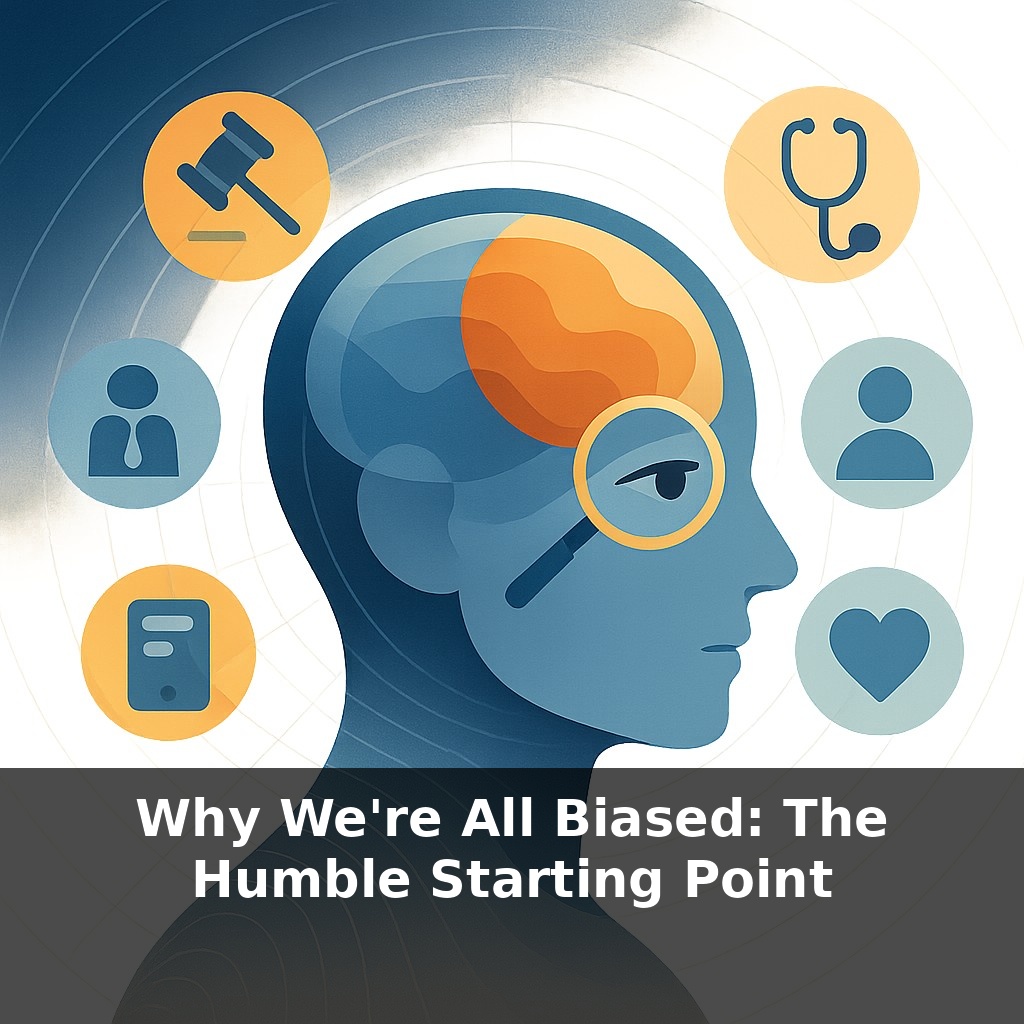
Right now, as you listen, your brain is quietly bending reality—and you probably feel completely objective. A judge, a hiring manager, a doctor, a friend: each absolutely sure they’re being fair, all making skewed choices the same day. How can everyone feel right and still be wrong?
Your mental ‘autopilot’ kicks in from the moment you wake up. You scroll headlines, skim emails, size up a colleague’s comment, decide whether someone seems trustworthy—all in seconds, with zero sense of effort. It’s a remarkable process that often goes unnoticed. It feels smooth because your brain is constantly compressing, filtering, and discarding information before you ever notice it. That silent triage is happening when you cross a street, when you read a CV, when you react to a stranger’s accent. And here’s the uncomfortable twist: the more certain you feel in those snap judgments, the more likely hidden shortcuts are steering the wheel. This isn’t a glitch reserved for “other people” or for extreme situations; it’s the baseline setting of a healthy human mind. The real question isn’t “Am I biased?” but “Where are my biases nudging me right now—and who else is affected when they do?”
Across thousands of studies, a clear pattern emerges: these mental habits don’t just color rare, high‑stakes decisions—they quietly shape the routine ones. Parole rulings shift with meal breaks, product prices feel “reasonable” or “outrageous” based on a random starting number, and even people who explicitly reject racism still show split‑second preferences in lab tests. It’s less like catching one big mistake and more like noticing tiny drafts in a house: each barely noticeable, together changing the whole climate of your choices, relationships, and the systems you participate in.
So where do these mental tilts actually come from, if not from being “a bad person” or “not smart enough”? One answer is brutally practical: your brain is managing a brutal trade‑off between accuracy and efficiency. You face more data in a morning than your ancestors did in a month. Slowing down to weigh every option, every person, every headline as if it were a Supreme Court case would paralyze you. So your mind leans hard on patterns, habits, and past experiences to make quick calls—and those patterns don’t stay perfectly aligned with reality.
Researchers have mapped this landscape in surprising detail: more than 180 distinct ways our judgments reliably drift. Some push you to overweight first impressions, some make you cling to initial numbers, others quietly protect your existing worldview from uncomfortable facts. You don’t “choose” them any more than you choose your reflex to pull your hand from a hot stove; they’re baked into how human reasoning operates under pressure and uncertainty.
This is why intelligence and education don’t grant immunity. In fact, they can sharpen something else: the ability to defend whatever you already believe. Lawyers don’t stop being biased because they know more arguments; they simply have more rhetorical tools to justify their stance. The same goes for scientists, activists, CEOs, and you. The better you are with words and numbers, the easier it becomes to build a convincing story that keeps your current picture of the world intact.
A single, uncomfortable implication follows: there is no “unbiased me” hiding underneath, waiting to be revealed if you read enough books or take enough trainings. There is only a “slightly less distorted me” who learns to notice, question, and sometimes override those automatic tilts.
This is why practices that force reflection can help. When people are asked to explain how they reached a decision, brain scans show more activity in regions associated with deliberate control and error checking—and error rates drop. It’s not magic; it’s simply shifting from reflex mode to review mode for a moment.
Think of this first step not as self‑indictment, but as calibration: like adjusting a sensitive instrument that you now realize has always been a little off. The instrument still works; you’re just finally learning where and how it drifts.
Think about ordinary choices where nothing dramatic seems at stake. You’re skimming CVs and a familiar university logo gives one candidate a tiny edge. You’re in a meeting and, without noticing, you treat the first opinion voiced as the “starting point,” adjusting from it instead of asking whether it deserves that power. Or you’re splitting a restaurant bill and everyone nods at the first suggested number, even though no one actually checked the receipt line by line.
Across a day, these micro‑tilts stack up: who gets interrupted, who gets second chances, which ideas are labeled “risky” versus “innovative.” None feels like a capital‑B “Bias Moment,” which is precisely why they slide through unchallenged. In finance, a tiny interest rate difference compounds into a huge gap over years; in social life, tiny preference differences compound into unequal access, trust, and opportunity. You can be kind, progressive, and well‑intentioned—and still be constantly feeding that compounding machine without realizing it.
Bias doesn’t only tilt verdicts or hiring; it quietly shapes culture. Left unchecked, it’s like seasoning you never measure—gradually overpowering the dish without anyone agreeing to the recipe. As AI tools learn from our past choices, those unmeasured sprinkles risk hard‑coding who gets flagged, promoted, or believed. The real project isn’t purging bias, but building systems—checklists, audits, diverse teams—that catch our blind spots before they congeal into “how things are done.”
Treat this as the first draft of how you see the world, not the final cut. Your mind’s “rough edits” help you move fast, but they’re not the version you’d release if the stakes were high. Your challenge this week: spot just one moment a day when you feel unusually certain—and mentally add a quiet asterisk: *This might not be the whole story.*
From this course
Overcome Your Biases: Transform How You Think
8 episodesUnlock all episodes
Full access to 8 episodes and everything on OwlUp.
Subscribe — $1.99/monthLess than a coffee ☕ · Cancel anytime