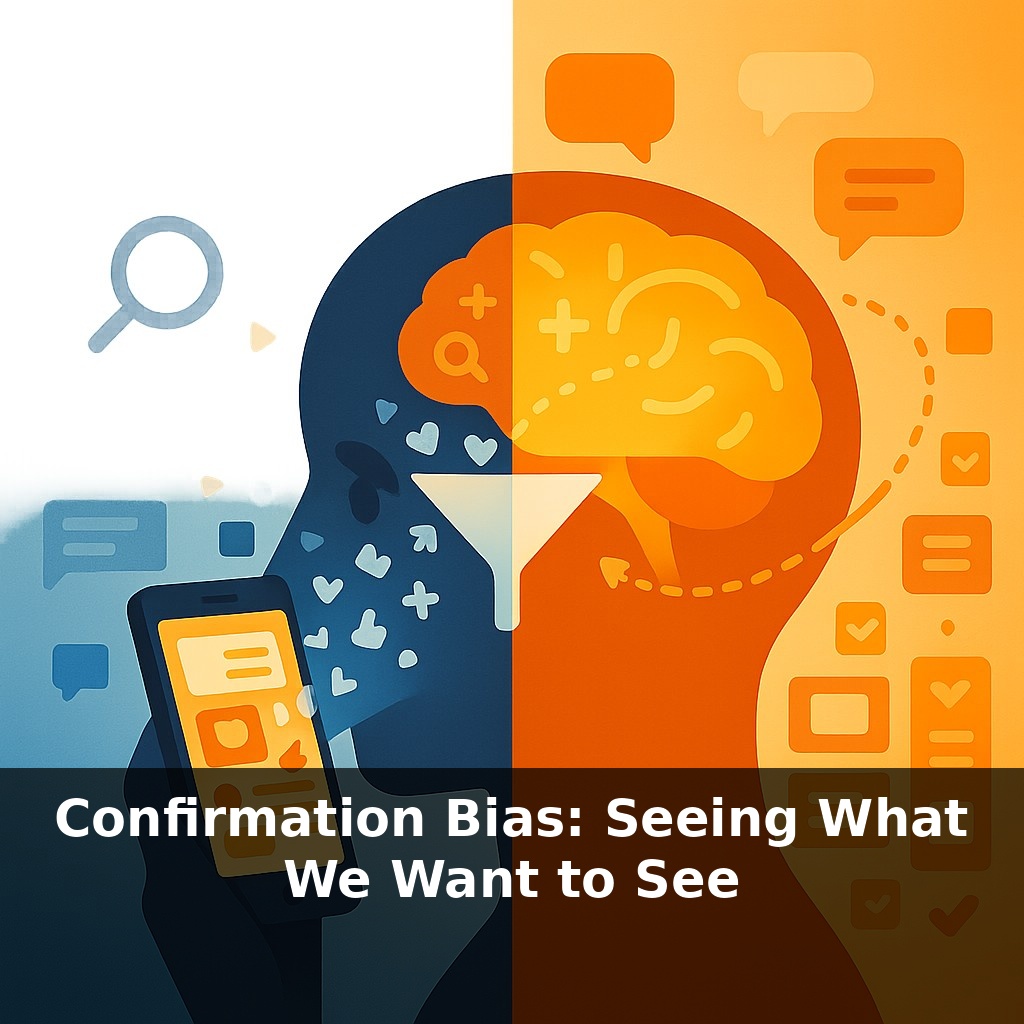
About eight in ten people in a classic psychology experiment clung to a wrong idea even as evidence piled up against it. Now jump to you, scrolling your feed, arguing with a friend, or choosing a doctor. Here’s the twist: your brain may be editing reality before you even notice.
You’ve seen this play out in small, quiet ways. You google a symptom, click the result that matches what you already feared, and close the tab feeling “confirmed.” You skim reviews, but the one that agrees with your first impression suddenly feels more “trustworthy.” A friend sends an article that challenges your stance; you save it to “read later” and somehow never do. None of this feels dramatic or irrational in the moment. It feels like being efficient, trusting your gut, moving on. Yet underneath, the same mental habit that kept those experiment participants stuck is quietly training you to treat agreement as evidence and discomfort as error. Over time, entire areas of your life—your politics, career choices, even who you think is “on your side”—can start to orbit around what’s easiest to keep believing.
Now scale that quiet habit up to the systems around you. News feeds learn which headlines you linger on and quietly serve you more of the same, like a playlist that only repeats one mood. Search engines autocomplete your question in a particular direction, nudging what you’ll even think to ask. Friends who share your views comment more, so their posts rise to the top while others sink out of sight. None of this requires a conspiracy; it’s just your preferences, reflected back and amplified. But as the mix narrows, it gets harder to notice what’s missing—or how differently others might be seeing the same world.
Look closely at when this bias hits hardest: not when you’re carefully weighing options, but when something feels important, emotional, or tied to who you are. Neuroscientist Drew Westen found that when committed partisans confronted damaging information about their favorite politician, the brain regions for logical reasoning went quiet while emotional circuits lit up. In other words, the more your identity is on the line, the less your “inner scientist” shows up.
This doesn’t just play out in politics. A doctor who’s had success with a particular treatment may keep spotting signs that it’s working and downplaying reports that it isn’t. A startup founder, deeply invested in their product, might highlight every flattering comment from early users while explaining away warning signs about the business model. Experts aren’t immune; their extra knowledge can simply give them more tools to defend what they already think.
And the environment around you quietly rewards this pattern. Comment sections cheer you on when you “destroy” the other side. Recommendation systems notice what you click and keep feeding you content that feels satisfying, not unsettling. Your social circle may subtly punish you for “going soft” or “selling out” if you entertain ideas that don’t fit the group story. It can start to feel as though changing your mind is a moral failure instead of a sign of learning.
Notice how much of this is about emotion and belonging rather than raw information. That’s why just “knowing the facts” isn’t enough to protect you. You can read a meticulously sourced article and still walk away more convinced of your starting view, because you’ve used every sentence as raw material to build your existing case stronger.
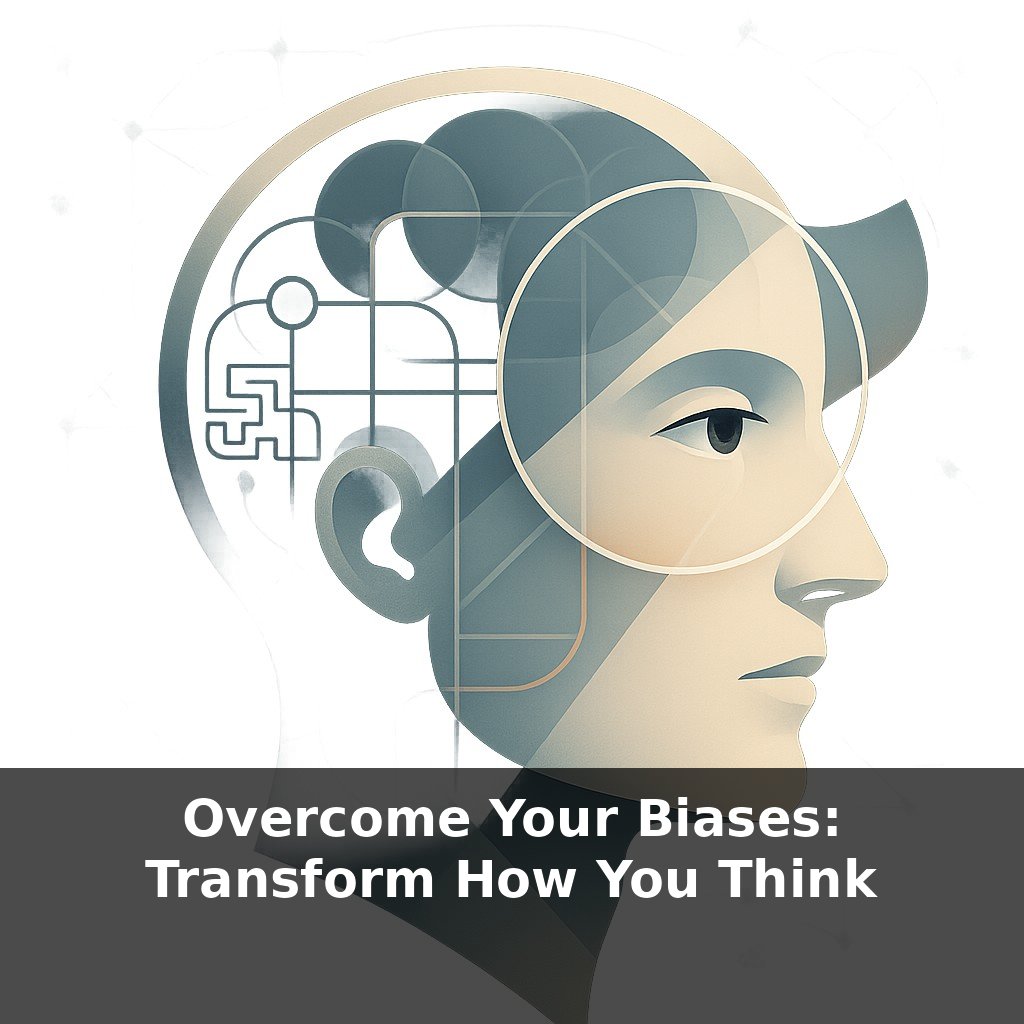
The good news is that this tendency is predictable—and that makes it workable. Confirmation bias shows up in patterns: the sources you instinctively trust or dismiss, the kinds of objections you consider “serious,” the people you mentally label as “reasonable” versus “lost.” Spotting those patterns in yourself is like finding the settings panel for your own thinking: you may not be able to turn the bias off, but you can start adjusting how loudly it speaks in the decisions that matter most.
Think about decisions where you feel especially “sure”: which candidate is “obviously” honest, which diet “clearly” works, which coworker is “definitely” unreliable. Those aren’t random; they’re where this bias is quietly doing its most ambitious work.
You see it when a manager only invites the same two employees to weigh in, then treats their agreement as proof that “the whole team” is aligned. Or when an investor keeps hunting for charts that show growth, skimming past cash‑flow warnings that don’t fit the success story forming in their head. In scientific research, groups can drift this way too: labs may chase data that refines a favored theory while shelving results that would force everyone back to the drawing board.
Even small habits add up. Skipping articles from outlets you “don’t like,” re‑reading only the comments that praise your post, or double‑checking bad news more than good—each one tilts the floor a little. Over months and years, those tiny tilts can quietly steer your beliefs, your career bets, and even who you think is worth listening to.
When whole communities lean into this bias, public debates start to look less like conversations and more like parallel monologues. Health advice, climate data, and even local safety issues can split into competing “realities,” each with its own experts and charts. Policy then drifts toward whoever shouts longest, not who reasons best. Over time, institutions either adapt—by hard‑wiring dissent and independent checks into decisions—or they slowly lose trust and relevance.
You don’t have to scrap your beliefs to loosen this bias; you have to hold them with lighter hands. Start by asking, “What would change my mind?” before diving into news, research, or a debate. That question acts like a north star in a foggy harbor, keeping you oriented when every wave of information wants to push you back to shore.
Start with this tiny habit: When you catch yourself nodding along to a news article, podcast, or social post you already agree with, pause and whisper to yourself, “What would the other side say?” Then, type exactly one sentence into Google or your podcast app that starts with “arguments against [your belief here]” and open just the first result. Instead of trying to fully engage, simply read or listen until you find *one* point that surprises or annoys you, then stop. Over time, this 30-second pause-and-peek will gently train your brain to look beyond its confirmation bias without feeling overwhelming.