A Princeton study found that split-second judgments of a politician’s face predicted most election winners. Now, think of a job interview, a first date, or a courtroom. One early impression quietly takes the wheel—long before facts, resumes, or evidence ever get a say.
That same mental shortcut that nudges voters also leaks into places we think are “objective.” A sales manager keeps forgiving a star performer’s missed deadlines. A teacher overestimates a “bright” student’s essay before reading the last page. An investor sees one quarter of great numbers and suddenly every risk looks smaller, every future projection rosier. The common thread isn’t just snap judgment; it’s how stubborn that first positive (or negative) signal becomes once it’s lodged in our mind. We start grading everything else on a curve tilted by that one trait—confidence in a pitch, polish in a presentation, pedigree on a résumé. The danger is subtle: you don’t feel biased; you feel consistent. And consistency feels like fairness, even when it’s quietly steering you away from reality.
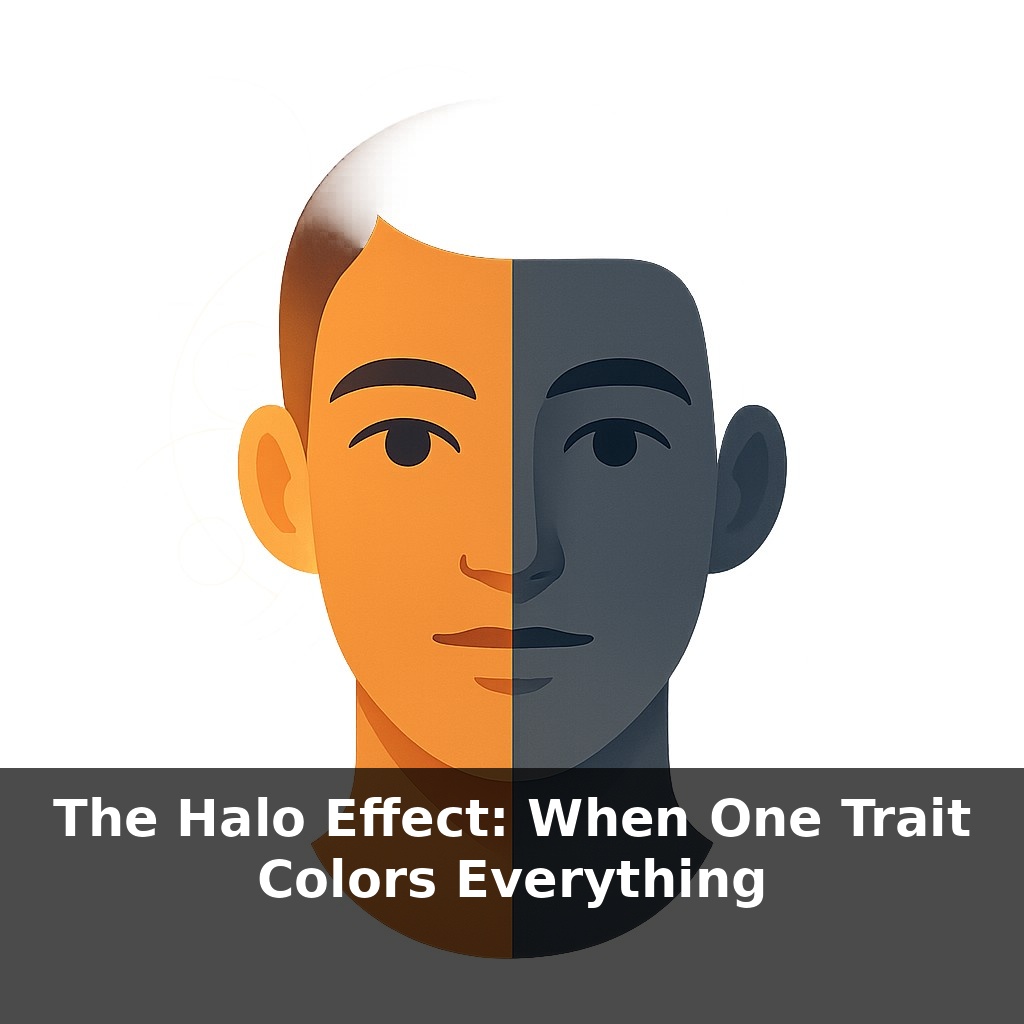
In psychology, this pattern is called the halo effect: one standout feature quietly reshapes how we “see” everything else about a person or thing. It doesn’t just apply to people’s looks or charm; brands, schools, and even entire industries benefit from it. A single hit product pulls their weaker offers into the glow. In classrooms, teachers tend to overrate work from students they already see as “strong.” In performance reviews, one big win can blur a year of average results. The tricky part: the more information we collect, the more confident we feel—even when that confidence is built on a skewed starting point.
A 12–14 % wage bump for attractive workers across countries isn’t just an academic curiosity; it’s a structural distortion quietly baked into pay scales, promotion ladders, and “high‑potential” lists. Those extra percentage points compound over decades into different neighborhoods, schools, and safety nets. Zoom out, and the halo effect stops looking like a private quirk and starts looking like an engine for inequality.
Crucially, the trigger doesn’t have to be looks. In many elite firms, the “right” university logo functions like a master key. Two candidates with similar performance histories walk in; one has an Ivy League crest on their CV, the other doesn’t. The prestigious degree lights up an inner story: “smart, disciplined, high ceiling.” From then on, the interviewer’s questions, patience, and interpretation of minor slips all tilt in that direction. By the end, the “strong impression” feels earned, when in reality it was scaffolded by the first piece of information.
You see similar patterns in investing. A company nails a breakout product, nails a few quarters, and suddenly analysts start describing management as visionary, culture as world‑class, strategy as unbeatable. Apple leaned into this explicitly: its own filings credited a surge in Mac sales to the iPod’s glow. One success rewrote how everything else was interpreted, from laptops to retail stores.
In courts and hiring panels, the stakes get sharper. Experiments with mock juries found that more attractive defendants were literally costing society less prison time. Update that to modern contexts—body‑cam footage, social media images, polished LinkedIn profiles—and you have a justice and employment system where “looking the part” subtly bends outcomes.
The unsettling twist is how few safeguards exist. Most managers admit these distortions show up in their appraisals, yet only a small minority ever receive serious training to counteract them. Legal, medical, and academic experts show similar vulnerabilities. Expertise, it turns out, adds confidence far faster than it adds immunity.
The paradox: halo bias makes the world feel more coherent—people, brands, and leaders seem consistently good or bad. But the more seamless the story, the more suspicious we should be that a single shining detail is doing most of the narrative work.
Boardrooms aren’t immune. One charismatic founder nails a TED‑style presentation, and suddenly every half‑baked product idea in the meeting “sounds visionary.” Colleagues who questioned the plan start second‑guessing themselves: “Maybe I’m missing something.” In hospitals, a surgeon with a stellar reputation gets more benefit of the doubt when complications occur, while a quieter peer may have their similar outcome labeled “careless.” Even restaurant reviews show it: diners wowed by ambience and plating rate the food, service, and even music more highly than those served the exact same dishes in a plainer setting.
Think of it like a buggy recommendation algorithm: once you click “like” on one video, the platform floods you with content that fits that first signal, hiding everything that conflicts with it. The mind does something similar with people and organizations, auto‑curating evidence to match its initial “like” or “dislike,” while insisting it’s just following the data.
A 20‑second clip of a CEO on TikTok could soon move markets before any analyst reads a balance sheet. As hiring, lending, and even dating migrate into feeds, a polished thumbnail or viral soundbite may weigh more than a decade of data. Recommendation engines can silently amplify these skewed signals, turning small biases into industry‑wide trends. Your future “instincts” about leaders, brands, even neighbors may be heavily pre‑edited by algorithms you’ve never seen or audited.
If one trait can sway so much, the real frontier is designing systems that force a second look: blind résumé reviews, randomized interview panels, structured scoring, even apps that hide profile photos until after core details. Like recalibrating a camera, the aim isn’t to drain warmth from judgment, but to bring the whole scene into sharper, fairer focus.
Start with this tiny habit: When you catch yourself thinking “She’s just naturally confident” or “He’s brilliant” after one good impression, quietly add the words “…and I might be missing something” in your head. Then, before you move on, ask yourself one super-specific question like, “What’s one thing I *don’t* know about how they behave under pressure?” or “When have I seen the opposite from them?” This 5-second pause gently trains your brain to zoom out instead of letting one shiny trait color the whole person.