Machine-gun fire tears across a quiet Pacific dawn. On one side, Japan fields the same carriers that struck Pearl Harbor. On the other, a smaller American fleet sails toward what looks like certain defeat—confident, because it already knows where the enemy will be.
Midway in June 1942 felt less like a remote speck of coral and more like a fragile hinge on which the entire Pacific war could swing. Far from the headlines in American cities, a handful of runways, fuel tanks, and radio shacks suddenly mattered as much as any capital. The Japanese high command believed they were luring the remaining U.S. carriers into a carefully prepared trap, expecting a predictable response to overwhelming pressure—like counting on the tide to rise at a certain hour. But beneath the surface, U.S. codebreakers had been quietly peeling back layers of Japanese naval messages, turning fragments of intercepted chatter into a rough but usable map of enemy intentions. That hidden picture gave American commanders something priceless in war: the chance to choose when and where to risk everything.
Midway’s runways and reefs were only part of the story; the real battlefield stretched across minds, maps, and radio waves. In Washington and Hawaiʻi, analysts squinted at cipher fragments the way meteorologists stare at shifting cloud bands, trying to guess where the next storm will break. Their warnings filtered to Admiral Chester Nimitz, who had to gamble scarce carriers and pilots on forecasts that were precise enough to be useful but too fuzzy to erase doubt. Meanwhile, Japanese planners moved with the confidence of a navy that hadn’t lost a major battle in months, adjusting details but not questioning their core assumptions.
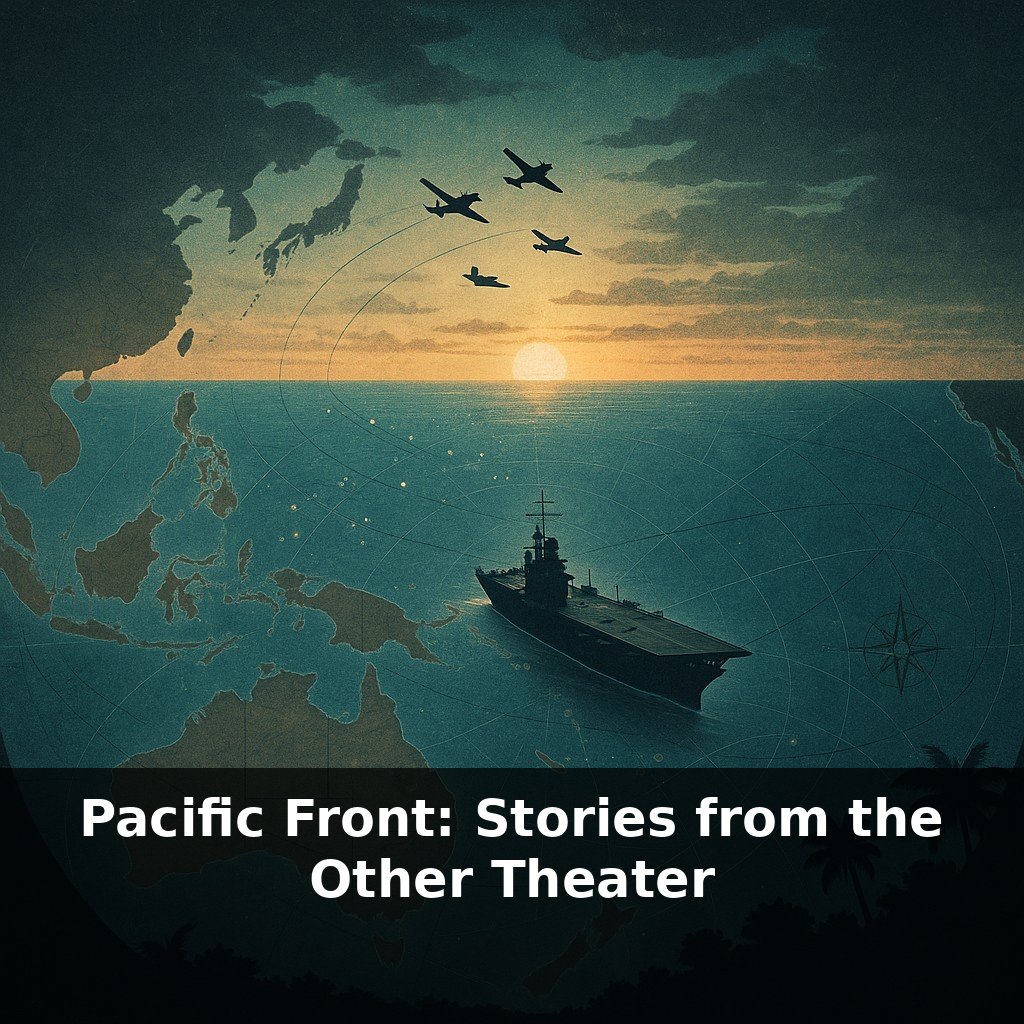
American planners now had a rough outline of Japan’s intentions—but not a photograph. They knew a major carrier force was coming, they suspected the timing, and they were fairly sure Midway was the target. What they didn’t know was how the first few hours would unfold, or which side’s pilots would spot the other first. So Nimitz took a risk that went against instinct: instead of massing all strength directly at Midway, he spread his three carriers—Enterprise, Hornet, and the battered Yorktown—northeast of the atoll, hidden beyond Japan’s expected search arcs.
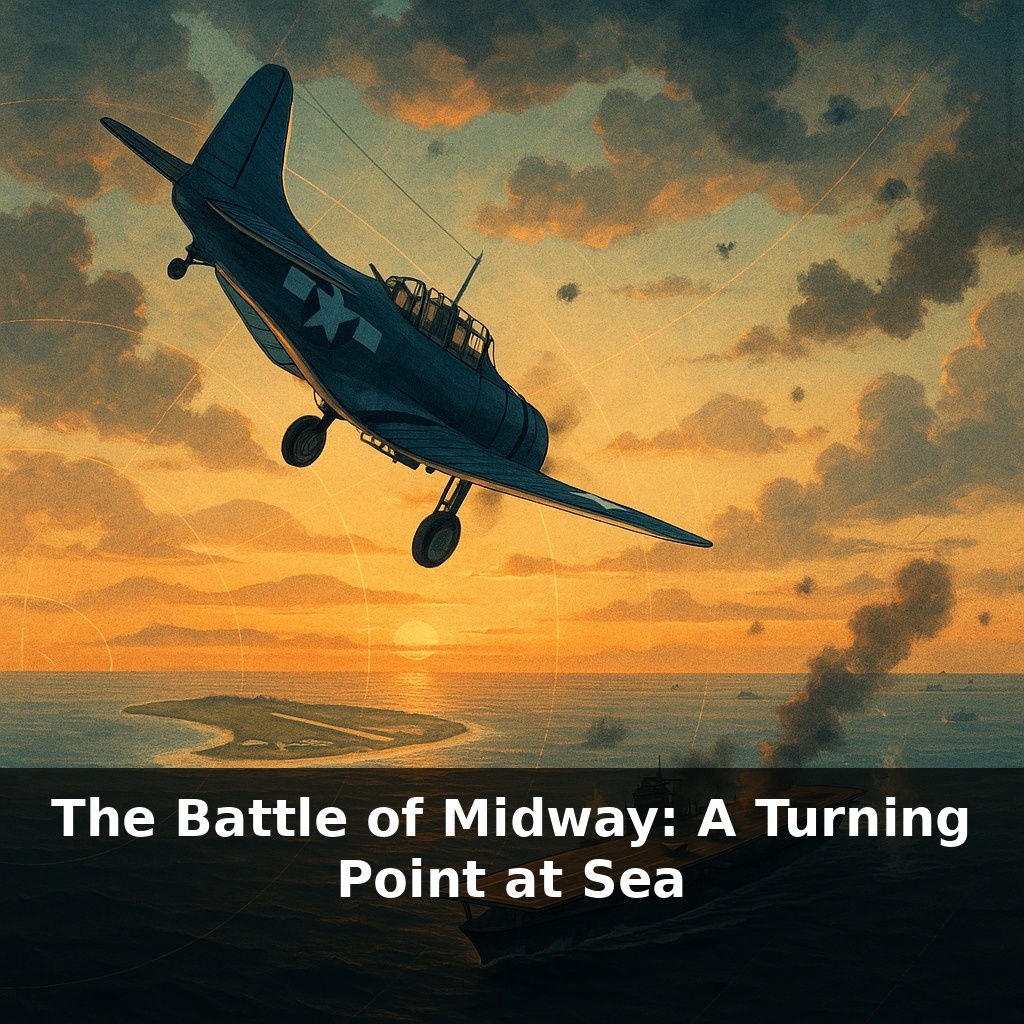
This meant the opening blows would fall not from the American carriers, but from Midway itself. Before dawn on 4 June, U.S. land-based bombers and torpedo planes clawed into the sky, flying long, exhausting sorties to strike the Japanese fleet as it advanced. Their attacks were mostly unsuccessful in terms of hits, but they forced Japanese commanders to react. Each alarm meant disrupted flight operations, fuel hoses dragged across decks, bombs and torpedoes hoisted and then swapped as mission priorities changed.
Those minutes of confusion mattered. On the Japanese carriers, decks and hangars began to resemble a workshop just as a storm front is rolling in—ordnance scattered, aircraft being refueled, crews trying to reset for the “next” strike while the current one wasn’t fully resolved. When U.S. carrier-based torpedo squadrons finally arrived, they ran straight into this storm. Flying low and slow, many without adequate fighter escort, they were cut apart by Zero fighters and anti-aircraft fire. Entire squadrons were nearly annihilated.
Yet their sacrifice bent the battle’s timeline. While Japanese fighters chased the low-flying torpedo planes, the sky above briefly thinned of defenders. That was when U.S. dive-bombers, delayed and even a bit lost on approach, appeared overhead. They found enemy carriers below with decks crowded by fueled aircraft and armed munitions—an extraordinarily vulnerable moment produced by a chain of earlier decisions.
In a matter of minutes, bombs plunged into three separate carriers, turning carefully prepared flight decks into burning wreckage. Japan still had one operational carrier left, but the tempo of the battle had shifted. For the first time in the Pacific war, Japanese naval aviation was reacting to American moves rather than dictating them.
In the hours that followed those first cascading explosions, choices made far from the roar of engines began to tell. Japanese staff officers had divided their strength across multiple objectives: Midway, the Aleutians, and a hoped‑for decisive clash with any American response. That broad plan left them powerful on paper but thinner at the exact point where the fight suddenly concentrated. By contrast, Nimitz had quietly gathered nearly everything he could spare around one purpose: breaking the attacking carrier force, even at terrible cost.
Think of it like a coastline facing an incoming storm front: Japan had high seawalls spread along miles of shore, while the U.S. piled sandbags in front of a single, critical harbor entrance. When the storm veered slightly, those concentrated sandbags mattered more than the rest of the concrete.
Yet nothing about the outcome felt inevitable to those involved. Pilots misread bearings, radios failed, and some squadrons arrived late or in fragments. The difference was how each side adapted as plans unraveled. American commanders increasingly trusted front‑line reports over original timetables, allowing individual squadron leaders to press attacks the moment fleeting chances appeared. Japanese leaders, trained in highly choreographed operations, struggled to revise their script while under sudden, multi‑directional pressure.
Your challenge this week: Study one tough decision you’re facing—work, personal, or strategic. First, write down your “perfect plan” assuming everything goes right. Then, deliberately identify the two or three spots where chaos would hurt you most: a delay, a missing resource, a wrong assumption. For the next seven days, focus only on strengthening those fragile points: build a backup contact, rehearse a faster way to decide, or pre‑commit to which goal you’ll sacrifice first if time or resources collapse. At the end of the week, ask: Did shifting effort from the “ideal script” to the pressure points change how prepared you feel for your own version of a Midway‑level surprise?
Midway’s legacy reaches well beyond WWII. Today’s navies still argue over how many “eggs” to put in the carrier “basket” as missiles, subs, and drones grow more lethal, much like a forest deciding whether to keep towering old-growth trees or spread strength into many smaller, flexible saplings. Signals intelligence has morphed into cyber and orbital surveillance, raising new questions: when does early insight prevent war, and when does it tempt leaders to gamble on a single, high‑stakes prediction?
Midway suggests a quieter lesson: lasting advantage often comes from how you learn afterward. Navies pored over radio logs, deck logs, even fuel reports, tracing cause and effect like rings in a tree trunk after a wildfire. The battle became less a triumphant ending and more a living case study in how quickly assumptions can—and must—be revised.
Before next week, ask yourself: Where in my life or work am I more like Yamamoto—overconfident in my “plan”—and how could I build in Nagumo-style caution and flexibility so I’m not caught refueling my own “planes” when circumstances suddenly change? If I had to choose just three “carriers” (key priorities) to protect the way Nimitz protected Enterprise, Hornet, and Yorktown, what would they be—and what “decoy operations” or distractions should I deliberately ignore this week? When unexpected “enemy contact” appears—bad news, sudden setbacks, surprising opportunities—how can I respond more like the U.S. codebreakers at Station HYPO, calmly gathering better information first instead of just reacting to the first signal I see?