One spring morning in 1942, thousands of soldiers surrendered—and then began dying only after the battle was over. Along a dusty Philippine road, victory and defeat blurred together. Were these men prisoners, survivors in progress, or witnesses to a crime still unfolding?
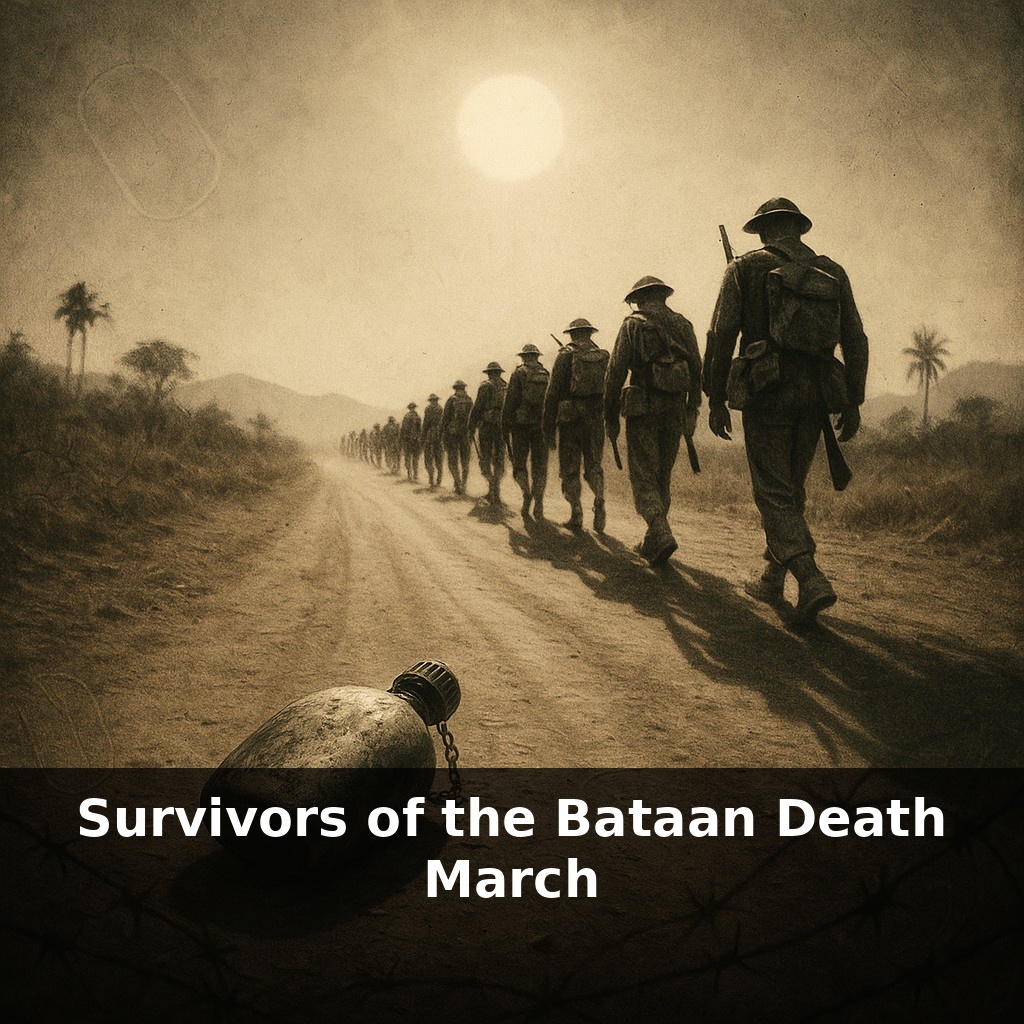
The road out of Bataan did not begin with footsteps—it began with thirst. Canteens were already nearly dry when the columns formed up, and the sun over Luzon was just getting started. Men who had spent months rationing bullets now had to ration each breath. Dust coated tongues, bandages, and hopes alike, turning every cough into a small landslide in the lungs. Some tried to step where shade briefly crossed the road, timing their pace like walking through scattered notes of music in a song that kept speeding up. Others quietly swapped places to brace a weaker friend for a few more yards. Orders barked in a foreign language cut through the heat, and the shape of the march emerged: no clear destination, only a rule as stark as the roadside ditches—keep moving, or disappear from the line entirely.
Some men stepped into that line already wounded, malnourished, or feverish from malaria and dysentery. Their uniforms hung loose over bodies thinned by months of half-rations. Medical units had been overwhelmed long before the columns formed; bandages were often just torn shirts, medicine a rumor. Alongside seasoned regulars walked teenage recruits, clerks, cooks, and drivers—soldiers by necessity rather than training. Filipino and American troops mixed together, trading fragments of language and comfort. Rank blurred as officers leaned on privates, and the definition of “strong” quietly shifted from muscle to endurance.
The first thing that disappeared along that road was time. Men stopped thinking in days and started thinking in intervals: the next tree, the next curve, the next guard whose mood might mean a chance to pause or a rifle butt in the spine. Watches had broken or been stolen, so distance was measured in blisters, in how many times the column passed the same overturned cart or burned-out village type. Somewhere ahead were boxcars and camps they’d never seen; all that mattered was staying inside the moving boundary between the living and the discarded.
Rules emerged, unwritten but fierce. Don’t walk on the edges of the column—guards there were quicker to strike. Don’t cling too obviously to a friend; it could draw attention and a blow that took you both down. If someone stumbled near you and could be hauled upright in a heartbeat, you tried. If they went down hard and didn’t respond, you learned the brutal art of looking forward, not back. Each man became his own grim strategist, deciding when to spend precious strength to help and when to hoard it like the last coin in a silent marketplace.
Food came in fragments—an occasional handful of rice, sometimes stolen sugar or scraps bartered from civilians who risked their own lives to slip water or bananas to the passing columns. Those tiny gifts became anchors of meaning. A Filipino farmer’s quick shove of a pail toward the roadside wasn’t just charity; it was quiet rebellion, a reminder that the world beyond the guards had not entirely surrendered its conscience. Prisoners memorized the faces of such strangers as if they were family portraits.
Illness moved as steadily as the column. Feet swelled and split; infections crept up legs. Men learned to walk a little differently, shifting weight to spare a raw spot, like dancers improvising steps to keep the music going a few beats longer. Malaria chills hit under full sun, layering shaking and sweat into the same body. Yet within this breakdown, small systems of care formed: one man watching for holes in the road when his friend’s vision blurred, another trading his last cigarette for a smear of salve.
For all the chaos, patterns of brutality took shape. Beatings clustered where the road narrowed. Water sources became scenes of both relief and terror—races to fill a helmet before a guard fired into the crowd or slammed the lid shut. Later testimony would name units and officers, but in the moment, most men only knew them as the ones with quick tempers or, more rarely, the ones who looked away rather than strike. That thin variance in cruelty could mean the difference between another mile and a roadside grave.
Your challenge this week: whenever you feel tempted to say “I couldn’t live through that,” pause and trace one hard thing you *have* lived through—an illness, a loss, a season of grinding stress. Identify one concrete habit, belief, or person that carried you a little farther than you thought you could go. Write it down. Then, once this week, tell someone younger than you that specific story—not to compare struggles, but to hand them a tool they might someday need when their own road suddenly stretches much longer than they’d planned.
Some survivors later said the smallest choices, not the grand gestures, tilted the odds. One man quietly swapped boots with a friend whose feet were worse off, keeping him mobile long enough to reach a field hospital. Another learned a few words of Japanese, just enough to deflect a guard’s anger or ask for a brief halt for the men behind him. A Filipino officer broke his last piece of hard candy into shards, passing them back through the line—not for calories, but as proof that sharing hadn’t died yet. Acts like these worked almost like unexpected cloud cover on a blazing day: they didn’t change the landscape, but they lowered the temperature just enough for someone to keep going. After the war, many veterans described a similar pattern in civilian life. When a job vanished or a diagnosis arrived, they fell back on the same quiet math—conserve strength, look after the person next to you, and turn every scrap of kindness into a reason to face the next mile.
Bataan’s legacy doesn’t just sit in archives; it quietly edits our future choices. Modern officers study those routes as ethical fault lines: where obedience became abuse, where mercy survived inside orders. Digital projects now stitch fading voices into searchable “weather maps” of past crises, letting lawmakers and commanders trace how small decisions—sharing water, opening a corridor, ignoring a plea—can tilt an entire campaign’s moral climate in the space of an afternoon.
Today, those who endured Bataan shape how militaries train and how states define “non-negotiable” rules in war. Their testimonies echo in courtrooms, field manuals, and classrooms, like a steady drumbeat under shifting headlines. Each retelling asks a live question: when pressure climbs again, will we recognize the warning signs faster—and act before the line breaks?
Try this experiment: For the next 24 hours, impose a “Bataan March–style” ration and hardship simulation on one ordinary part of your day. For example, deliberately walk a route you usually drive—no headphones, no shortcuts, and carry a backpack with a few books to mimic weight—while limiting yourself to just water and one simple food item until the walk is done. As you go, pay close attention to your thoughts at the points you feel most tired or frustrated, and ask, “What did the prisoners face that I’m not facing right now?” Then, tonight, tell one other person specifically what you did and one thing about the Bataan survivors’ endurance that felt more real to you because of it.