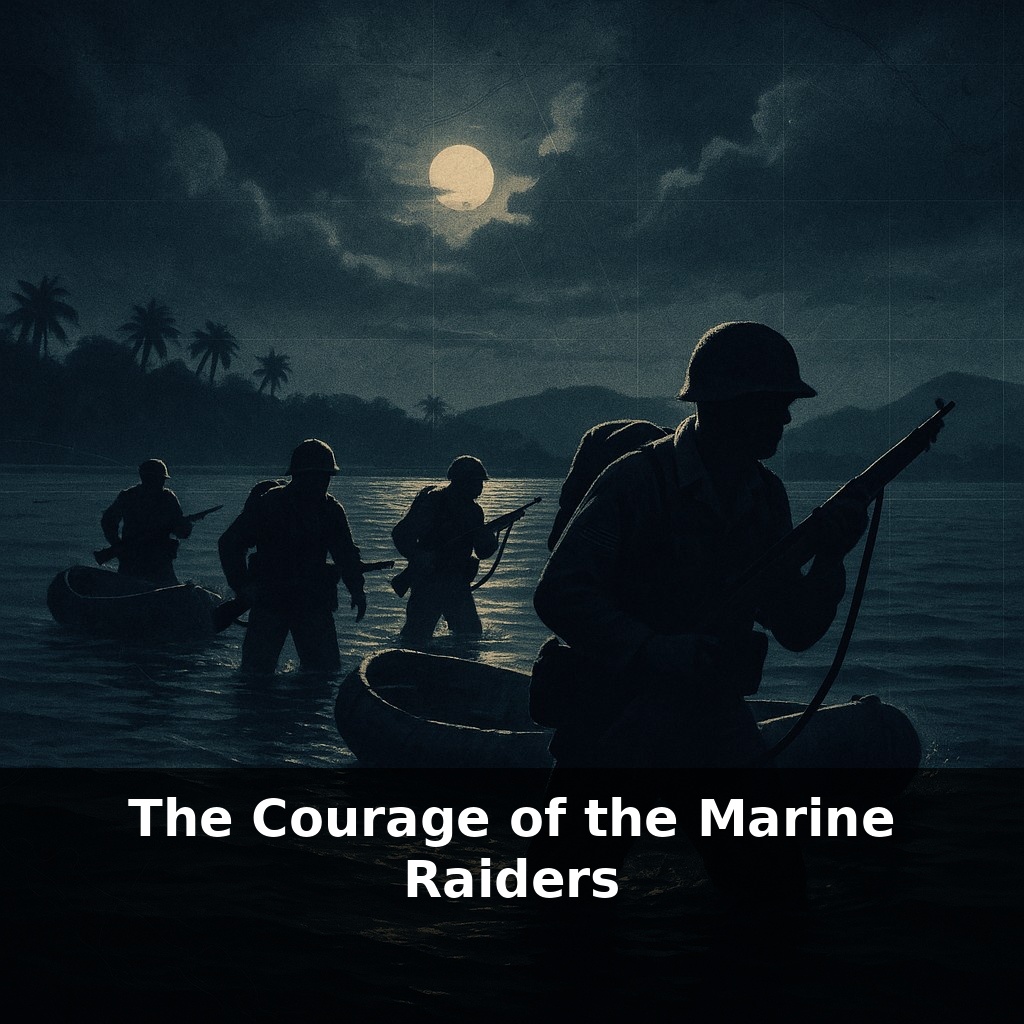
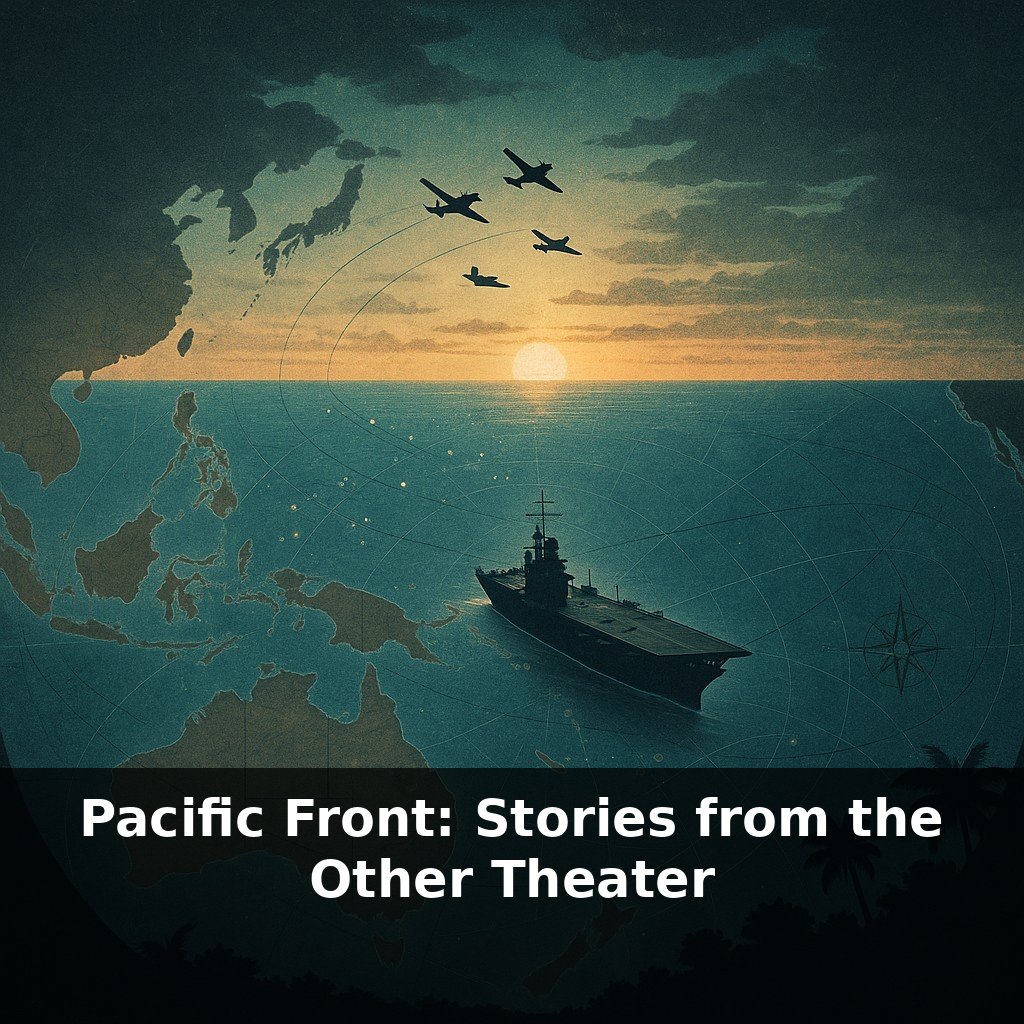
A few hundred Marines step silently from rubber boats into black Pacific water—no band, no headlines, just orders that most of them might not come back. This isn’t a last stand. It’s the first American offensive strike on land in the Second World War.
They move like a storm front—small, fast, and hard to predict. These Marines aren’t meant to hold ground for months; they’re there to hit, confuse, and disappear before the enemy truly understands what arrived in the dark. The men wearing Raider patches have volunteered to trade the relative pattern of regular combat for something stranger: missions where the plan might be little more than “land here, move fast, improvise the rest.”
They train for it ruthlessly. Long marches until the jungle feels like a second skin. Live-fire drills where mistakes hurt. Officers running beside privates, not shouting from behind. Their unofficial motto, “Gung Ho”—work together—wasn’t a slogan for posters; it was a survival rule. On a tiny atoll or a knife-edge ridge, if one man failed, the whole unit bled. The Raiders learned early that courage wasn’t loud. Most days, it sounded like one Marine saying quietly to another, “We go anyway.”
Raider courage wasn’t just about charging into fire; it was about accepting missions where the map itself was a question mark. Orders could sound almost absurd on paper: land on a nameless beach, cross jungle no one has scouted, strike an enemy force of unknown size, then vanish before dawn. They carried weapons, rations, and a kind of stubborn faith that the man next to them would solve the unsolvable. Like sailors steering by stars they couldn’t always see, they trusted fragments of intel, a compass bearing, and the instincts honed in training to carry them into—and back out of—the dark.
They also had to accept a strange kind of anonymity. While headlines followed big battles like Guadalcanal and Tarawa, many Raider actions were designed to leave no obvious signature. If things went perfectly, the enemy would be shaken, confused, misdirected—but never entirely sure who had hit them or from where. Courage here meant being willing to risk everything for an effect you might never personally see or be credited for.
The tools they carried matched that mindset. Raiders experimented constantly: silenced weapons, folding-stock carbines, early night-approach techniques, rubber boats packed with demolition charges. They weren’t just given gear; they were expected to adapt it, break it, improve it. A canteen might become a demolition timer weight, a rubber boat a stretcher under fire. Their commanders didn’t ask, “Can this be done by the book?” but, “Can this be made to work by dawn?”
That mindset shaped how they fought in very different roles. On some islands, they were the silent scalpel, slipping in to cut Japanese supply lines or seize a key piece of terrain just long enough for larger forces to land. On others, they became a human bulwark, holding razor-thin lines while heavier units regrouped. At Edson’s Ridge, Raiders dug in on ground so narrow and exposed that any retreat would have opened a direct road to the U.S. airfield. They stayed, night after night, under artillery, banzai charges, and close-quarters combat that turned foxholes into hand-to-hand arenas.
Their small numbers hid a disproportionate impact. When a Raider company cut a coastal radio station or destroyed fuel dumps, the result could ripple across hundreds of miles of ocean: convoys delayed, air raids blunted, enemy commanders forced into hasty, bad decisions. It was courage leveraged for strategic effect, the way a sudden gust can shift the entire course of a wildfire—not by sheer size, but by striking at exactly the right moment and place.
Even their disbandment showed a different bravery: accepting that their specialized role had done its job, and that their experience was now more valuable spread across the wider Corps. Many former Raiders carried their hard-won lessons into regular units, training a new generation to move faster, think sharper, and expect the unexpected. Their legacy wasn’t just in stories of daring raids, but in a changed idea of what Marines could be asked to do—and what they could dare to attempt when everything familiar fell away.
Raider courage also showed up in choices that never made after‑action reports. A radioman at Makin quietly stayed on a burning beach a few seconds longer so one more boat could find its way out in the dark. A young lieutenant on Guadalcanal shifted his whole platoon 20 yards at dusk because the ground “felt wrong,” then rode out a night attack from a position that let his men survive and counterattack at dawn. These were split-second decisions, but each demanded the nerve to act without reassurance that it was right.
Their leaders had to gamble, too. Approving a raid meant accepting that a small failure could become a very large disaster, and that success might only be visible weeks later in an enemy convoy that never sailed. In that way, they resembled a jazz ensemble onstage: each Marine expected to play his part precisely, yet ready to break the written score when the situation bent out of shape, trusting the others to hear the change and follow him through the unknown.
Their example hints at a future where courage is less about charging forward and more about holding steady amid information noise. As autonomous systems make rapid choices, someone still has to decide when to override, redirect, or abort. Think of leaders as lighthouse keepers in a digital storm, tending signals that keep swarms, sensors, and human teams aligned. The Raider story suggests those quiet, value‑anchored decisions may shape tomorrow’s Pacific contests as much as any breakthrough weapon.
Their story doesn’t end on those islands. Today’s Marine Raiders of MARSOC inherit that same bias for small, sharp actions in murky situations, but add cyber tools, drones, and data feeds to their kit. Your challenge this week: when a choice feels unclear, pause and ask, “What’s the smallest bold step I can take?” Then treat that step like a match in dry grass—tiny, but capable of reshaping the whole hillside.