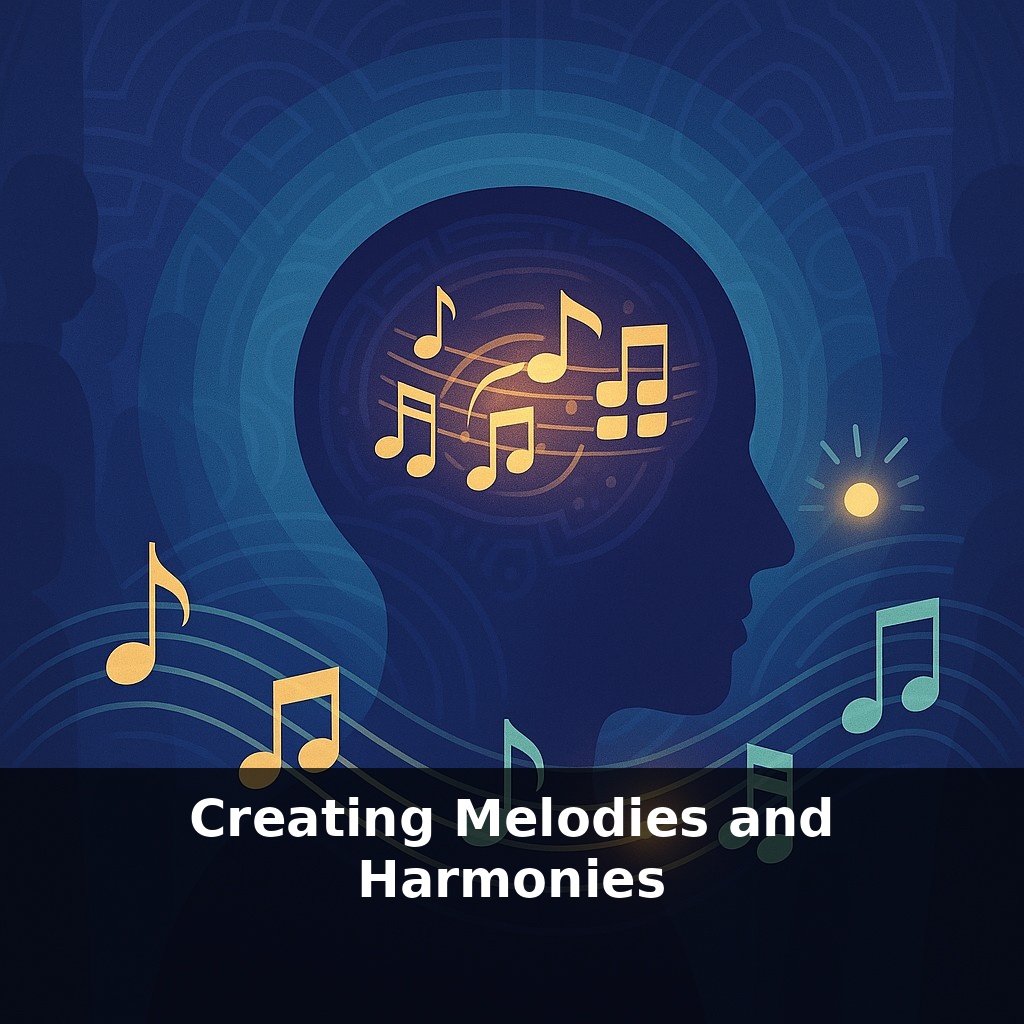
“Most hit songs lean on just a handful of chords, yet they feel endlessly new.” You’re on a crowded train, someone’s humming a tune you’ve never heard—by the second repeat, you’re humming too. How did your brain learn that melody so fast, and why does it already feel familiar?
That “instant familiarity” isn’t an accident—it’s your brain recognizing patterns it already likes. Research on hit songs shows most sections only lean on a small set of harmonic roles, yet feel rich because of how the tune moves over them: a leap that grabs your ear, a stepwise slide back down, a held note that suddenly lands on a more tense chord. Songwriters treat tiny ideas—a three‑note turn, a rhythm you can clap, a single surprising interval—like Lego bricks, snapping and re‑snapping them into place until they click.
You’ll notice great hooks rarely ramble. They often stay within a tight vocal range, repeat their core shape, then twist it slightly—a new ending, a delayed entry, a syncopated echo. Your brain predicts the next move, gets it half right, then is rewarded when the song answers “almost” the way you expected. In this episode, you’ll learn how to design those small, repeatable shapes so your own music lodges in listeners’ heads.
Instead of hunting for “inspiration,” think in terms of building blocks you can control. Research on pop hits shows sections often rely on only a few distinct chord functions, yet listeners report them as emotionally rich. That richness comes from how you combine scale degrees, intervals, and rhythm into clear, repeatable identities. Treat each small idea—a clipped rhythm on one note, a leap that always falls back, a two‑note call and answer—as a reusable tool. Like a coder with a tight standard library, you’ll move faster and keep things consistent while still sounding personal and fresh.
When you zoom in on melodies that stick, you’ll notice they’re not long speeches; they’re tight, repeatable phrases that know exactly where the “important” notes are. One way to think about this is in terms of scale degrees behaving like characters with different levels of drama. In a basic major key, 1 (do), 3 (mi), and 5 (so) feel stable; 2, 4, 6, and 7 carry more pull or suspense. Strong hooks usually plant their “home base” on a stable degree, then visit tension notes in short, purposeful bursts.
Listen carefully to choruses you love: often the first note of the main phrase is either the root (1) or the 3rd of the key, even if the chord underneath is changing. That anchors the listener. The more unstable degrees—like 4 leaning to 3, or 7 reaching for 1—tend to appear on accented beats or longer note values, so your ear has time to feel their “lean” and their release.
Interval choices shape personality just as much. Stepwise motion (moving by neighboring scale degrees) feels conversational and singable; leaps inject spotlight moments. Many successful hooks alternate the two: a leap grabs attention, then steps smooth it out. Crucially, big leaps often “resolve” by moving back toward where they came from, creating a satisfying arc instead of sounding random.
Rhythm turns all of this into something you can’t help but internalize. A tiny, distinctive rhythm—even on a single pitch—can define a song’s identity as strongly as its note choices. Repetition here is powerful: repeating the same rhythm over different notes, or shifting it one beat earlier or later against the groove, creates variation without confusion. Producers sometimes sketch a hook as a pure rhythm first (clapped, tapped, or spoken nonsense syllables), then map pitches onto that grid.
Harmony doesn’t just “support” these ideas; it can be used to spotlight them. Holding one melodic note while the chords change beneath it lets that note play multiple roles across the progression—consonant on one chord, tense on the next—without the singer moving at all. Conversely, you can keep the chords static and let the melody travel through stable and unstable degrees, creating motion over stillness.
Architects often start with a simple structural grid, then carve out unexpected spaces within it; in the same way, you can keep your chord palette modest and let your melodic and rhythmic decisions create the feeling of complexity.
Think of your hook like a username you use across multiple apps: the letters stay the same, but the context changes how it feels. Take a four‑note idea you like. First, try it as straight quarter notes, then as a dotted rhythm, then with one note stretched long at the end. Record each version over the same beat. You’ll notice some suddenly feel like a chorus, others like a more relaxed verse idea.
Now flip the process. Keep the rhythm identical, but change the contour: all steps up, then all steps down, then a small leap followed by steps. Each contour suggests a different emotional angle—uplifting, reflective, or urgent—without touching the groove.
Listen to a song like The Weeknd’s “Blinding Lights” or Dua Lipa’s “Levitating”: notice how a short motif keeps reappearing with slight rhythmic reshaping or a different high point. You’re not hearing “new” material each time; you’re hearing a familiar stamp rotated just enough to stay interesting.
Streaming platforms are quietly reshaping what “catchy” means. Short‑form clips reward hooks that hit fast, loop cleanly, and survive being ripped from their original context. Expect more motifs designed to work as 5‑second earworms that can stack into longer arcs, like LEGO bricks. As tools suggest intervals and functions in real time, your job shifts from “finding any idea” to curating which tiny cells deserve repetition, contrast, or silence in an always‑on feed.
Your challenge this week: capture three tiny melodic ideas a day—whistled on your phone, tapped on a table, or played on a soft synth. Each night, pick one and surround it with two contrasting “answers.” Treat them like alternate captions on the same photo, testing how mood shifts when you nudge contour, rhythm, or harmony around a fixed core.