A kick drum hits. Then a single low note joins it—and suddenly the groove feels twice as powerful. Here’s the twist: our ears are naturally biased against bass, yet most tracks you love quietly cheat that bias. Today, we’ll peek behind that trick and why it works so well.
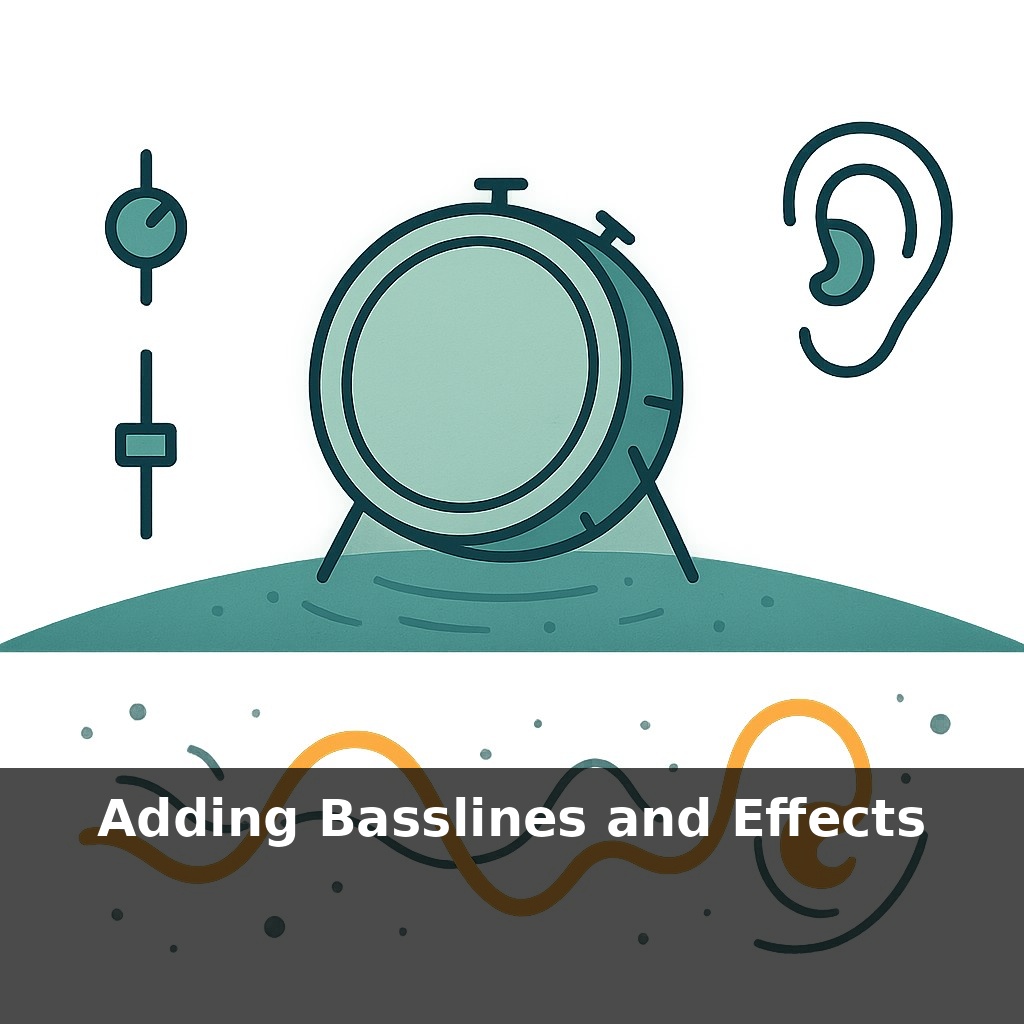
Most beginners do one of two things with bass: either they bury it so deep it’s barely there, or they crank it until everything else sounds small. Both feel powerful in the moment; both usually fall apart the second you play the track on a different system. That’s where basslines and effects step in as a team. The bassline decides *what* the low end is saying—rhythm, notes, attitude. Effects decide *how* it speaks—tight or boomy, upfront or distant, clean or gritty. And here’s the twist: the same simple pattern can feel weak, warm, or absolutely massive depending on how you shape it. In this episode, we’ll focus less on “fancy sound design” and more on making a few notes and a handful of effects carry real emotional weight, without wrecking your mix.
Most producers start by chasing “epic” sounds—endless presets, massive chains of plugins—then wonder why the track still feels flat. The missing piece is usually hidden in plain sight: the relationship between your low notes and the tiny decisions you make around them. A 2 dB EQ cut, a slightly shorter note, a touch more sidechain, and suddenly the whole track breathes differently. This is where you move from *placing* a bass to *directing* it. Rather than aiming for loudness alone, you’ll learn to aim for clarity, consistency, and energy that survives phone speakers, club systems, and everything in between.
A 50 Hz wave is almost seven meters long—longer than many bedrooms. That means when you play a low note, your room is “playing back” too: peaks, dips, and strange dead zones that can trick you into thinking your bass is wrong when it’s actually fine. Before touching plugins, do a simple test: play a steady low note and slowly walk around your space. If the bass vanishes at your chair and booms in the corner, you’re not hearing reality. Even basic bass traps or moving your listening position can make your next decision about tone or volume far more trustworthy.
Once you can reasonably trust what you’re hearing, zoom in on what your bassline actually *does* over time. Start with just drums and bass. Ask: does the pattern clearly tell you where the “1” is? If you mute the drums, can you still feel the pulse? Try three variations of the same idea: one super sparse, one moderately busy, one almost too busy. Record all three, loop them, and notice how quickly each becomes tiring or boring. This is arrangement, not sound design—but it sets the stage for every effect you’ll add.
Now, think about *frequency roles* within the bass sound itself. A simple strategy:
- One element handles true low end (sub or deep bass notes). - Another contributes midrange detail (a second synth layer, a duplicated track with different processing, or even a lightly distorted copy).
On the low element, keep processing focused and minimal: control dynamics so loud and soft notes don’t jump around, and gently shape the lowest octave so it doesn’t fight the kick or overwhelm everything else. On the mid element, you can be more aggressive—saturation, modulation, even subtle reverb—to create character that translates on laptops and phones.
Consider how movement over time affects emotion. A static note with an evolving filter or modulation can feel more alive than a busy riff with no change in tone. Automate a lowpass filter to open slightly in the chorus, or introduce a touch more distortion only when the arrangement needs to lift. Like changing camera lenses in a film, these shifts say, “pay attention now,” without turning the volume knob.
Finally, stay aware of loudness. If you crush your bass with heavy limiting, it might seem impressive in isolation but lose impact once streaming services turn it down. Aim for consistency rather than sheer level; use meters as a sanity check, but let your perception of punch and clarity guide you.
Think of effects as tiny, programmable decisions you make *over time*. For instance, set a compressor on your bass so it barely works in the verse, then automate the threshold so it bites harder in the chorus. Same notes, same sound source—suddenly the section change feels physical, not just “louder.” Or try this: duplicate your mid-bass, distort the copy until it’s nasty, then low‑pass it so it mostly adds texture around the edges of the original. Blend it just until you *miss* it when muted. That’s your new “energy fader” for intense moments.
You can also use delay and reverb as rhythmic punctuation instead of permanent haze. Send only the last note of a phrase to a tempo‑synced delay so the tail answers the groove, then dies before the next bar. Or automate reverb send so a single fill blooms into space, then snaps back to dry. In a way, you’re running a live mixer in slow motion: deciding when the bass steps forward, when it steps back, and when it momentarily lights up the whole room.
A 50 Hz wave can slosh across a bedroom like a slow tide, but we’re headed somewhere stranger: spaces where “up” and “down” exist in sound. As immersive formats spread, your low end might sit *under* the listener while delays orbit their head. Add haptic gear and that same line can buzz in wrists or car seats, like a second sub made of touch. AI tools will happily spit out 100 bass variations; your real edge becomes taste—choosing when a tiny filter move or one extra note changes the story, not just the sound.
Treat this stage like colour‑grading a finished film: you’re no longer asking “what happens?” but “how should it feel?” Tiny moves—like a filtered echo on the last note of a phrase or a brief widening of a distorted layer—can hint at tension, relief, or mystery, even in a four‑bar loop. Chase those micro‑shifts; they’re where replay value hides.
Your challenge this week: build a 4‑bar loop with drums and a single bass sound. First, make a version with *no* effects at all. Then create three alternate versions that use only automation (filter, distortion, send levels) to change the emotional feel—without adding new notes. A/B them on speakers, headphones, and a phone, and keep the one that still feels alive everywhere.