Half the battle in mixing isn’t adding new plugins—it’s learning what to *mute*. A crowded session, the chorus hits, and instead of feeling bigger, everything gets smaller. How can removing sounds make your track sound larger? That’s the paradox we’re unpacking today.
A pro mixer can move a vocal from “buried” to “front and center” with nothing but a 2 dB fader move and a tiny EQ tweak—and suddenly the whole song feels more expensive. That’s the level of sensitivity you’re training for now: hearing and shaping details most casual listeners never notice consciously, but always *feel*.
In this episode, we’ll zoom in from the big-picture decision of *what* plays, to the microscopic decisions of *how* each sound sits. Think of it like fine‑tuning a racing bike: the frame is chosen, but tiny adjustments to tire pressure, seat height, and gear ratios decide whether you win or wipe out.
We’ll connect three levers—level, tone, and space—to concrete outcomes: punchier drums without turning them up, clearer vocals without harshness, and wide mixes that still hit hard in mono. Then we’ll turn these ideas into repeatable habits you can practice in every session.
Now we’ll ground those artistic moves in the physics and psychology behind them. Every fader ride, EQ notch, or pan move is secretly a negotiation with your listener’s ears: how loud something *seems*, where it *feels*, and whether it *grabs attention* or fades into the background.
Psychoacoustics tells us your brain doesn’t measure sound like a meter; it cheats. It’s more sensitive to some frequencies, easily fooled by small level changes, and strongly guided by contrast.
Think like a lighting designer: instead of “making everything bright,” you decide *what stays in shadow* so the subject stays unmistakable.
Think of your mix as a negotiation between four forces: volume, frequency, panorama, and movement. They’re all pulling on the same perception: *“What should my brain care about right now?”*
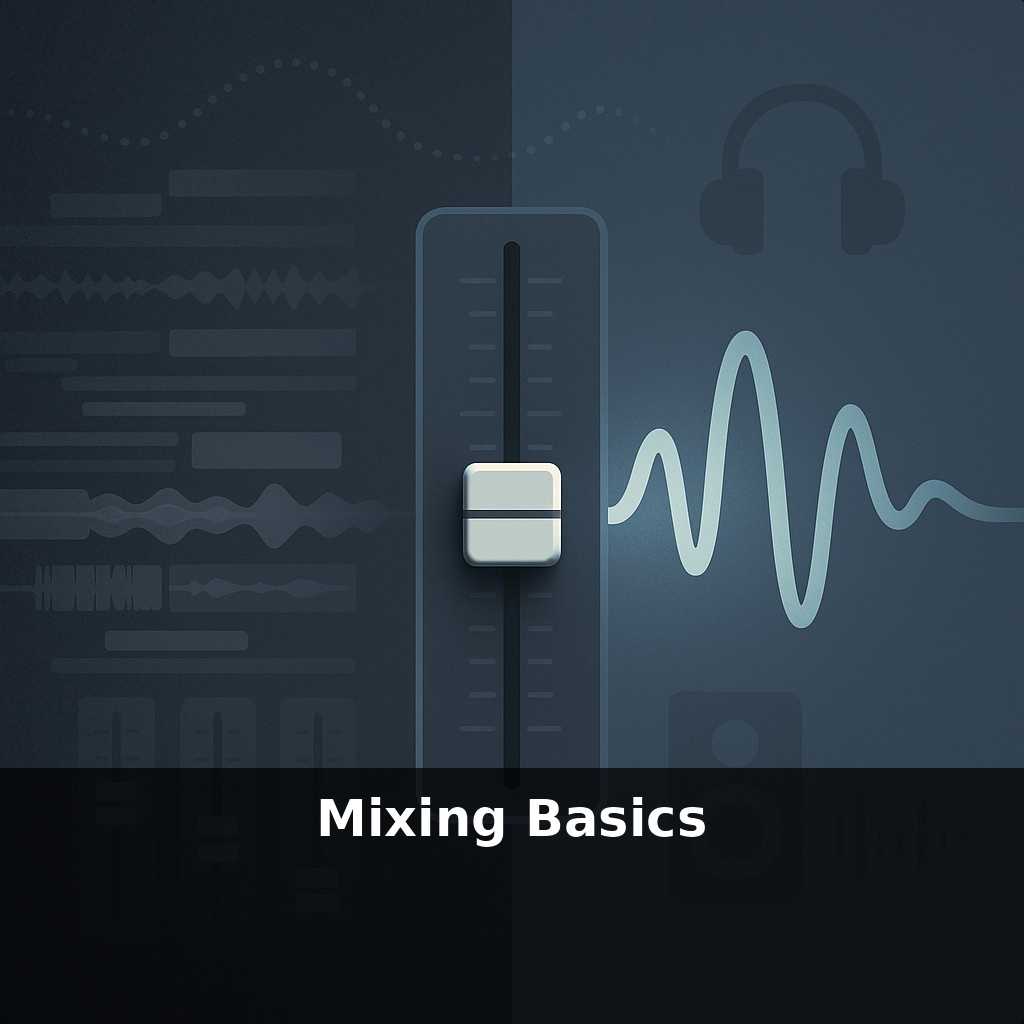
Start with level, but resist the urge to “set and forget” faders. Your ear barely notices a 1 dB change, yet a 3 dB nudge can flip the star of a section. That means micro‑moves matter: a snare that creeps up 1.5 dB in the chorus, a synth that dips 2 dB under a vocal phrase, a bass that rises only in the last chorus to feel like a lift without any new part. Riding levels over time is often more powerful than reaching for another plugin.
Next, zoom into *where* each part lives on the spectrum. Instead of thinking “make the kick bigger,” ask, “in which *band* should it win the argument?” A kick that dominates 60–80 Hz may feel huge on big speakers but vanish on phones; one that speaks more in the 100–120 Hz area trades sub-weight for translation. The choice is aesthetic and strategic, not “right” or “wrong.”
Now layer in how the ear cheats. Because lows and highs need more actual energy to feel as loud as mids, you can tilt the balance of a mix without touching master volume. Gently boosting low and high regions on individual elements—not just across the whole mix—can create a sense of size while keeping meters under control. But every push should have a trade‑off you accept: more air in a vocal might expose sibilance; extra low‑end in the bass might mask the kick’s body.
Stereo placement is your next lever. Small pan differences and tiny delays between left and right can imply width without obviously “effecty” processing. But each widening move risks hollowing out the center. Treat the phantom center like prime real estate: protect it for elements that must survive on a single phone speaker.
Finally, consider dynamics as arrangement in disguise. A slower compressor that lets transients through makes something feel closer and more urgent; a faster one smooths the edges so parts blend. Instead of asking “how much gain reduction is normal?” ask “should this sound behave like a foreground voice or background texture?”
Think of your session like designing a stadium: you’re not just deciding *who* plays, but *where* every speaker stack points and how loud it hits each seat. Take your kick and bass: instead of fighting, try an experiment—nudge the kick’s “weight” slightly lower and let the bass own a bit more in the 120–200 Hz area. Then, pull both down 1–2 dB and see if the groove still feels just as strong. If it does, you’ve just created headroom without losing impact.
For presence, don’t only chase the usual 2–5 kHz area. Try adding a hint of “character” somewhere unexpected: a gentle bump around 1.5 kHz on a synth, or a narrow boost at 8–10 kHz on a hat, then compensate with a tiny level dip. Notice how a frequency tweak can feel like a volume move.
Play with micro‑contrast: automate a 0.5–1 dB dip on pads *only* when the vocal phrase starts. The pad will seem to “duck” even if you’re not using sidechain—your ear simply locks onto the vocal more easily.
Future mixing might feel less like finishing a stereo “picture” and more like coding a flexible sound-world that reshapes itself. A track could subtly re‑balance when you switch from earbuds to a car, or tilt its energy for late‑night listening versus a gym session. Think of it like responsive web design for audio: one mix “codebase,” many listening layouts. As AR layers music onto real spaces, you’ll decide not just *what* is heard, but *where* it appears around the listener.
Treat each mix like testing a prototype car: you don’t really know it until you drive it on different roads. Your home setup is just one track; take rough bounces to a friend’s speakers, cheap earbuds, even a noisy bus. Notice how your balances, tone choices, and space shift. The goal isn’t perfection everywhere—just intentional trade‑offs you actually recognize.
Start with this tiny habit: When you open your DAW, pull all your faders down by just one dB and listen to 10 seconds of your rough mix at that lower level. Then, nudge up only the vocal or main instrument by a hair—just one tiny move—until it feels clearly in front. Don’t touch plugins yet; just train your ears on balance for those 10 seconds. Do this every time you open a project, and you’ll quietly build your mixing instincts without overwhelming yourself.