Some of the most iconic tracks in history are built from audio that’s less than a second long—flipped, stretched, and unrecognizable. You hit play, a loop starts, and suddenly you’re asking: am I creating something new… or just arranging someone else’s ideas?
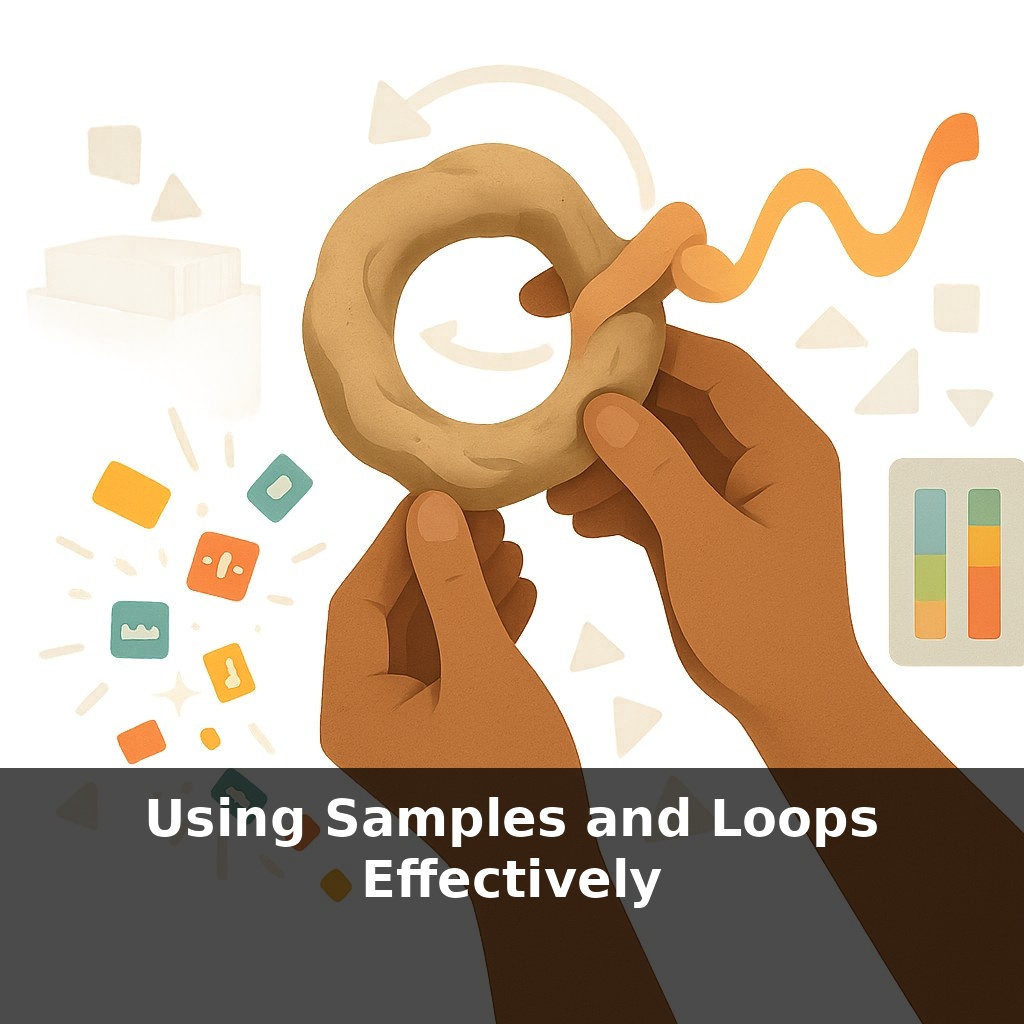
In this episode, you’ll start treating samples less like shortcuts and more like raw clay. That tiny snare hit, vocal chop, or dusty drum break isn’t just “someone else’s sound”—it’s potential energy. You decide whether it snaps into a generic pattern or mutates into something unmistakably yours.
Modern libraries make it trivial to drag in polished material and have something “finished” in minutes, but that convenience is a trap: if you stop there, your track risks sounding like thousands of others built from the same source. The real fun begins when you push beyond plug-and-play: slicing, reversing, pitching, stretching, and reordering.
We’ll explore how to transform a loop until it no longer feels like a preset groove, how to blend it with your own synths or recordings, and how to stay safely on the right side of sampling law while doing it.
Think about how fast sample culture is moving: millions of loops are downloaded every month, and the same packs show up in countless productions. That means your advantage isn’t *having* sounds—it’s how you bend them to your taste and context. Instead of scrolling endlessly for “the perfect loop,” you’ll get further by committing quickly, then nudging it toward your track: shift the groove against your kick, carve space with EQ, automate a filter so it breathes with your arrangement, or resample your own synth line. The goal here isn’t hiding your sources—it’s making them serve your musical point of view.
Start with one simple question before you drop anything onto the grid: is this a *centerpiece* or a *supporting actor*? You’ll treat the same material very differently depending on its job. A vocal hook or a rare drum break can carry the track; a hi-hat loop or texture might just fill space. Decide early, then shape everything around that decision instead of letting the sample dictate the song.
For centerpiece material, zoom in until you find the most charismatic fragment: the two-note bend that feels emotional, the single bar of drums that has perfect swagger. Build *around* that fragment instead of using the entire file. Turn it into a motif: repeat it, answer it with a synth line, or move it to different points in the bar so it feels like call-and-response with your kick or bass. When you do this, your track stops sounding like “Loop #147” and starts sounding like “your idea that happens to use found sound.”
Supporting loops invite a different mindset. Treat them like scaffolding in architecture: something that helps you construct the building but doesn’t have to stay in its original form. You might low-pass a percussion loop so it becomes a soft shuffle behind your drums, or pan tiny chopped hits from a melodic loop to create width without exposing the original tune. Sidechain them gently to your main elements so they breathe with the groove instead of fighting for attention.
Variation is where loops earn their keep. The danger isn’t using a loop; it’s letting it run untouched for three minutes. Introduce micro-changes: mute the last hit every 4 bars, automate a subtle low-pass during transitions, or swap one slice for a reversed version in every 8th bar. Over a whole arrangement, those tiny shifts keep listeners engaged without you having to design new material constantly.
Finally, don’t forget your own recordings. Clap, tap a mug, sing a rough idea into your phone, then layer or process these alongside commercial material. The blend of “perfect” and “imperfect” is often where personality lives.
Your challenge this week: pick one loop and one one-shot, and force yourself to build a 60-second sketch where *no* bar is an exact copy/paste of another. Use mutes, automation, rearranging, and your own recorded sounds to create continuous, evolving movement.
Treat a loop like a live musician you’ve just hired: you wouldn’t ask them to play the same four-bar phrase, at the same intensity, for the entire gig. You’d ask for quieter sections, fills before big moments, and small twists that react to the rest of the band. Do the same with your samples—especially around transitions. For example, before a drop, strip your main loop down to only its highest notes, then let a filtered, delayed tail spill over the barline so the impact feels earned, not just “next.”
Concrete moves: duplicate your loop to a new track and brutally distort or bit-crush it, then only *unmute* that gnarlier version on every 16th bar as a “hype burst.” Take a melodic fragment and feed it into a granular or shimmer reverb, printing the result as a new texture bed that quietly glues sections together. Or borrow just the rhythm of a drum loop by turning its transients into MIDI, then triggering your own drum kit—same groove DNA, completely different fingerprint.
Expect sampling to become less about “finding the perfect loop” and more about steering adaptable material. As AI reshapes audio in real time, your taste in *how* something is transformed will matter more than the raw source. Think of it like sports scouting: everyone sees the same rookie, but only some coaches build the right system around them. Meanwhile, stricter automated flagging will reward producers who develop recognizable “fingerprints” in their edits, not just their sound palette.
Instead of chasing “perfect” material, start noticing how small choices—where you mute, where you bend pitch, where you automate a filter—quietly steer the whole track. Over time, you’ll recognize your own patterns, like a signature way you leave rhythmic “gaps” or smear transitions. That recurring set of quirks is what eventually reads as *your* style.
Here’s your challenge this week: produce a 16-bar loop-based sketch using only one drum loop, one melodic loop, and one texture/atmosphere sample, and make them sound like they belong together. First, chop or time-stretch each loop so they all lock to the same tempo and key, then use at least three techniques from the episode—like EQ carving, sidechain compression, transient shaping, or filtering—to give each sound its own space. Next, create at least two arrangement variations (for example: “intro” with filtered drums and texture only, and a “drop” with full drums and melody) using muting and automation instead of adding new sounds. Finally, bounce a rough 60–90 second arrangement and save it as “Loop Challenge – [date]” so you can compare your progress with future experiments.