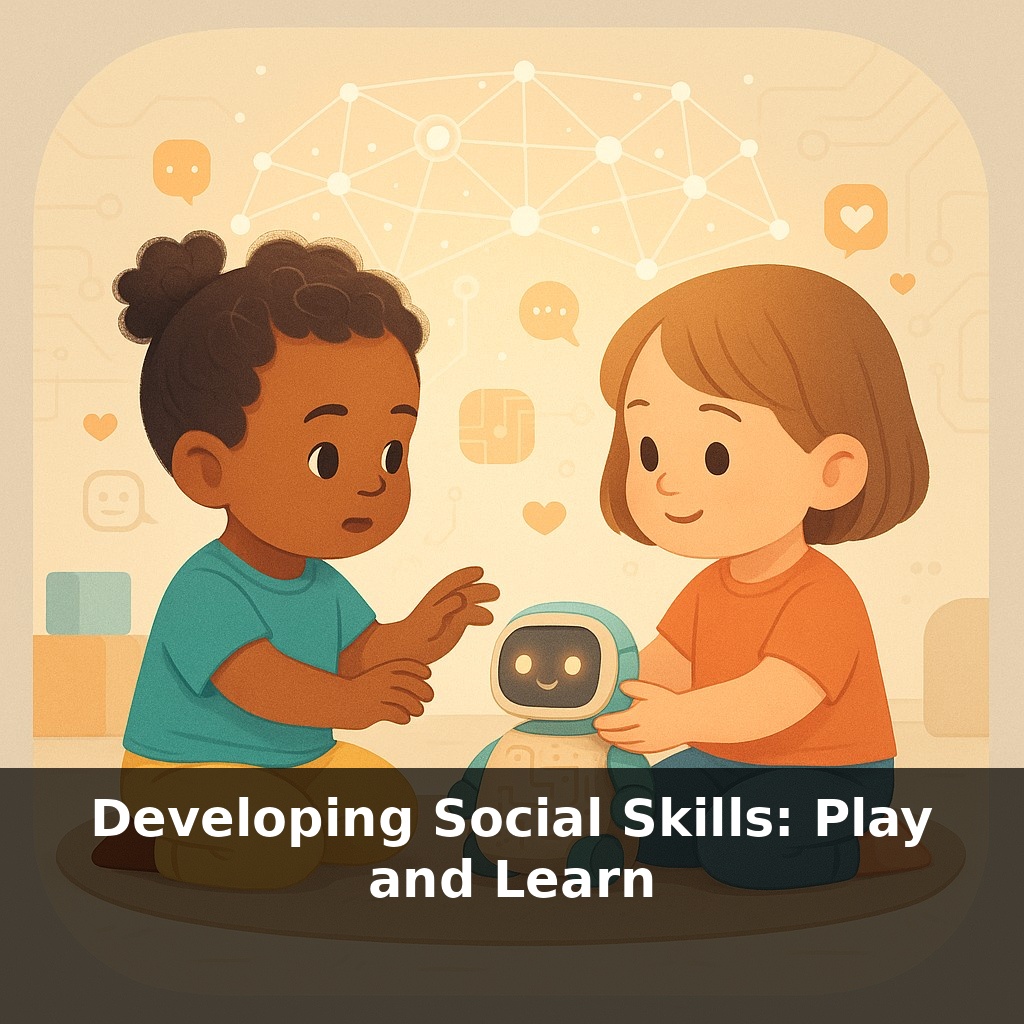
By the time your toddler starts kindergarten, roughly nine out of ten brain connections they’ll use are already in place. Consider this: two toddlers, one toy, and zero clear rules. How they choose to interact in that moment can quietly shape their future friendships.
Ninety percent of brain growth happens before kindergarten, yet no one hands toddlers a “how to people” manual. Instead, they experiment in real time: swiping toys, copying laughs, hiding behind you, then peeking out to see who’s watching. Beneath the chaos, they’re running thousands of tiny social “tests” a day.
Here’s the twist: it’s not just *what* they play with that matters, but *how* the play is shaped. When your child chases a friend around the couch, that wild giggle-fest teaches very different skills than a calm, turn-taking game on the floor. One stretches bravery and reading other kids’ signals; the other builds patience, self-control, and early negotiation.
Across many cultures and studies, the same pattern shows up: toddlers who get rich practice in both kinds of play—wild and loose, gentle and guided—tend to handle school, stress, and teamwork more smoothly later on.
Here’s the catch: toddlers don’t learn these social moves from adults explaining “be kind” speeches—they learn them in the messy middle of real interactions. A slight shove at the slide, an eager “mine!”, a surprised look from another child: these are like live pop quizzes in reading faces and adjusting behavior. And because a toddler’s focus is so short, the “questions” keep changing. A parent who gently steps in—adding just enough structure, then stepping back out—turns ordinary moments at the park, playgroup, or living room floor into a rotating lab for cooperation.
Most toddlers don’t walk over to another child and think, “Time to practice cooperation.” They spot a truck, a tower, or a tablet—and *that* becomes the center of the social universe. Objects are magnets that pull kids into each other’s orbit, which is exactly where early cooperation, conflict, and comfort get rehearsed.
This is why both free play and light structure matter. Left alone with a pile of blocks, toddlers naturally test out roles: the destroyer, the builder, the observer waiting for a safe moment to join. Add a simple rule—“you add one block, then your cousin adds one”—and suddenly they’re not just stacking; they’re coordinating, waiting, and noticing what the other child does. You’ve nudged the scene from parallel play toward true back-and-forth.
Crucially, toddlers can only hold that back-and-forth for a few minutes before the moment frays. Their attention shifts, emotions spike, or a new toy steals the spotlight. Rather than fighting this, smart scaffolding works *with* that rhythm. Think of tiny, repeatable “social rounds”: a quick song-with-actions, a mini hide-and-seek behind the couch, a two-turn race with cars. Each round has a clear start, middle, and end, giving children frequent chances to reset, rejoin, or bow out without it turning into a meltdown or power struggle.
Conflict inside these rounds is not failure; it’s curriculum. When two kids lunge for the same dinosaur, you can quietly shape what happens next. Offer simple scripts—“my turn, then your turn,” “you can both see it”—or create a choice—“dino can jump or sleep; which first?” Over time, those phrases become tools toddlers reach for themselves, especially if you stay neutral instead of declaring a constant “winner.”
Parents often worry that stepping in will “ruin” the moment. The research points the other way: brief, calm guidance early on leads to smoother, more independent play later, because children internalize those patterns. You’re not running the show; you’re designing the stage so that kindness, patience, and courage have room to appear again and again.
Think of your living room like an architect’s studio for social skill “blueprints.” Each tiny game redraws the floor plan. One afternoon, you might lay out a “sharing circuit”: two stuffed animals, one pretend stroller. “Bear rides to the couch, bunny rides back.” No lecture, just a playful route that quietly trains waiting, watching, and trading roles.
Or try “delivery service” with blocks: your toddler is the driver, you’re the customer, a sibling is the helper. You rotate jobs every two deliveries. Suddenly they’re coordinating, checking where others are, and coping when a tower “accidentally” tips.
Screens can join in without taking over. Use a short clip of dancing animals, then pause and say, “Your turn to make up a move, then mine.” The device becomes a starter’s whistle, not the whole game.
Notice how these setups don’t demand perfect manners. They create small, repeatable missions where bumps, protests, and recoveries are all part of drafting stronger plans for the next round.
Strong early cooperation can do more than ease toddler playdates; it may quietly rewire how families, schools, and workplaces function. As AR toys evolve, two toddlers across a city might stack the same virtual tower, rehearsing negotiation from different couches. Policymakers are already eyeing social skill indicators when funding early programs, much like credit scores shape loan offers. If that trend grows, tomorrow’s “report cards” could nudge whole communities to protect playful, relationship‑rich time.
Your toddler’s “people skills” won’t come from one magic app or one perfect playdate, but from hundreds of tiny experiments that add up, like steps on a trail. As tech shifts, keep asking: does this moment invite my child to notice, wait, respond? If not, tweak the setup. You’re not chasing flawless manners; you’re guiding a living, flexible practice run for real life.
Before next week, ask yourself: 1) “When my child plays (with blocks, pretend games, or board games), do I step in too quickly—what would it look like if I waited 10 more seconds before helping so they can practice problem-solving or turn-taking on their own?” 2) “During our next playtime, how can I deliberately model one specific social skill—like sharing, taking turns, or reading facial expressions—and then gently name it out loud so my child can see what it looks like in action?” 3) “Thinking about a recent playdate or playground visit, when did my child seem unsure socially (for example, joining a group, handling a ‘no’, or losing a game), and how could we replay that moment at home through a quick role-play game to give them a safe practice round?”