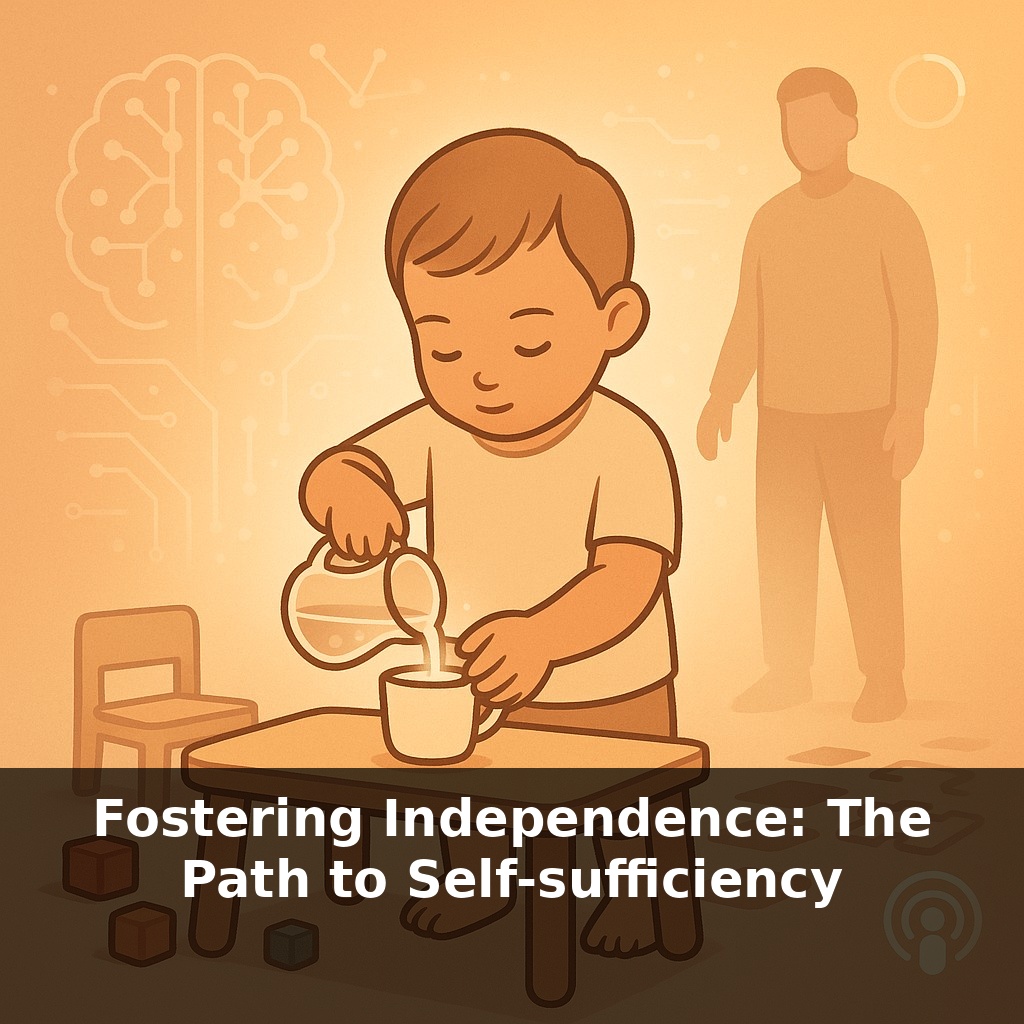
About three-quarters of a toddler’s brain growth happens before preschool—yet many adults still tie their shoes, pour their water, and solve every puzzle for them. This well-meaning help, though, could be unintentionally stunting their ability to grow. What steps can you take to foster genuine independence for your toddler?
Toddlers don’t wake up one day suddenly "ready" to do things alone; readiness is quietly built through consistent practice and small steps that reinforce their confidence in their abilities. What feels like a tiny moment—letting your child press the elevator button, carry the napkins, or pull up their own pants—is actually practice for bigger leaps later. And here’s the twist: the goal isn’t to get them to do everything by themselves as fast as possible. It’s to create a rhythm where they expect to *try* first, knowing you’re nearby if they get stuck. That rhythm looks different in every family. A parent working from home might lean on independent play so they can finish emails; another might focus on self-help skills around busy mornings. The common thread is “guided independence”: adjusting how much help you give today so your toddler can do a bit more tomorrow—without either of you burning out.
That rhythm you’re building doesn’t just make mornings smoother; it quietly reshapes how your toddler sees themselves: as someone who *can* act, not just be acted upon. Research shows that small, repeated chances to choose and help don’t just cut down on power struggles—they train the “I can figure this out” voice they’ll lean on in school, friendships, and later risks like joining a new club. Think of daily routines as low-stakes practice grounds: swapping one rushed shortcut (you doing it for them) for a slightly slower moment where they get the first attempt, and you’re the backup plan, not the boss.
When you zoom in on what actually changes a toddler’s behavior, three levers show up again and again in the research: *how* you offer control, *how* you break down tasks, and *how* you respond when they get stuck.
First, control. The studies on choice aren’t about endless options; they’re about **predictable, bite-size decisions** that signal, “Your input matters.” Think of it as setting a tiny “budget” of choices they can reliably count on each day—two shirts, which fruit, which book first. The power isn’t in the specific decision; it’s in the repeated experience of having a say without having to fight for it. Over time, many kids stop testing every boundary because they trust that some real choices are coming.
Next, task design. Toddlers rarely refuse *because* something is hard; they refuse because it feels impossibly big or vague: “Get ready,” “Be gentle,” “Help clean up.” When you quietly slice a big demand into two or three tangible pieces—“First shoes, then coat,” “Blocks in this bin, cars in that one”—you turn an overwhelming job into a short, winnable sequence. Each small success is like a deposit in their internal “I can do hard things” account. Raver and others have shown that these repeated, scaffolded efforts show up years later as stronger focus and planning.
Then there’s what you do at the edge of their ability. The most powerful moments often happen *right* where they’re about to give up. If you jump in and finish the puzzle or yank the sock on, their brain gets the message: “When it’s tricky, someone else takes over.” If instead you narrate and model—“You pulled so hard! Try a little wiggle like this”—you’re lending your calm problem-solving skills *without* stealing the final move. That small pause before rescuing is where executive function gets a workout.
Stress biology backs this up. Gunnar’s cortisol findings suggest that toddlers who expect steady backup can approach new challenges with a quieter stress response. The security of “someone will help me *figure it out*, not *take it away*” changes how threatening a new task feels.
Fine-motor chances matter, too. Offering spoons, small pitchers, Velcro shoes, or low hooks isn’t about Montessori aesthetics; it’s about aligning the environment with what their hands and brain are ready to practice. When the setup fits their size and skill, they need less verbal coaxing—and more of the work shifts from your nervous system to theirs.
A parent in a rush might think, “It’s faster if I just do it,” but watch what shifts if you treat mornings like a tiny cooking project. You’re still the head chef, but your toddler gets a real job: carrying the “ingredients” (diaper, shirt, socks) from the basket to the bed, peeling off socks, pressing the zipper tab. You’re not aiming for speed; you’re building a repeatable “recipe” they learn by doing alongside you.
Over a week, that same child who used to run away at dressing time may start anticipating their steps, grabbing the sock without a prompt. You’ll notice less wrestling and more small, focused tries—like the way a novice cook slowly stops asking, “What now?” after making the same dish a few times.
You can use the same structure at dinner: your child’s job is placing one fork at each spot, then wiping the table with a damp cloth. Consistency matters more than complexity here. The task stays mostly the same; their share of it grows as their confidence does.
As kids practice these tiny decisions now, they’re also learning how to pilot themselves in a world that will change faster than we can predict. Think less “checklist of skills” and more “settings panel” you’re helping tune: curiosity on, persistence up, fear of mistakes dialed down. Those same settings are what teens draw on when facing social pressure, and what adults lean on when switching careers or countries in an economy where stability isn’t guaranteed.
As you test new forms of guided independence, notice how your own habits shift too—maybe you start narrating less and observing more, which helps uncover your child’s quirks and strengths, giving you a clearer “map” for when to step in—and when to step back. Over time, these small tweaks can uncover your child’s quirks and strengths, giving you a clearer “map” for when to step in—and when to step back.
Before next week, ask yourself: 1) “Where in my daily routine do I still default to ‘rescuing’ others—like jumping in to solve my partner’s scheduling issues or my coworker’s messy inbox—and what would it look like to step back and let them figure it out while I offer support only if they ask?” 2) “If I picked one area of my own life to grow more self-sufficient in this week—like managing my budget without ‘checking with someone,’ cooking three meals without takeout, or handling a tricky call on my own—what exactly would I do differently, and how will I know I actually stretched myself instead of opting for the easy route?” 3) “When someone around me struggles (a child with homework, a colleague stuck on a project), how can I shift from giving them the answer to asking one or two guiding questions that help them think it through themselves, and what’s one real conversation this week where I’m willing to try that?”