 2min preview
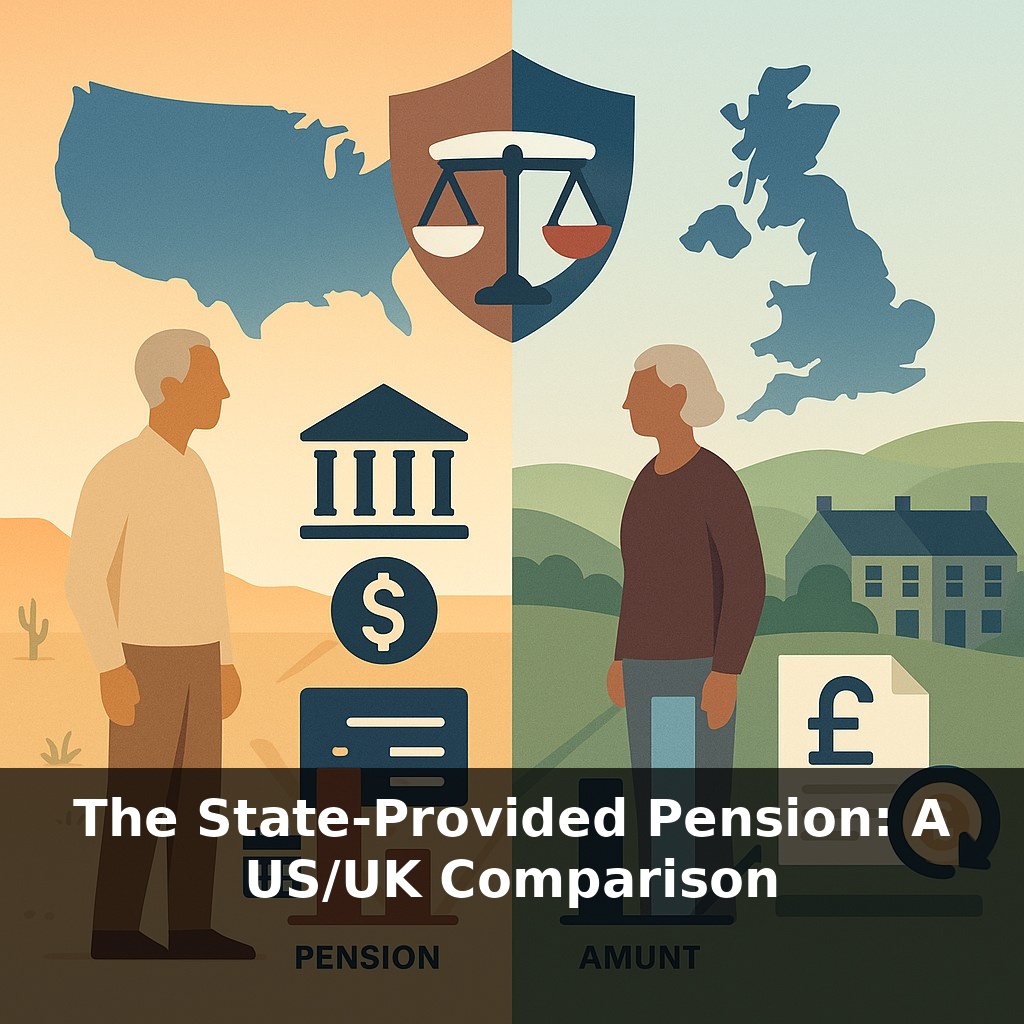
The State-Provided Pension: A US/UK Comparison
📝 Transcript
About half of retirees in rich countries rely on a single government check to keep the lights on—yet that check can look wildly different depending on your passport. Today, we’re stepping into two retirements: one in Texas, one in Yorkshire. Same age, same work history… very different safety nets.
By now, our Texan and Yorkshire retirees both know a monthly deposit is coming—but how that number is built, and how much control they had over it, is where the stories really split. In the U.S., your eventual benefit is stitched together from decades of earnings records, with higher earners getting larger checks but with a twist that quietly favors lower earners. In the UK, today’s system looks more like a fixed menu: collect enough qualifying years and you’re served a largely standard portion, with extra help only if your income falls below a certain line. These differences shape real choices: do you push for a raise, chase overtime, or switch to a higher-paying sector—and how much does that actually move the needle in retirement? As we dig deeper, we’ll see that “work more, get more later” isn’t equally true on both sides of the Atlantic.
Now we zoom out from our two retirees and look at the systems they’re plugged into. Social Security behaves a bit like a lifetime scoreboard: each extra year of decent earnings can nudge your final tally, and delaying your claim can boost the points you cash in each month. In the UK, once you’ve banked enough qualifying years, extra effort mostly matters through separate workplace schemes rather than the State Pension itself. Inflation rules add another twist: U.S. benefits follow price rises, while the UK “triple lock” links increases to whichever is highest—prices, wages, or 2.5%, a promise that’s powerful but politically fragile.
Subscribe to read the full transcript and listen to this episode
Subscribe to unlockSubscribe for $1.99/month to unlock the full episode.
From this course

Retirement Around the World
6 episodesUnlock all episodes
Full access to 6 episodes and everything on OwlUp.
Subscribe — $1.99/monthLess than a coffee ☕ · Cancel anytime