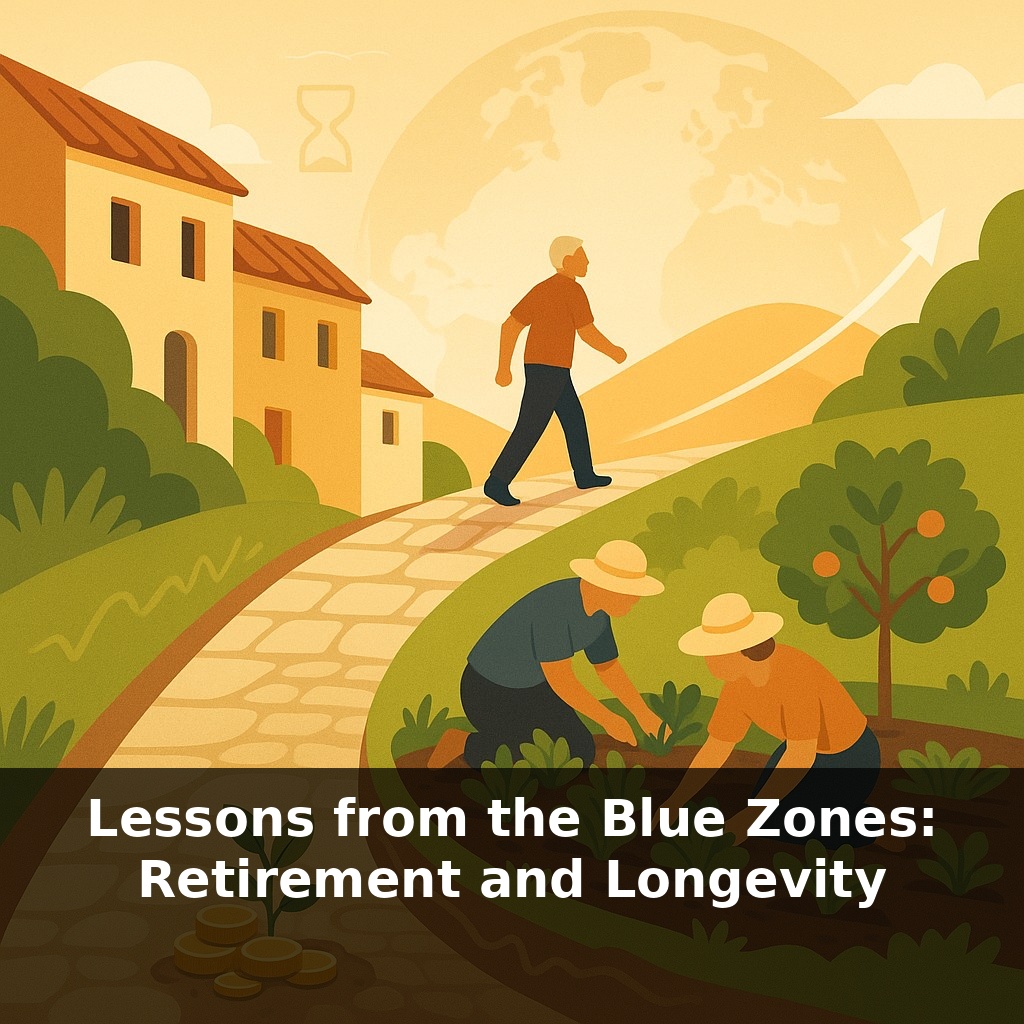
On a steep stone street in Sardinia, 89-year-old Giovanni strides daily, defying conventional retirement norms with unparalleled vitality. In Okinawa, women in their 90s tend tiny vegetable plots. These aren’t exceptions—they’re the norm. This vibrant lifestyle upends conventional wisdom about aging, suggesting that how we approach the last third of our life could unlock secrets to longevity across cultures.
A Costa Rican centenarian once told a researcher, “I never retired. I just changed jobs.” That’s the quiet revolution hiding inside the Blue Zones: retirement isn’t a finish line, it’s a redesign. In Nicoya, elders shift from farm labor to mentoring; in Loma Linda, from full-time careers to volunteering and caregiving. Their days still have structure, responsibility, and reasons to get up in the morning—just without the time clock. Think of it less as stepping off the field and more as changing positions on the team. Income sources, daily routines, and social roles all adjust, but they don’t disappear. In this episode, we’ll connect those long-lived patterns to practical choices: how you spend, where you live, who you see regularly, and what you commit to when paid work no longer defines your calendar.
In every Blue Zone, money supports the plan—it’s never the plan itself. Elders don’t chase “more”; they protect “enough” and then pour their energy into how they live, not how much they accumulate. That shows up in surprisingly modest homes, shared gardens, and routines that cost little but pay out in health and connection. Their environments are set up so walking to a friend’s house is easier than buying new gadgets online. As we zoom in on your own future, we’ll treat your finances less like a scoreboard and more like a toolkit: Which tools do you actually need to build a life you want to wake up to?
In Okinawa, researchers found something striking: when people lose their moai—a small, committed social group—their health markers worsen almost as predictably as if they’d started smoking. That’s a clue to how these communities “invest” for long life: time and attention flow first into people, not products.
Across the Blue Zones, three patterns keep showing up when paid work winds down.
First, they automate the basics. In Nicoya, families often grow staples—beans, corn, fruit—year after year on the same plots. Housing is simple, owned outright more often than not, and daily food comes from near home. The result isn’t romantic rustic living; it’s fewer fixed costs and fewer decisions. When your core needs are predictable, you don’t wake up every morning negotiating what you can afford to enjoy.
Second, they bias toward “active necessities.” In Ikaria and Sardinia, the tasks of living double as movement and social time. Steep walks to a neighbor, tending vines, going to the open-air market—these are obligations that quietly keep people fit and connected. Contrast that with a car-dependent suburb where every errand sits behind a steering wheel and a checkout screen. One environment spends your energy and money while topping up your health; the other mostly spends.
Third, they treat community as an asset with a return. In Loma Linda, it’s common to rotate shared meals, caregiving, even rides to appointments. No spreadsheet records it, yet it dramatically lowers both cash outlays and worry. When one person has a health scare, others show up with food, advocacy, and rides; nobody has to purchase a solution alone.
Think of it less as “cutting expenses” and more as rewiring where value comes from. A weekly shared potluck can replace three solo restaurant meals. A move to a walkable neighborhood might increase rent but reduce car dependence, healthcare costs, and loneliness all at once. It’s similar to upgrading software: the upfront change can feel inconvenient, but the system runs smoother and needs fewer costly patches later.
As you sketch your later years, the Blue Zones suggest a different planning question: not just “Will I have enough money?” but “What can I structure now so that health, movement, and friendship are the default outcome of my ordinary Tuesday?”
In Okinawa, an older shopkeeper might downsize from a storefront to a cart by her doorway, selling just enough vegetables to see familiar faces and keep a rhythm to the day. That tiny “micro‑job” doesn’t exist to pad an account; it’s there to anchor her week. You can mirror that by turning a former career skill into a narrow, low‑pressure niche: tutoring twice a month, or running a small seasonal workshop, not to maximize income but to keep structure, learning, and light interaction on your calendar.
In Sardinia, a retired shepherd may still keep a handful of animals—not for profit, but to justify daily hill walks and regular chats at the cheese counter. Translate that into urban life as a “purposeful excuse”: committing to a community garden plot, or agreeing to walk a neighbor’s dog three mornings a week. These are like low‑risk index funds of well‑being: modest, automatic deposits of movement, sunlight, and conversation that compound steadily while your formal career portfolio winds down.
A 95‑year‑old in Ikaria tending tomatoes at dawn isn’t “exercising”; they’re just living in an environment calibrated for stamina. As cities age, policy can copy that: zoning that favors corner shops over megastores, benches every 100 meters, stairwells with daylight so they’re used, not avoided. Financial planners may soon “score” neighborhoods like funds—walkability, noise, green space—so moving at 70 becomes a health investment as concrete as an annuity purchase.
Think of the years ahead less like a finish line and more like a kitchen you’re still stocking. You can still add new “ingredients”: a weekly game night, a nearby park you actually use, a neighbor you trade favors with. Your challenge this week: test one tiny change that makes movement or connection happen automatically—then notice how it quietly reshapes your days.