“You don’t rise to the level of your goals, you fall to the level of your systems.” James Clear said that—now here’s the twist: two tiny sentences you say to yourself can quietly turn those systems into autopilot, so skipping your habit starts to feel out of character.
Ninety‑one percent. That’s how many people stuck with a weekly exercise habit in one study when they added a single, specific sentence: “If it is [day] at [time], then I will [behavior].” No extra motivation hacks. No inspirational speeches. Just a microscopic script, tied to a clear moment, that quietly did the heavy lifting.
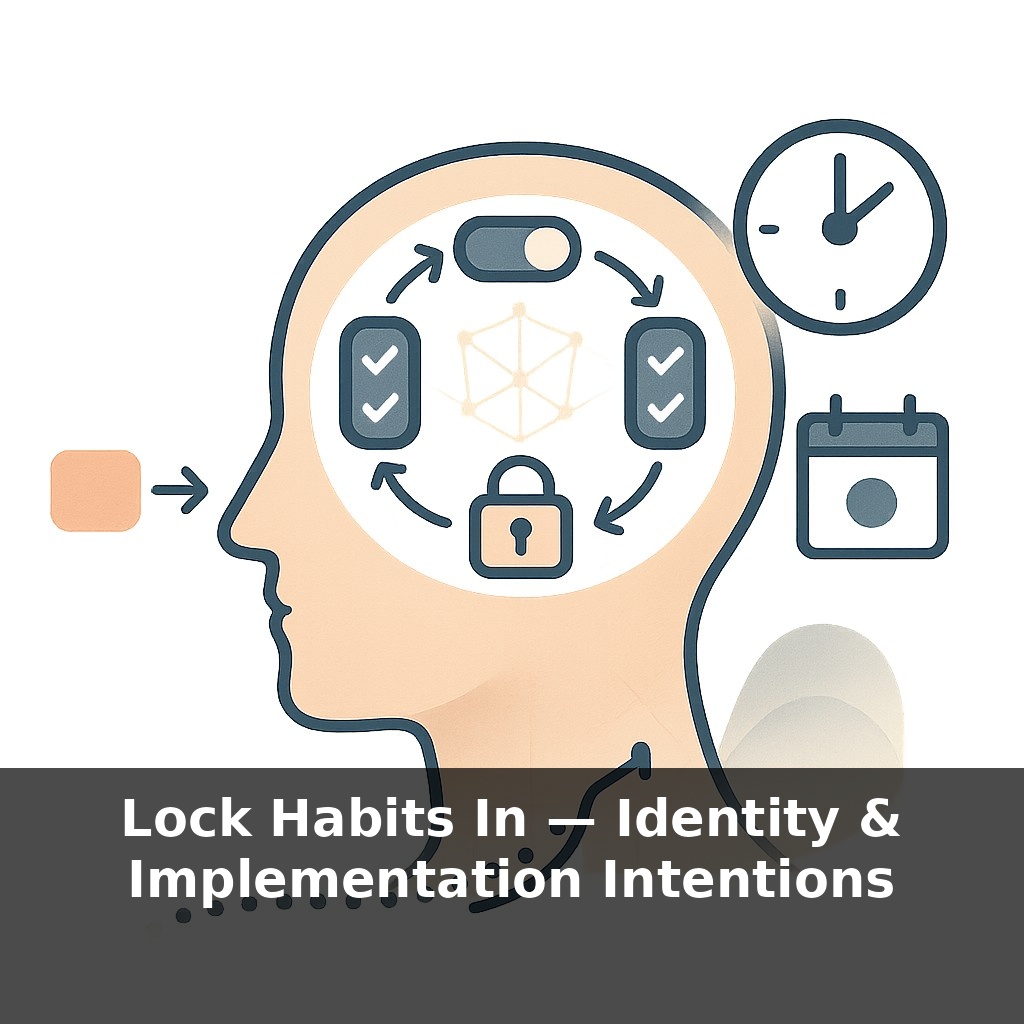
In the last episode, you chose a keystone habit and gave it a basic daily slot. Now we’re going to make that habit much harder to drop by welding it to two things: who you say you are, and what you’ll do in the exact next moment.
Think of it like adjusting a recipe you already like: same dish, but you tweak the ingredients so it reliably turns out right, even on rushed nights. Here, the “ingredients” are identity language and if‑then planning—and together, they can turn your habit from “something I’m trying” into “something I just do.”
Most people try to “feel more motivated” when a new routine starts slipping; research points the opposite way. Motivation is shaky, but identity‑level cues and if‑then scripts are surprisingly stable under stress, fatigue, and bad moods. They work especially well when life gets messy—late nights, travel, disrupted schedules—because the decision has already been made upstream. In this episode, we’ll zoom in on that upstream layer: how to phrase identity so it feels honest (not delusional), how specific your if‑then needs to be, and how to quietly debug both when they stop producing the action you want.
The “21 days to a new habit” slogan sounds neat, but it’s fiction. In one of the best real‑world studies, people took anywhere from 18 to 254 days before a simple daily action started to feel genuinely automatic—and the average was 66. That huge range matters: you’re not “broken” if week three still feels clumsy. It just means your brain is still wiring the shortcut.
What actually speeds that wiring isn’t gritting your teeth; it’s feeding your brain two kinds of consistent evidence: “this is who I am” and “this is what happens next.” Over time, your mind gets lazy in a helpful way. It stops debating and starts predicting.
Here’s the twist most people miss: you don’t need a dramatic life story to claim a new identity; you need a repeatable pattern of tiny votes. Each repetition of your habit is one more ballot cast for “the kind of person who does this.” You’re not forging a fake ID; you’re slowly updating your passport.
To make those votes count faster, you want your self‑description and your behavior to be in the same weight class. “I am a world‑class athlete” clashes with three half‑hearted walks. “I’m someone who moves my body every day” fits. Identity statements that are aspirational but still believable give your brain less to argue with and more to confirm.
Now add the situational side. When you tie your habit to a precise external cue—clock time, location, or a preceding action—you’re training your environment to nudge you. Over a few weeks, the moment itself starts to feel incomplete without the behavior, the way brushing your teeth feels “missing” if you skip it before bed.
This is why slips during chaos (travel, illness, crunch time at work) are particularly important. Those are the days your old identity and old defaults try to reclaim territory. A single “even on bad days, I at least do X‑version of my habit” keeps the story intact, even if the volume is turned way down.
Your goal isn’t perfection; it’s consistency of identity: many small, nearly boring proofs that the sentence “I am the kind of person who ____” is simply describing reality.
Think about places where you already act “in character” without much inner debate. A vegetarian doesn’t negotiate every menu; a parent doesn’t weigh up whether to respond when their kid cries at 2 a.m. The identity silently narrows the options before the moment even arrives. You’re going to borrow that same quiet constraint and apply it to a specific behavior.
One way to test whether your new sentence is working: notice your emotional reaction when you break it. If you say, “I’m a reader,” and a whole week passes with zero pages, it should feel slightly off—not shameful, just… mismatched. That mild friction is useful data; it means the story is starting to take root.
You can also layer identities across domains. “I’m someone who keeps promises to myself” can cover workouts, deep work, and sleep, as long as you attach clear, small behaviors to each. Over time, those stacked proofs create a kind of compound interest.
Your challenge this week: pick ONE domain and craft a “believable but better” identity sentence for it. Then, for seven days, keep a tiny log with two columns: “Acted in character” and “Acted out of character.” Don’t judge, just tally. At week’s end, rewrite the sentence so it better matches who you actually chose to be most often.
Soon, your calendar might quietly negotiate with your habits. Miss two “I’m a focused writer” mornings, and your devices could reshuffle meetings, dim notifications, and surface a single prompt: “If it’s 9 a.m., then open your draft.” Workplaces may experiment with shared “team identities” tied to visible, trackable triggers—like a kitchen where labeling yourself “I’m a mindful eater” gently changes what appears at eye level, the way a chef rearranges a pantry to change what gets cooked.
Over time, this isn’t just about one routine; it’s about editing your personal “user manual.” The more your days reflect chosen roles instead of inherited ones, the easier it becomes to say no to clutter that doesn’t fit. Like clearing a crowded fridge, removing stale roles makes space for habits that actually nourish who you’re becoming.
Start with this tiny habit: When you wake up and your feet touch the floor, quietly say to yourself, “I’m the kind of person who keeps promises to myself.” Then, immediately do one ridiculously small action that matches that identity—like placing your running shoes by the door, filling your water bottle, or opening the book you want to read and leaving it on your pillow. After you do it, say out loud, “See? That’s what someone like me does.”