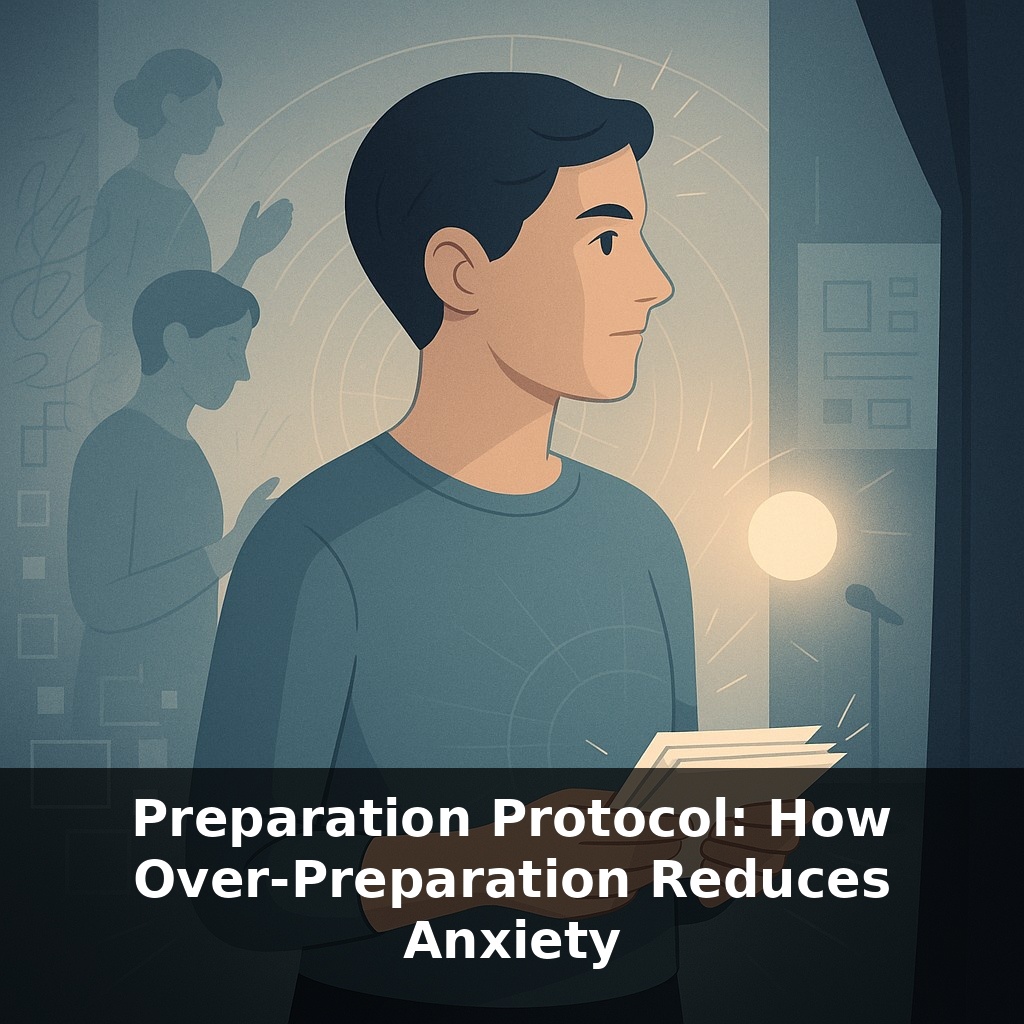
Most people remember only a tiny fraction of what they hear once—yet public speakers often rehearse just once and hope for the best. You’re standing backstage, notes in hand, heart racing… and here’s the paradox: the more you over‑prepare, the freer you actually feel.
So let’s zoom in on what really shifts when you don’t just “go over your slides,” but you rehearse like a professional. Most speakers treat practice as a final spell‑check; confident speakers treat it like a wind‑tunnel for their ideas. Run the same talk three or four times and you start hearing tiny bumps in your phrasing, like audio glitches you didn’t notice at normal volume. You catch the sentence that always makes you stumble, the transition that feels abrupt, the story that drags. Each pass smooths one of those edges. Over a few rounds, your talk stops being a loose collection of points and starts to feel like a clear track you can run on, even when nerves show up. The magic isn’t that you “memorise every word”; it’s that you remove enough friction that your brain can focus on connecting, not surviving.
Here’s the deeper layer most people miss: your brain doesn’t just store your slides; it stores the *sequence* of what you do under pressure. Every rehearsal quietly teaches your nervous system, “We’ve been here before—and it turned out fine.” That’s why structured run‑throughs lower heart rate and that shaky‑voice effect in real presentations. Think of each practice as adding another safety net beneath the same jump: the height doesn’t change, but your willingness to leap does. This is especially powerful if you’re introverted or detail‑oriented, because predictability itself becomes a source of calm.
Here’s where the science snaps into focus. When you move beyond “I’ve skimmed this once” into real repetition, you’re not just polishing wording—you’re changing what your brain has to work on during the talk.
On the first run, your mind is juggling everything at once: what comes next, where to look, what to do with your hands, whether the example makes sense. That’s why it feels mentally expensive. But as you repeat, certain pieces get automated. Cognitive psychologists call this shifting from controlled processing to more automatic processing. In plain terms: your brain takes the basics off the front burner.
That matters, because anxiety and performance draw from the same pool of mental resources. If most of your attention is chewed up by “Don’t forget slide 7,” there’s not much left for noticing the audience, adjusting your pace, or recovering smoothly from a stumble. Over-preparation is really about buying back that bandwidth.
Rehearsal also builds motor–verbal memory: the tiny coordination between your mouth, your breathing, your gestures, and your pacing. That’s why speakers who’ve practised can momentarily lose their place and still “land” in the right section without visibly panicking. Their body remembers the route even if their conscious mind briefly blanks.
Here’s a key nuance: this isn’t about freezing yourself into a script. The goal is to over‑prepare the *structure*—your opening, key beats, turning points, and close—so those pieces are rock solid. Within that frame, you actually have more room to improvise because you know you can always find your way back.
This is especially powerful for introverts and analytical thinkers. Predictable anchors—like rehearsed transitions, familiar slide flows, and practised stories—reduce the number of live decisions you face on stage. Fewer micro‑decisions mean fewer opportunities for self‑doubt to hijack your focus.
Think of a musician who knows a song so well that they can start listening to the room instead of the notes. That’s the real payoff of heavy preparation: you move from “Can I get through this?” to “How can I tune this to *these* people, *right now*?”
Think of three versions of you giving the same talk. Version one glances at the slides once, then wings it. Version two runs it twice the night before. Version three has walked through it out loud, in real time, five separate days. In real rooms, with real shoes on, clicking a real remote. Only that last version can afford to notice the bored face in row three and shift gears without derailing.
Take a manager pitching a new initiative to senior leaders. She scripts only her opening and close, then rehearses the transitions between sections until she can move through them while mildly distracted—phone buzzing, colleague walking past, timer beeping. By the time she’s in the boardroom and someone interrupts with a tough question, she can answer directly *and* still find her way back into the flow.
Or an introverted engineer: he records three full run‑throughs on his phone a week before demo day, each in a different room. When the actual meeting comes, his environment already feels like “just another variation,” not a threat.
Future prep will feel less like guessing and more like using navigation in a car. AI tools will flag where your energy dips, when your pace races, even which story lands best with a given audience type. VR rooms will let you “test‑drive” a high‑stakes town hall before anyone’s invited to the calendar. The risk will shift: not under‑preparing, but over‑tweaking. The new skill won’t just be rehearsing; it’ll be knowing when to stop and trust the version you’ve built.
When you prep this deeply, anxiety becomes data instead of a verdict. A quickened pulse is just your system saying, “We’re live.” You can decide to treat each rehearsal like tuning a mixing board—nudge volume here, trim echo there. Over time, you’re not chasing “no nerves”; you’re learning how to ride that energy and aim it exactly where you want it to land.
Start with this tiny habit: When you open your calendar for the day, say out loud one sentence that begins with, “The only thing I need to be ready for is…” and name the single event that matters most (like “tomorrow’s client call” or “that 3 p.m. presentation”). Then spend exactly 60 seconds visualizing just the first 2 minutes of that event: where you’ll sit or stand, the first sentence you’ll say, and where your notes or slides will be. Stop after the minute, even if you feel like doing more. This keeps your brain focused on realistic, bite-sized preparation instead of spiraling into all-or-nothing over-prep.