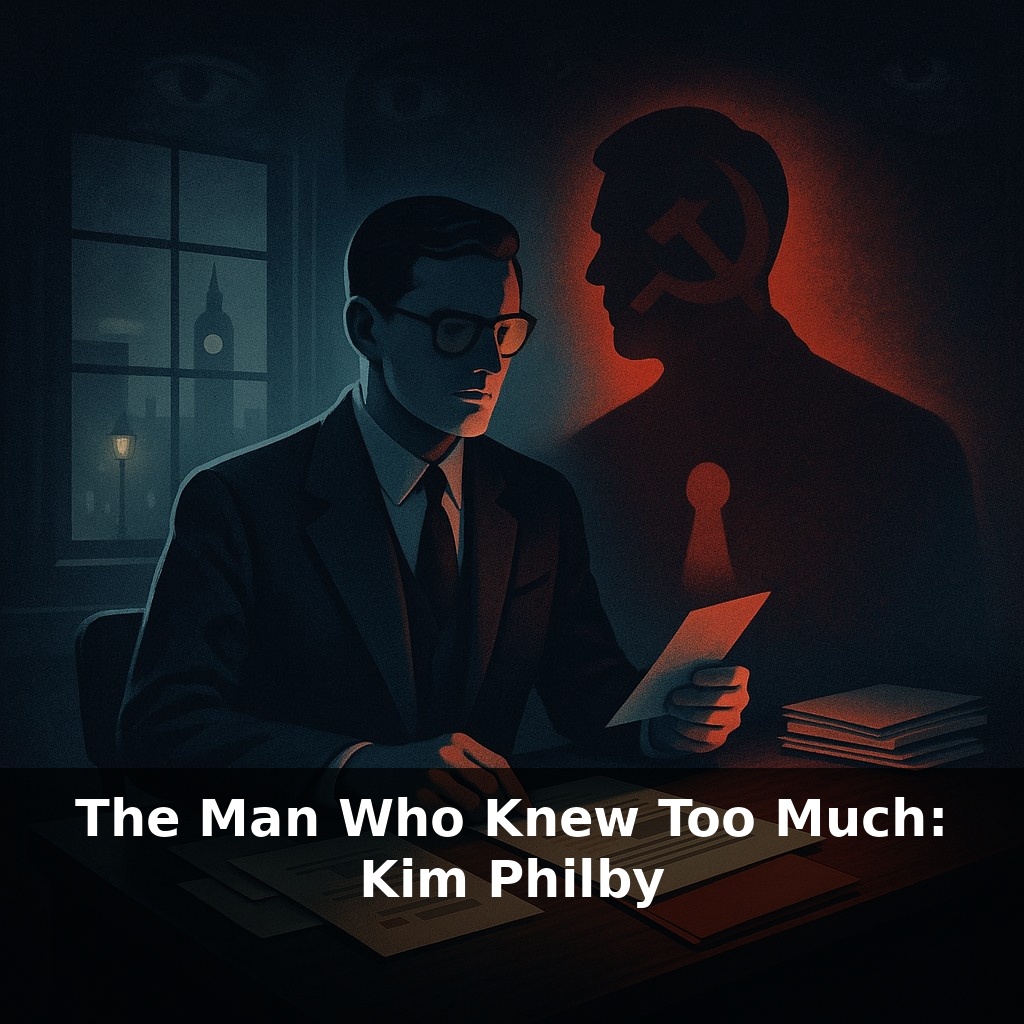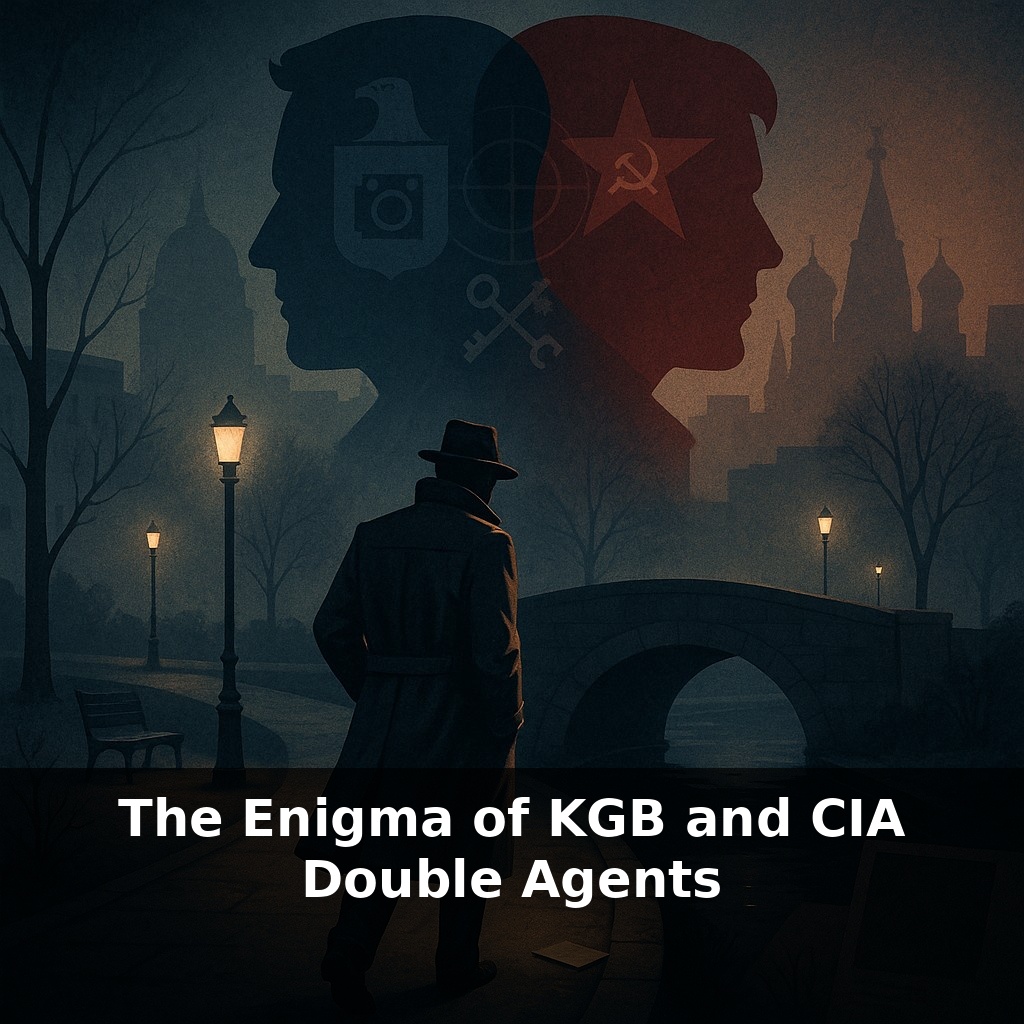
A man walks into a quiet park, hides a package under a footbridge, and walks away with a small fortune in his pocket. Another snaps thousands of secret photos inside a locked Soviet office. Both swear loyalty to one flag—while quietly serving its greatest enemy.
They weren’t just sneaking documents out of filing cabinets; they were quietly bending the course of history. KGB and CIA double agents sat in conference rooms, typed routine cables, and attended dull briefings—then, after hours, fed those same secrets to the other side. Their value wasn’t in one “smoking gun” memo, but in a steady drip of insight: which generals were nervous, which weapons actually worked, which crises were real and which were theater.
Some passed along satellite photos, others meeting schedules, others raw gossip about who drank too much at embassy parties. When stitched together, these fragments formed a backstage map of the Cold War. Leaders who had access to that map could call bluffs, stall invasions, or rush to the brink knowing exactly how close they really were. In a conflict where open war risked nuclear disaster, that hidden edge mattered more than any tank or missile.
On paper, many of these operators looked painfully ordinary: mid-level case officers, analysts, even desk-bound bureaucrats shuffling cables no one outside their building would ever read. What made them dangerous was where they sat in the information stream. They handled raw, unpolished intel before it was spun into speeches or strategy, giving them chances to quietly redirect what flowed up the chain. One misfiled report, one delayed warning, one “lost” photograph could skew a briefing in Moscow or Washington the way a subtle crosswind nudges an airplane off course—barely noticeable at first, but decisive over long distances.
Some of the most damaging operators didn’t sit at the apex of power; they lurked just low enough to be ignored and just high enough to see everything that mattered. Aldrich Ames, for instance, wasn’t a Hollywood-style mastermind. He was a mid-level CIA officer with expensive tastes and sloppy habits. Yet by quietly handing the KGB the names of U.S. assets in Moscow, he helped wipe out an entire generation of American sources. Analysts later estimated that roughly a quarter of the CIA’s espionage losses in the late 1980s could be traced to what he revealed.
If Ames was the blunt instrument, Robert Hanssen was the slow, methodical leak. From a cubicle at the FBI, he fed Moscow counter-intelligence secrets for years. He didn’t meet handlers in smoky cafés; he dropped trash bags of documents under a wooden footbridge in Nottoway Park, Virginia, and walked away. The KGB knew him as “Ramon Garcia.” To his colleagues, he was the quiet guy down the hall who seemed to know policy arcana no one else cared about.
Not all of these players were sabotaging their own side. Oleg Penkovsky, a Soviet military intelligence officer, slipped more than 5,000 photographs of missile sites and manuals to the West. During the Cuban Missile Crisis, those images gave U.S. planners crucial detail about what the USSR could actually do—and what it was bluffing. That level of technical clarity made the difference between panicked guesswork and calibrated risk.
Motives were rarely tidy. Ideology mixed with boredom, grievance with greed. Ames took more than $4.6 million from the KGB; Penkovsky believed Khrushchev’s course would destroy his country. Ego threaded through almost all of them: the thrill of outsmarting bosses, agencies, sometimes entire governments. And yet, for all the spycraft, many were caught by unglamorous means—bank deposits that didn’t match salaries, unexplained debts suddenly erased, patterns that popped under routine financial review.
Inside the USSR, exposure often meant a short, brutal epilogue. The average uncovered double agent reportedly survived less than two years, many ending in a secret trial and a bullet. Like a fault line running beneath a quiet city, they were tolerated only so long as they remained invisible; once traced, the system snapped hard to close the break.
Some of the most revealing cases weren’t the headline names, but the ones buried in footnotes. A mid-level translator in a listening post who quietly flagged which intercepted cables got rushed upstairs, tilting attention toward—or away from—particular hotspots. A logistics officer who “accidentally” scheduled certain shipments to arrive late, ensuring that key hardware was always just out of reach when it mattered most. A signals technician who slipped in a minor software tweak so specific frequencies were slightly noisier, making one side’s surveillance look less capable than it really was.
These operators rarely touched grand strategy directly; instead, they shaped what strategists believed was possible. The KGB and CIA built elaborate psychological profiles around such people, mapping not just their politics or vices, but their patience: who could live with a slow burn of risk for years, who would crack under silence. Recruitment files show case officers probing tiny pressure points—a sick parent abroad, a stalled promotion, a casual complaint at a bar—then circling back months later to see which cracks had widened.
Algorithms are the new case officers, quietly watching badge swipes, odd logins, and code commits at 3 a.m. Instead of following a briefcase through Berlin, tomorrow’s hunt may trace a subtle pattern of keystrokes or server pings. Your challenge this week: pick one digital system you use daily—email, chat, or cloud storage—and list three ways someone could abuse it without leaving obvious fingerprints. Then, note what faint “weather changes” might be the first signs something is off.
Today, that same tug-of-war plays out in quieter forms: a mismatched data field that skews an algorithm, a “harmless” edit to a briefing slide that tilts a decision, a chatbot subtly nudging a narrative. The puzzle isn’t just who holds secrets, but who can bend the lens itself—like fog reshaping a skyline without moving a single building.
Here’s your challenge this week: Pick one real Cold War double agent mentioned in the episode (like Aldrich Ames, Oleg Gordievsky, or Kim Philby) and create a one-page “double life dossier” on them that includes their cover story, true allegiance, key betrayals, and how they were finally exposed. Then, map those four elements onto a current real-world domain you care about (for example: corporate whistleblowing, cybersecurity, or political disinformation) and spell out one specific modern parallel for each. Finally, choose one concrete safeguard you could implement in your own work or online life (e.g., a verification habit, a compartmentalization rule, or a data-access limit) inspired directly by how that agent exploited trust, and put it in place today.