What Is Stoicism? The Philosophy That Built Empires
📝 Transcript
A Roman emperor once kept a secret journal, not about power or conquest, but about how to stay calm when everything was falling apart. Now, over a thousand years later, CEOs and therapists quietly use the same playbook—yet most of us have never heard its real name.
That “secret journal” came from a tradition with a very un‑Instagrammable promise: life will hurt, people will fail you, plans will collapse—and your job isn’t to avoid any of it. Your job is to become the kind of person who can walk through all of that without becoming cruel, bitter, or broken.
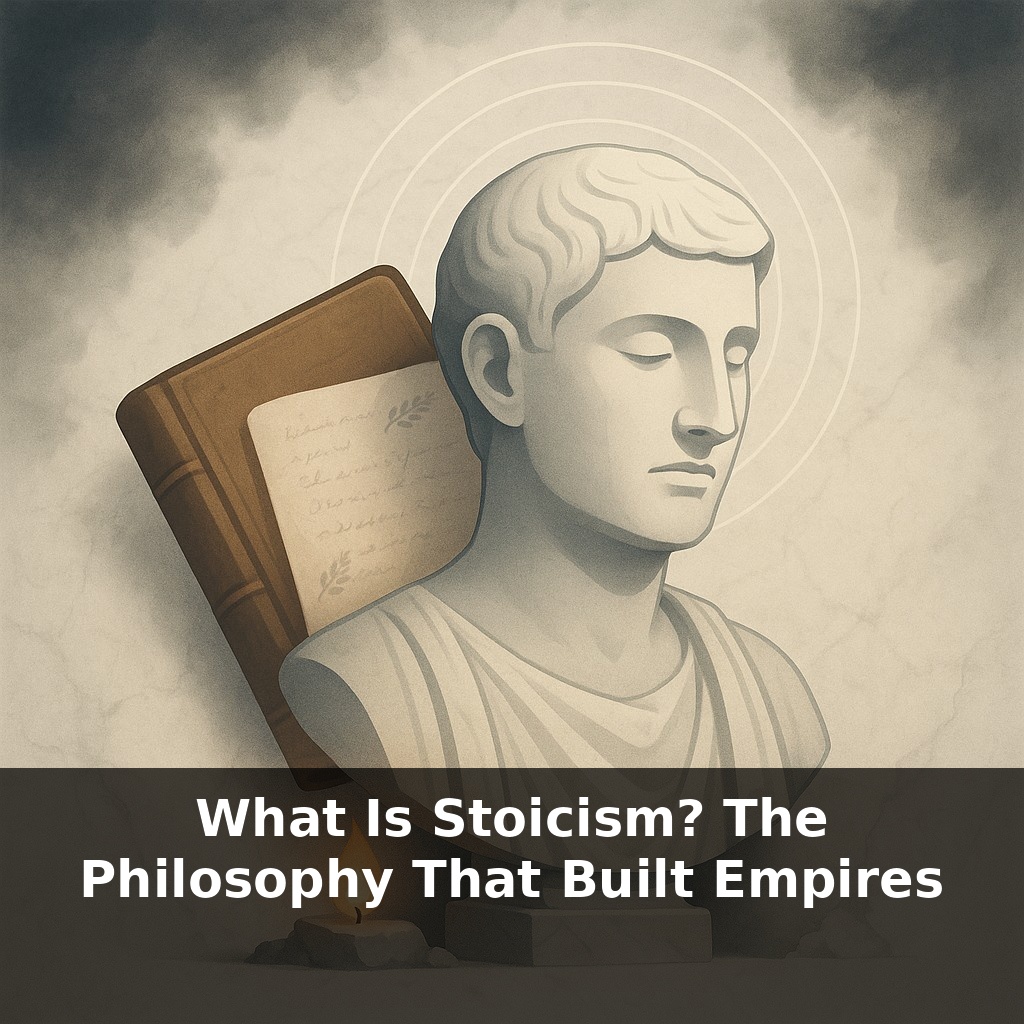
This is Stoicism: a philosophy born in noisy Athenian markets and tested in courts, battlefields, and slave quarters long before it reached boardrooms or therapy offices. It isn’t about suppressing emotion or pretending not to care. It’s about learning to tell the difference between what’s truly yours—your character, your choices, your response—and what never was, like other people’s opinions or the next market crash. In this episode, we’ll unpack how that shift in focus quietly reshapes ambition, stress, and even success itself.
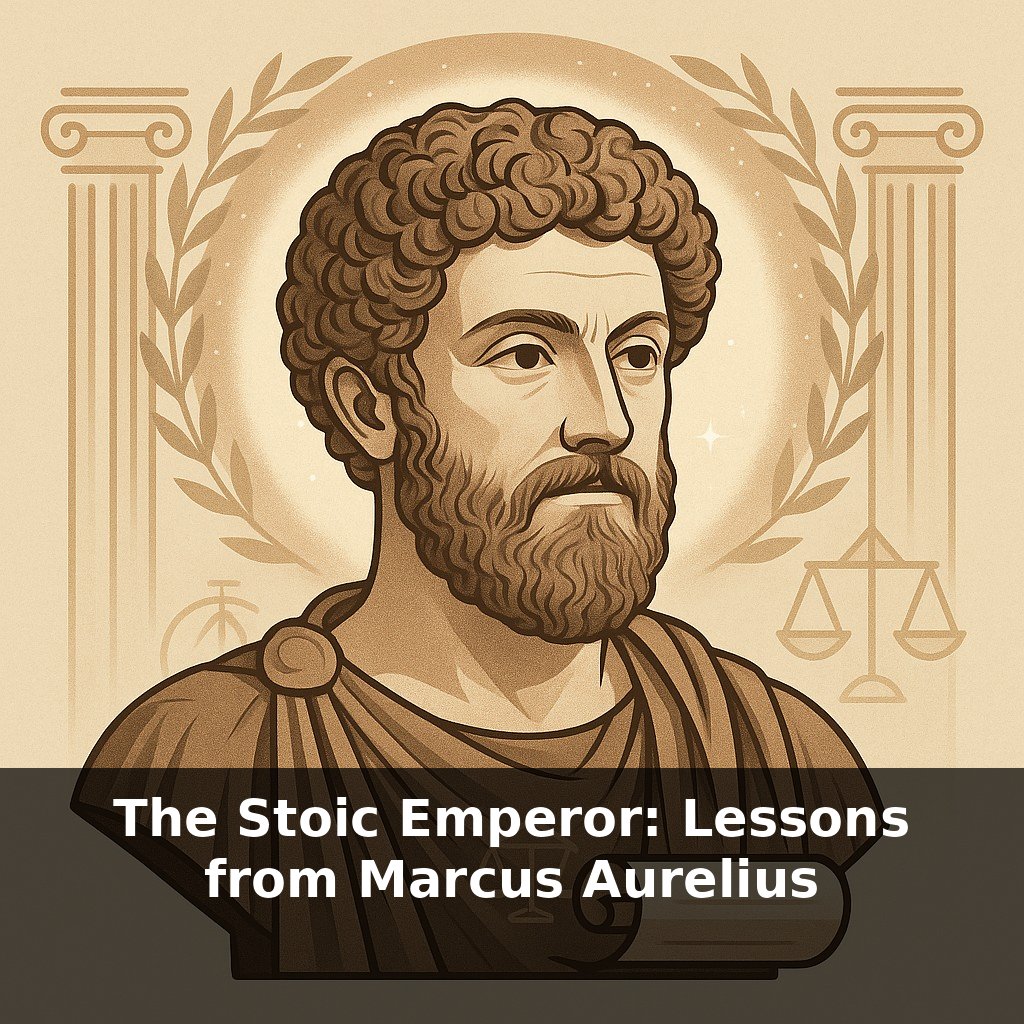
In the ancient world, this outlook wasn’t a side hobby for bookish monks; it was a performance standard for people under pressure. Seneca advised politicians while navigating scandals and exile. Epictetus taught former slaves and future leaders in a cramped classroom over a workshop. Marcus Aurelius wrote between military campaigns and plagues. They weren’t chasing inner peace in a vacuum; they were trying to act well when stakes were brutally high. Think of it less as a mood hack and more as a code of conduct for days when everything feels on fire.
If you’d walked through Athens around 300 BCE, you wouldn’t have found Stoicism in a quiet temple. You’d have seen Zeno of Citium teaching in a busy public walkway, the Painted Porch, projecting his voice over merchants, gossip, and political arguments. That location wasn’t an accident. From day one, this was a philosophy designed to be tested in traffic, not in retreat.
Zeno and his successors argued that the universe is ordered by logos—roughly, a deep rational structure that runs through nature and through us. Live against that grain and you fracture yourself. Live in harmony with it and you become “aligned”: your thoughts, words, and actions reinforce each other instead of pulling you in opposite directions. Virtue, for them, wasn’t a moral sticker you earn; it was this inner alignment made visible.
They broke that alignment into four trainable qualities: wisdom, courage, justice, and temperance. Wisdom asks: “What’s really going on here? What am I missing?” Courage: “What would I do if I weren’t afraid of discomfort or disapproval?” Justice: “Who else is affected, and what do I owe them?” Temperance: “Where is ‘enough’ in this situation?” Notice how all four are questions; Stoicism is less a set of dogmas and more a habit of interrogation.
This is where it starts looking surprisingly modern. When cognitive‑behavioral therapists ask clients to write down catastrophic thoughts—“I blew that meeting, my career is over”—and then test them against evidence, they’re echoing Stoic exercises. Epictetus told his students that people are disturbed not by events but by their opinions about events, then drilled them in spotting those opinions in real time.
You can trace similar threads into leadership. James Stockdale survived seven years as a prisoner of war by working straight from Epictetus. Contemporary investors quote Seneca when markets lurch. The appeal isn’t macho toughness; it’s the promise that, under pressure, you can become more principled, not less.
Analogy-wise, think of a skilled physician facing a difficult case: she doesn’t control the patient’s genetics or past choices, but she does control diagnosis, treatment plan, and bedside manner. Her professionalism is measured not by outcomes alone, but by how consistently she applies sound judgment in the face of uncertainty. Stoicism aims to cultivate that same steady competence toward your own life.
Picture a modern product manager staring at a launch dashboard: server load spiking, a bug report coming in, a VP pinging for updates. In a Stoic frame, she sorts the chaos: fixing the bug and communicating clearly are hers; the public reaction isn’t. That filter doesn’t make the stakes smaller—it makes her more precise.
Or take a parent in a grocery store as a toddler melts down in the cereal aisle. The parent can’t directly command the child’s mood, but can choose their tone, posture, and next sentence. A Stoic parent isn’t a stone statue; they’re someone who treats this small crisis as training for patience and fairness under pressure.
You see versions of this on trading floors when markets swing wildly. The disciplined investor who has rehearsed losses in advance is less shocked, more able to ask, “What’s the wisest move now?” Likewise, in a tense performance review, an employee can’t script their manager’s verdict, but can own their preparation, their questions, and how they’ll grow from the feedback tomorrow.
Stoic ideas are quietly reshaping how we design systems, not just how we manage moods. Mental‑health apps now surface tiny “philosophical drills” between meetings, like a gym that fits in your pocket. In offices, resilience trainings are starting to treat setbacks like weather fronts: you can’t stop the storm, but you can reinforce the building. Looking ahead, Stoic cosmopolitanism may steer AI ethics and even space crews, treating distant strangers as teammates in one shared mission.
In a way, Stoicism turns ordinary days into a kind of laboratory. Annoying emails become test tubes, delays are like tricky recipes, difficult people the heat under the pan. You’re not chasing a flawless life; you’re refining how you show up in the messy one you already have. And the more you practice, the more “empire” starts at your own doorstep.
Here’s your challenge this week: For the next 7 days, practice “negative visualization” every morning by spending 2 minutes imagining one concrete thing you value (your job, a relationship, your health) suddenly being taken away, then deliberately noting one specific way you’ll appreciate or protect it that day. Once per day, when something annoys you (traffic, email, coworker), silently repeat Marcus Aurelius’s line “You have power over your mind, not outside events,” and choose one different response than your usual reaction (e.g., pause, slow your breathing, or lower your voice). Each night, do a 3-minute “Stoic debrief” by replaying one moment you handled well and one you didn’t, and state out loud how you’ll respond differently next time, like a Roman general reviewing the day’s campaign.
From this course
Stoicism for Modern Life
7 episodesUnlock all episodes
Full access to 7 episodes and everything on OwlUp.
Subscribe — $1.99/monthLess than a coffee ☕ · Cancel anytime