Epictetus wrote a tiny handbook, just a few pages long. Two thousand years later, war colleges, therapists, and CEOs quietly study it. Why? Because buried in those short lines is a move so simple, it can shrink your stress in minutes—once you spot it in your day.
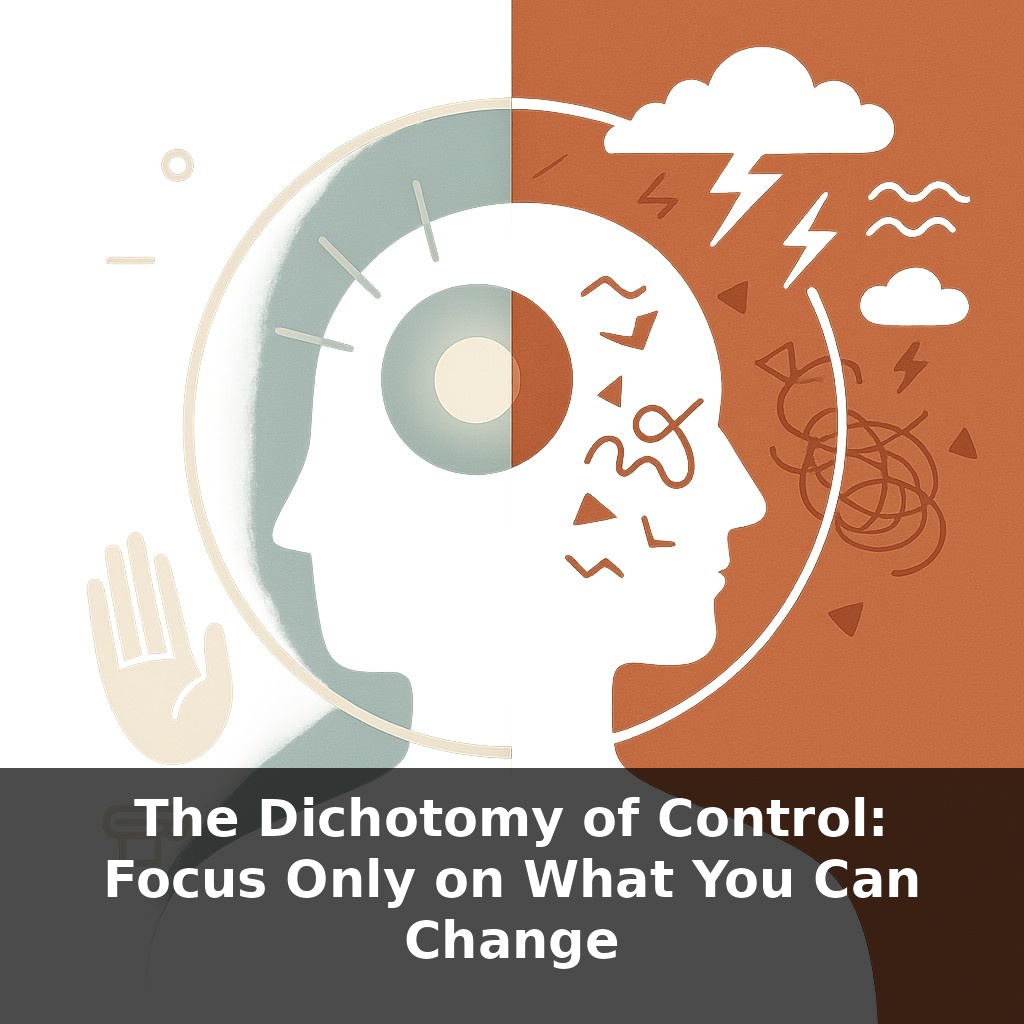
Most of us mix everything—our mood, our boss’s email tone, the economy, a stranger’s comment online—into one mental blender and then wonder why the result feels like anxiety soup. The Stoic move Epictetus pointed to is basically: separate the ingredients before you cook. Not to be calm in some abstract way, but to be precise about *where* your energy actually matters.
Modern psychology backs this up. Therapists using CBT don’t tell clients “think positive”; they teach people to sort events into “mine to influence” and “not mine,” then work only on the first pile. Naval officers now study this too, not to be philosophical, but to make clearer calls under pressure, when information is messy and consequences are real.
In daily life, this isn’t about being passive. It’s about refusing to donate your limited attention to battles you can’t actually fight—and doubling down on the ones you can still win.
Most people treat “control” as all-or-nothing: either I run the show, or I’m powerless. Stoics—and now psychologists—slice it into three quieter categories: what’s fully up to you (your choices, your standards), what isn’t at all (weather, past mistakes), and the messy middle: where you have influence but no guarantees. That middle zone is where most modern life happens—teams, markets, relationships, health. The dichotomy of control isn’t about pretending that complexity isn’t there; it’s about deciding, moment to moment, which layer you’ll answer for.
Modern research adds teeth to this old Stoic move. When psychologists study people who naturally separate “what I can affect” from “what I can’t,” they consistently find lower chronic stress, better follow‑through on goals, and fewer symptoms of depression. Not because their lives are easier, but because their *attention* is better organized.
One big finding: people with a strong “internal locus of control” (believing their actions matter in many situations) tend to persist longer, plan better, and recover faster from setbacks. But there’s a catch. Push that belief too far—thinking you *should* control things that are clearly outside your hands—and anxiety actually *increases*. You start interpreting every random outcome as a personal failure.
This is where the Stoic distinction is sharper than pop self‑help. It isn’t “you can do anything if you try hard enough.” It’s closer to: “in every situation, there is *something* that is yours to do—focus there, and drop the rest.” That might be your preparation, your honesty, your effort, your willingness to learn after things go sideways.
Modern leaders use this in very concrete ways. Some Navy officers are trained to ask, under pressure: 1) What facts do I truly have? 2) What decisions are *actually* mine? 3) What outcomes must I accept, whatever I do?
That third question sounds defeatist, but it’s the opposite. By naming what you must accept, you stop burning energy on it and free capacity for clearer action on what remains.
In personal life, the move is subtler but similar. You can’t script your partner’s reactions, but you can choose to speak plainly and kindly. You can’t control whether a company hires you, but you can refine your portfolio, widen your search, and learn from each interview. Over time, this repeated shift—back to the narrow slice that’s truly yours—builds a kind of quiet confidence. You stop needing guarantees before you act.
The paradox: the more precisely you admit what you *don’t* control, the more powerful you become where you do.
A practical way to test this is in three everyday arenas: work, health, and relationships.
At work: say a project derails because another team missed a deadline. The reflex is to replay their mistake, complain, and mentally prosecute the case. A Stoic‑style move is to ask, “Given *today’s* reality, what’s the next action only I can take?” Maybe that’s clarifying the scope, adjusting timelines, or documenting risks for next time.
With health: you can’t dictate genetics or yesterday’s choices, but you can decide tonight’s bedtime or whether you walk during a call instead of scrolling. Tiny, boring levers, pulled consistently, quietly shift trajectories.
In relationships: you can’t rewrite a tense message once it’s sent. You *can* choose your follow‑up: own your part, ask a clean question, or step back for an hour before replying again.
Like a cook who stops blaming the oven and starts working with the ingredients on the counter, you move from protest to practice.
Remote teams, students, and even parents can all treat this as mental “infrastructure.” As hybrid schedules, shifting algorithms, and volatile markets keep adding uncertainty, those who practice this sorting become calmer decision hubs for their groups. Meetings change: less blame‑storming, more, “Given today’s constraints, what’s our smallest useful move?” Over time, careers and cultures tilt toward roles, habits, and tools that reward this steady focus on workable levers.
Your challenge this week: when something spikes your frustration, pause long enough to name one concrete step available in the *next ten minutes*—an email, a clarification, a small habit, a question you can ask. Treat it like tuning a radio: a tiny twist, but repeated across days, can quietly change the whole station your life is playing on.