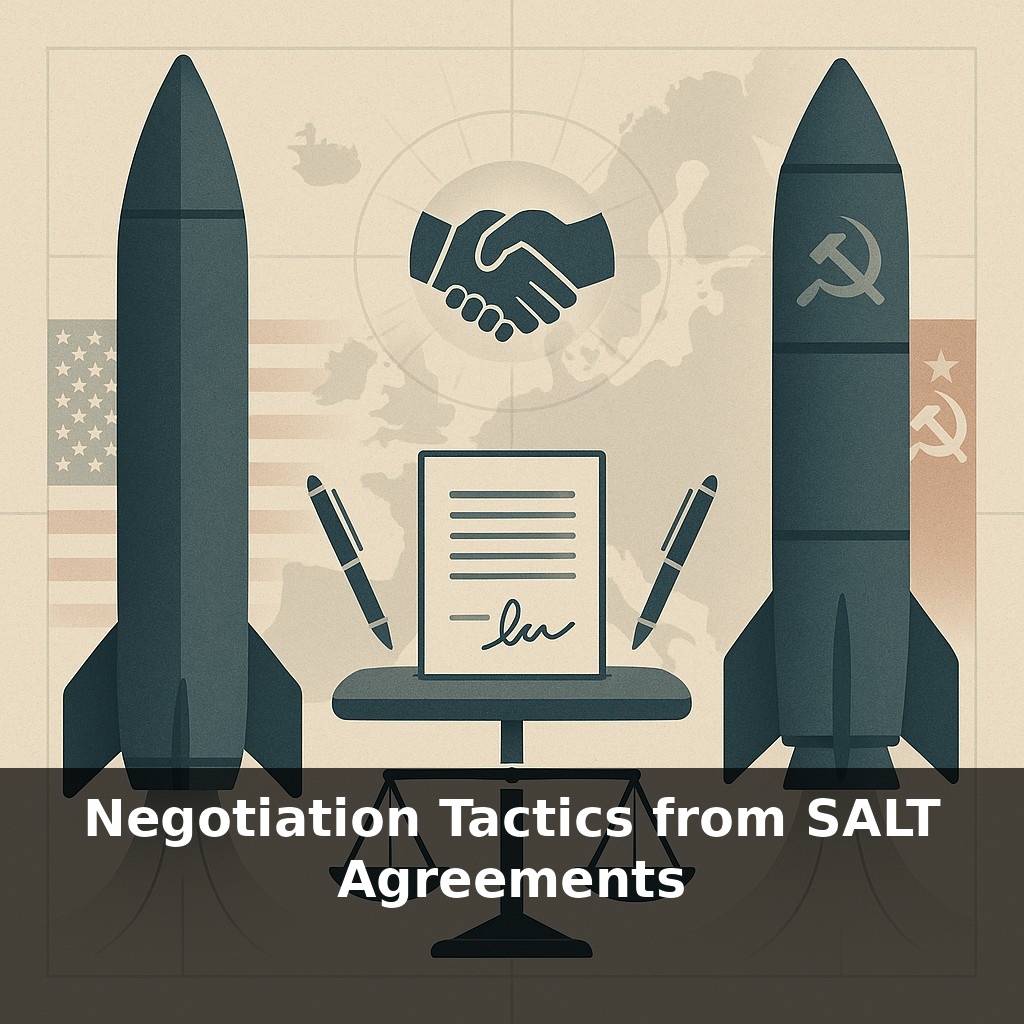
Two superpowers once agreed to limit the very weapons they’d built to destroy each other—*and* saved each side tens of billions of dollars doing it. In this episode, we’ll dive into how sworn rivals turned mutual fear into a disciplined, surprisingly durable negotiation playbook.
By the time SALT negotiators sat down in Helsinki, both sides had spent years perfecting how to threaten each other—yet almost no time perfecting how to *work* with each other. That’s where these talks become useful for us. We rarely walk into a negotiation with nuclear stakes, but we often face their everyday equivalents: a budget fight that could stall a product launch, a partnership dispute that can poison a market, a contract renewal that might quietly shape your next five years.
In SALT, progress came not from grand speeches but from how they structured the conversation: narrowing the agenda to what both sides secretly feared, splitting technical issues from political theater, trading concessions in sequenced steps, and keeping a standing forum open even when tempers flared elsewhere. In this episode, we’ll unpack how to adapt those moves to high-stakes corporate deals, internal power struggles, and even tense one‑to‑one negotiations.
SALT’s hidden power wasn’t just in what got signed, but in *how* the talks survived constant turbulence. Elections, leadership changes, proxy wars—yet the process kept moving. That resilience came from habits you can copy: treating verification like an engineering problem, not a loyalty test; translating vague political slogans into measurable thresholds; and rehearsing “acceptable outcomes” long before anyone walked into the room. In a tense salary review or cross‑team dispute, those same moves turn a brittle, winner‑take‑all clash into a series of smaller, fixable design challenges.
The first quiet revolution inside SALT was *what they agreed not to talk about*. No moral judgments about whose system was better, no revisiting old invasions, no debates over ideology. They filtered ruthlessly for “shared catastrophe”: accidental launches, surprise attacks, ruinous costs. Only issues that could destroy *both* sides made the cut.
Translating that to your world: most negotiations drown in side arguments—status, history, tone, perceived slights. The SALT move is to explicitly label those as “background noise” and park them. A product lead and a compliance team don’t have to settle whose roadmap is “more important”; they only need to agree that a major regulatory fine or missed launch window hurts everyone.
The second shift was how they treated information. Both sides assumed the other would posture in public, so they built a parallel track where quiet, technically precise conversations could happen without every phrase being headline material. Inside companies, you can mimic this by distinguishing between “stakeholder theater” (the big review meeting) and “instrument panels” (small working sessions where numbers and edge cases get hammered out without grandstanding).
This is where SALT’s use of “National Technical Means” is so instructive. Instead of arguing endlessly about trust, they asked: *What data will both of us accept tomorrow, even if we’re angry?* In business, that might be independent audit logs, shared dashboards, or a mutually agreed metric definition. You’re not chasing perfect trust; you’re designing a system where distrust has nowhere useful to go.
Third, notice how limits were framed. SALT I didn’t claim to create peace; it created ceilings, baselines, and thresholds. That’s a powerful shift: from promising harmony to promising *constraints*. In a tense vendor negotiation, you may not be able to guarantee satisfaction on all sides, but you can anchor on caps (maximum liability), floors (minimum service levels), and guardrails (conditions that trigger automatic review).
Think of it like risk budgeting on a hiking expedition: you don’t control the weather, but you do control how much food you carry, how close you stay to marked trails, and what conditions force you to turn back. SALT’s genius was accepting that rivalry would continue—while carefully deciding which cliffs neither side was allowed to approach.
Consider a hard internal conflict: a product VP wants rapid feature launches; an infra director insists on stability. Instead of arguing abstractions like “innovation” vs “safety,” borrow SALT’s bias for specifics. Start by asking: “What’s the maximum deployment risk we can both live with this quarter?” Now you’re haggling over a number—failed deployments per month, error budget spent—not over values or egos.
You can layer in “National Technical Means” by agreeing on a neutral data source: a release dashboard both sides accept as ground truth. If rollbacks spike past a set line, launches slow automatically; if the system stays healthy, the VP gets more release slots.
A similar move works in partnerships. Two startups co‑marketing a product can pre‑define “red lines”: maximum discounting, cap on ad spend, minimum lead quality. A shared report pulls from both CRMs, so when tension rises, no one is guessing; they’re reacting to the same instrument panel, not dueling narratives.
SALT-style thinking points toward a deeper shift: don’t just set limits, also cap how *fast* things can spiral. In AI safety talks, for instance, firms could agree on maximum training runs per month, shared red‑team reports, and a cooling‑off period after major incidents. It’s like adding speed bumps to a downhill road: drivers still choose their route, but jolts remind them when they’re pushing too hard, too quickly, toward a bend no one can yet see.
Tactics like these don’t just close deals; they change how people think about conflict. Over time, you’re not just solving this quarter’s dispute, you’re slowly rewriting incentives—making surprise moves less rewarding and steady candor more valuable. The real win is when your toughest counterparts start calling *you* first, before they reach for escalation.
Before next week, ask yourself: (1) “In my next real negotiation (salary, contract, or budget), what’s the ‘minimum acceptable deal’ and the ‘walk‑away line’—the way the SALT negotiators defined precise missile limits—and have I actually written those numbers down before I walk into the room?” (2) “What low‑risk ‘confidence‑building measure’—like sharing a small piece of verifiable data or conceding on a minor term first—can I offer the other side today to signal good faith without sacrificing my core interests?” (3) “If I had to propose a ‘verification mechanism’ like the SALT inspection regimes, what specific proof (reports, dashboards, check‑ins) would I ask for or offer so both sides can trust that any agreement we reach is actually being followed?”