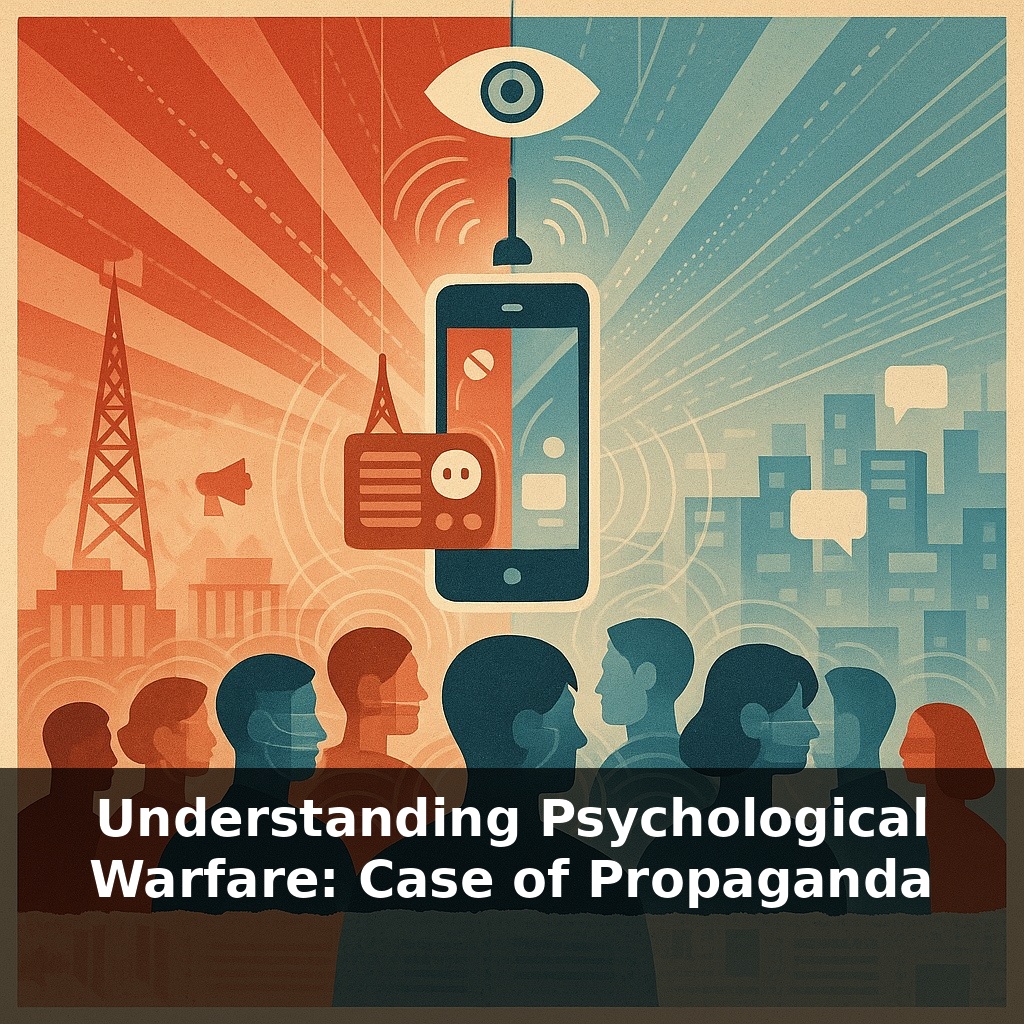
“A government once spent billions not on bombs, but on stories.” In this episode, we drop into the hidden battlefield where radio shows, posters, and carefully crafted news tried to win minds—revealing how the same tactics now shape your social feeds every day.
Governments weren’t just broadcasting messages; they were running long-term psychological experiments on entire populations. During the Cold War, both Washington and Moscow tried to shape how people *felt* about reality before they ever checked whether something was true. That’s why budgets quietly soared into the billions, why a station like Radio Free Europe could capture most of Poland’s adult ears each week, and why operatives obsessed over how often a phrase was repeated, not just what it said.
In this episode, we’ll explore how emotional hooks, authoritative voices, and sheer volume of information were combined to steer perception—sometimes with only a few careful repetitions—then connect those historical playbooks to the persuasion environment you navigate every day.
Cold-War strategists didn’t just care *what* people heard; they obsessed over *when* and *how often* they heard it, and who else seemed to believe it. Propaganda planners studied timing like traders study market cycles, releasing stories when anxiety, pride, or anger were already running high. They mapped which newspapers, priests, union leaders, or pop stars could “carry” a message into everyday conversations. And they experimented with how many slight variations of the same claim needed to circulate before it felt less like a campaign and more like common sense.
Cold-War operators treated persuasion less like speechwriting and more like system design. They asked: *What beliefs already exist? Who trusts whom? Where do doubts quietly live?* Then they engineered environments where the “right” conclusion felt like something people reached on their own.
One U.S. approach was **framing around lived pain**, especially in Eastern Europe. Instead of shouting “your government is illegitimate,” broadcasts and leaflets highlighted concrete daily irritants—food queues, housing shortages, rigid party rules—and contrasted them with small, believable improvements elsewhere. The point wasn’t to sell utopia; it was to make the *current* situation feel needlessly costly. In strategy terms, they were shifting the perceived “baseline,” so staying loyal felt like accepting a bad deal.
The Soviets, by contrast, often leaned on **doubt and contamination** rather than overt conversion. Many “active measures” didn’t try to make audiences love Moscow; they tried to make them distrust *everyone else*. A planted story about CIA-created diseases or staged “peace petitions” wasn’t mainly about being believed 100%. It aimed to inject just enough uncertainty that citizens thought: “Maybe no one is telling the truth.” In game-theory language, they were degrading the opponent’s information environment so coordinated action became harder.
Both sides understood that **repetition works best when it looks uncoordinated**. A line that appears in a speech, a joke, a song lyric, and a newspaper quote feels less like propaganda and more like “what people are saying.” That’s why unions, churches, student groups, and cultural festivals became prized channels: each one could echo the same core storyline in a different voice, turning a talking point into “background reality.”
Here’s where the University of Michigan finding matters: if a claim can feel truer after just three exposures, planners don’t need to win every argument. They just need to make sure a targeted slogan or rumor crosses your path a few times from *different* directions. The method survives today: a phrase appears in a foreign ministry tweet, then in a talk-show rant, then in a meme. By the third encounter, your brain quietly tags it as “familiar,” and therefore “probably not crazy.”
Your defense isn’t to distrust everything; it’s to notice *patterns*: Who keeps benefiting from the stories that seem to be everywhere at once?
Cold-War planners tested these ideas in very specific ways. When the U.S. quietly funded cultural magazines in Western Europe, the editors weren’t told what to write line by line; they were nudged toward themes that made liberal democracy feel intellectually “in fashion.” On the other side, Soviet services slipped forged “documents” to friendly newspapers in the Global South, letting local journalists carry claims about Western plots as if they’d uncovered them themselves.
You can see the same structure today when a fringe claim about an election or vaccine starts on an obscure forum, then shows up in a partisan blog, then in a mainstream segment framed as “some people are asking…”. Each step slightly upgrades the claim’s apparent legitimacy while keeping the origin blurry.
Propaganda is like buying into a speculative stock: you rarely read the full prospectus; you glance at who else is investing and how often you’re hearing the ticker symbol, then your comfort level quietly shifts.
Deepfakes and AI-generated voices may soon let campaigns tailor stories to your accent, slang, and late-night worries in real time. Influence won’t just flood the public square; it will knock quietly on your private screen. Expect “custom-fitted” narratives tuned to your fears, habits, and search history. The next literacy skill isn’t spotting a single lie; it’s tracking how your whole information diet is being nudged, one subtle adjustment at a time.
In the end, psychological warfare isn’t just a Cold-War artifact; it’s a user manual for today’s attention economy. Now, every notification, headline, and “recommended for you” thread can serve as a quiet nudge. Treat your mind less like an open window and more like a well-curated bookshelf, deciding which stories earn a permanent place on the shelf.
Before next week, ask yourself: 1) “When I scroll through news or social media today, which posts are clearly trying to trigger fear, outrage, or urgency in me—and what specific words, images, or repetition patterns give that away?” 2) “Looking at one concrete claim I saw this week (about politics, health, or a conflict), how could I quickly trace it back to an original source or check whether opposing evidence exists?” 3) “If I had to explain to a friend how this particular meme, headline, or video might be using psychological warfare tactics (like scapegoating, emotional flooding, or us-vs-them framing), what would I point out step by step?”