In one study, people who simply asked more questions were about a third more likely to get a second date—without changing anything else. Now jump to your last conversation: were you secretly waiting to be found interesting… while barely asking anything about the other person?
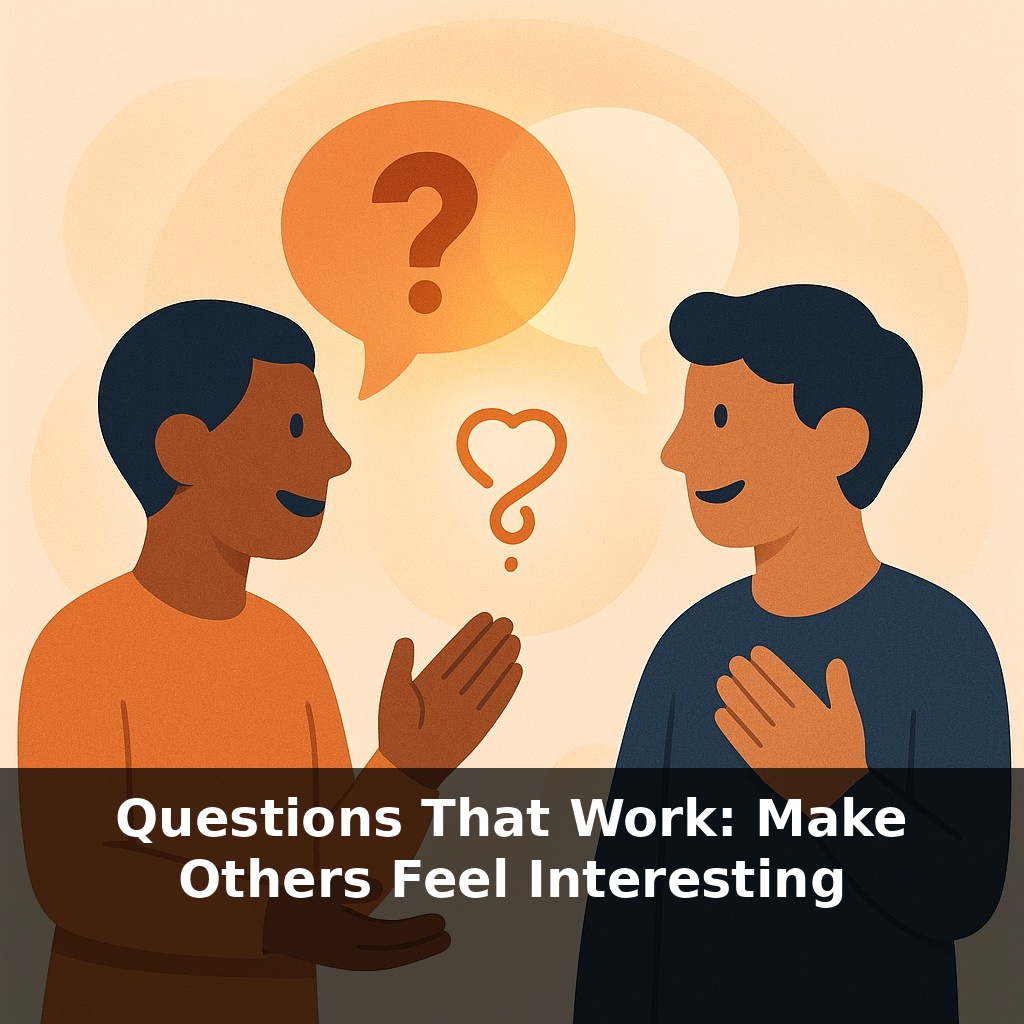
Most people walk away from conversations thinking, “I was pretty friendly,” while the other person walks away thinking, “They didn’t really care.” That gap doesn’t come from being rude; it comes from talking on autopilot. We default to safe, surface questions—“How’s work?” “All good?”—that signal politeness, not genuine curiosity. Meanwhile, the brain is wired to light up when someone draws out our stories, values, and turning points. The difference between “How was your weekend?” and “What was the best moment of your weekend, and why?” seems tiny, but it flips a switch: you stop skimming the headline of their life and start reading the article. When you consistently ask questions that help people feel like the main character rather than background noise, you stop chasing “being interesting” and start becoming unforgettable—for how you make others feel.
When you meet someone new, you’re not just trading words; you’re quietly testing, “Is it safe to be *more real* with this person?” That test happens fast. The other person is scanning for tiny signals: Do you interrupt? Do your eyes drift away when they share something personal? Do you follow the thread of what they just said, or yank the topic back to yourself? Each of those micro-moments nudges them either toward opening up or shutting down. The skill isn’t having clever lines; it’s noticing these cues early and adjusting, like a DJ reading the room and changing the track before the dance floor clears.
Most people think “good questions” means having a clever list ready. That actually keeps you stuck in your head, monitoring your performance instead of the person in front of you. The real shift is moving from *scripted* to *responsive* questions: letting what they just said be the seed for your next question.
Listen for three kinds of “hooks” in their answers:
1. **Emotion words** “It was *stressful*.” “Honestly, I’m *excited*.” “That part was *pretty hard*.” Each emotion is an open door. Instead of changing topics or offering your own story, stay with it: - “Stressful how?” - “What about it is exciting?” - “Hard in what way?” You’re not prying; you’re honoring the depth they already hinted at.
2. **Choice points** Anytime they mention a decision—“I ended up switching jobs,” “We moved cities,” “I stopped talking to him for a while”—you’ve found a turning point. Follow it: - “What made you decide to switch?” - “How did you know it was time to move?” - “What was the breaking point there?” You’re helping them tell the story of how they became who they are, which is far more engaging than trading updates.
3. **Contrasts and surprises** “I’m an engineer, but I actually hated math in school.” “I’m super introverted, but I love giving presentations.” These contradictions are natural conversation accelerators: - “How did that shift happen?” - “What changed your mind?” - “Where do you think that mix in you comes from?”
Notice how all of these questions are short and specific. They stay close to what the person just said instead of jumping to a new topic. That’s what makes you feel tuned-in rather than interrogating.
You can also vary the “zoom level” of your questions:
- **Zoom in:** “What happened right before that?” “What did you say next?” - **Zoom out:** “How did that year change you?” “Where does this fit in the bigger picture for you?”
Alternating between detail (zoom in) and meaning (zoom out) lets people relive their experiences *and* reflect on them. You become the person with whom they connect dots they’ve never fully articulated before.
“Tell me more about that,” sounds simple, but most people never say it. They react, advise, or compare instead. The small shift is choosing *depth over detours*.
Think of three layers you can invite people into:
- **Facts** – what happened - **Feelings** – what it was like - **Meaning** – why it mattered
Most conversations stall at facts:
“I started a new role.” “Nice, congrats!”
A tiny tweak pulls you deeper: - “What part of the new role feels most different?” - “What are you learning about yourself in this transition?”
Notice these aren’t huge, poetic questions. They’re ordinary words pointed at deeper layers.
You can also reflect a *theme* you’re hearing:
- “You’ve mentioned ‘freedom’ a few times—what does that look like for you now?” - “It sounds like loyalty is a big deal to you. Where do you think that comes from?”
One careful reflection like this can make someone feel startlingly seen, because you’re not just tracking their story—you’re tracking *who* is living it.
AI will push these skills from “nice-to-have” to basic literacy. When bots can handle small talk, your value will be the emotional precision of your questions. Think of workplaces where meetings feel less like status reports and more like joint investigations—questions mapping blind spots the way X‑rays reveal fractures. As schools lean into inquiry, kids trained to ask better follow-ups won’t just test well; they’ll collaborate, lead, and resolve conflict with far less friction.
Treat this less like a performance and more like sketching: your questions are quick pencil lines, not a finished painting. Some will land, some won’t—that’s the point. Over time you’ll spot which colors people light up around. The payoff isn’t perfect conversations; it’s a life full of people who feel unexpectedly seen when they’re with you.
To go deeper, here are 3 next steps: 1) Print or save a copy of the Question List from *The Like Switch* by Jack Schafer and pick 5 curiosity-based questions (e.g., “What’s the most surprising part of your job right now?”) to keep in the Notes app on your phone for your next 1:1 or coffee chat. 2) Watch Celeste Headlee’s TED Talk “10 ways to have a better conversation” and jot 3 concrete follow‑up questions she models (like “How did that feel?” or “What happened next?”), then try them in your very next conversation today. 3) Install a simple conversation-tracking tool like Reflectr, Notion, or even a dedicated “People” Google Doc and, right after your next three interactions, log one thing the other person lit up about so you can ask a deeper, second-level question about that topic next time.