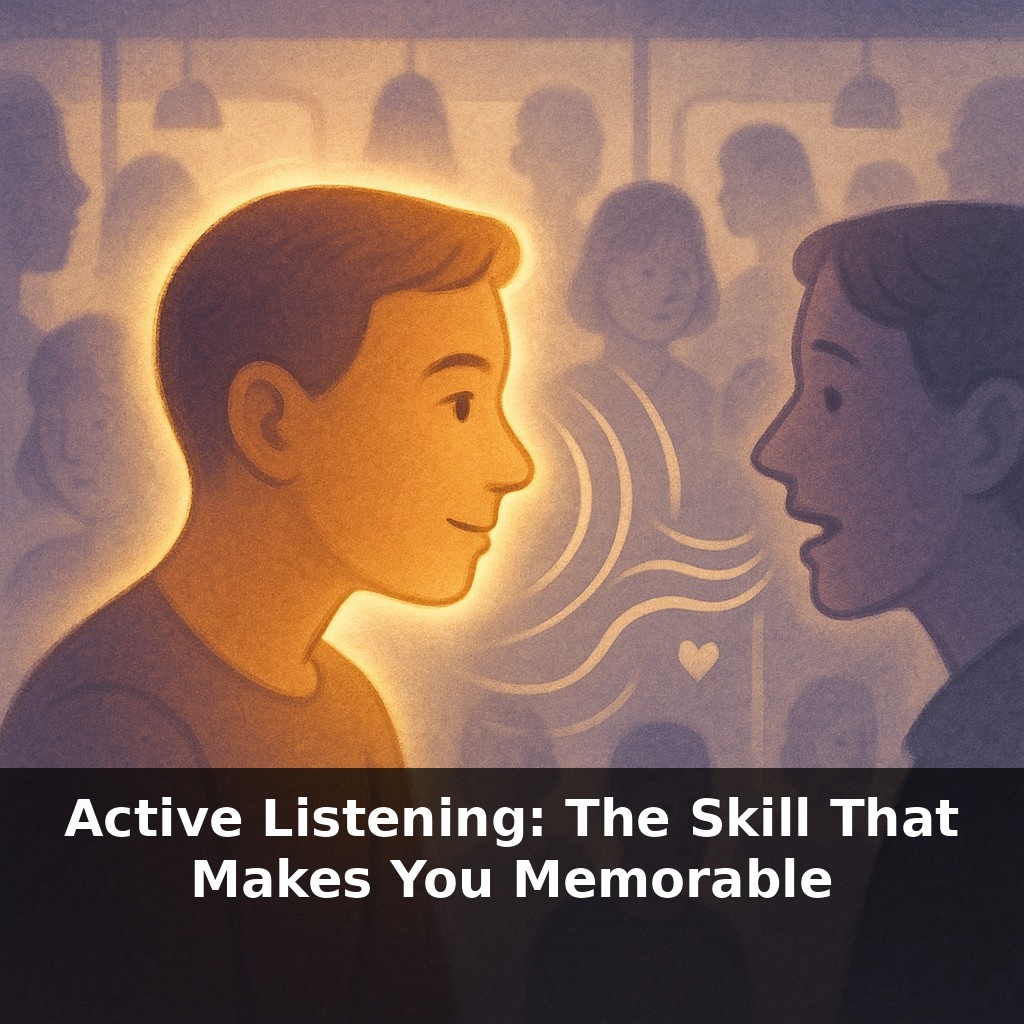
Most people remember only about a quarter of what they hear in a conversation… but they leave thinking, “Wow, that person really got me.” On a crowded train, at a noisy office party, one person leans in, asks one short follow-up—and suddenly they’re the only face you recall.
“Talkative” people rarely become the most memorable ones in the room. Counterintuitively, it’s often the person who speaks less—but listens better—who lingers in everyone’s mind afterward.
Part of that is psychological: when someone tracks our story, asks one precise question, then responds in a way that shows they actually absorbed it, our brain quietly upgrades them from “background character” to “important ally.” Colleagues start seeking their input. Friends start confiding in them. Even in quick networking chats, they’re the name people remember when opportunities pop up later.
You’ve seen this at work: two people leave the same meeting; one dominated the airtime, the other drew out the key insight with just a few well-placed questions—and it’s the second person whose opinion suddenly carries more weight. That’s the shift we’re after: from “good talker” to “trusted listener” who sticks in people’s minds.
In most conversations, we’re half in, half out—thinking about our reply, our to‑do list, or the last email we read. That “mental split screen” is normal: your brain can process far more than the other person is saying, so it quietly wanders. The problem is, others can feel that tiny lag in your eyes, your micro‑expressions, your delayed nods. They may not name it, but they register it as distance. The people who stand out don’t erase distractions; they manage them. They treat attention like a scarce budget and deliberately spend it, moment by moment, on the human being in front of them.
Most people think “listening better” means trying harder with the exact same habits. The real upgrade is treating listening as a sequence of small, observable moves that other people can actually feel in real time.
First, there’s what you do with that extra mental bandwidth you’re not using on their words. Instead of drifting, point it at three quiet questions:
- “Where are they coming from?” (past experience, pressure, stakes) - “What matters most to them in this story?” - “What are they *not* saying outright?”
You’re not psychoanalyzing; you’re just scanning for the emotional headline behind the factual details. That’s where trust sticks.
Next, shift from “collecting data” to “co‑creating the conversation.” Most people talk as if they’re presenting a finished product; great listeners help them think out loud. You do this with micro‑prompts that expand, not hijack:
- “Walk me through the moment you decided X.” - “What was the hardest part of that for you?” - “If we rewound this, what do you wish had gone differently?”
Notice these aren’t advice in disguise. They’re invitations for the other person to see their own situation more clearly—with you standing right beside them.
Then there’s verbal feedback. Instead of generic “mm‑hmm”s, use short, precise reflections that show you’re tracking the moving pieces:
- “So the deadline didn’t bother you—it was the *silence* before it.” - “You’re okay with the workload; it’s the randomness that’s draining you.”
You’re testing your understanding out loud, and you’re fine with being corrected. That tiny willingness to be wrong signals psychological safety.
Nonverbally, aim for responsiveness, not statuesque intensity. Small shifts—leaning in slightly when the story turns personal, softening your facial muscles when they mention something painful, breaking eye contact briefly when they share something vulnerable so it doesn’t feel like an interrogation—these calibrations reassure the other person that their inner world is landing somewhere soft.
Think of it the way a good physician listens to symptoms: they’re not just hearing “my back hurts”; they’re tracking timelines, triggers, and subtext, asking just enough to see the full pattern before they respond. That same structured curiosity in everyday conversations makes people feel unusually seen.
Finally, remember that active listening doesn’t end when they stop talking. The follow‑through—referencing a detail they shared last week, checking in before a big event they mentioned, sending a resource that actually fits their dilemma—turns a pleasant moment into a lasting mental bookmark with your name on it.
At a crowded networking event, two people ask a founder about her startup. The first jumps in with his own stories after every sentence. The second lets her finish, then says, “What did launch week actually *feel* like for you?” Ten minutes later, she can’t recall the first guy’s name—but she remembers the second, follows him on LinkedIn, and forwards him an investor intro a month later. Same room, same opportunity; different level of presence.
Or think of an art restorer working on an old painting. They don’t scrub aggressively; they work in careful layers—observe, test a tiny area, adjust, then continue. In conversation, “layers” might look like: give them space to talk, reflect one key piece, ask a gentle clarifying question, then pause again. No big speeches—just steady, careful attention that slowly reveals more color in the other person’s story. Over time, you become the person people seek out when they want to feel less scrambled and more understood.
As AI gets better at “hearing” words, your edge is making people feel heard. In hiring, leaders who reliably do this become talent magnets; in sales, they evolve from vendors into quiet advisors. Friend groups start treating good listeners like a social “home base” where conversations naturally gather. Over time, neighborhoods, teams, even online communities begin to function less like megaphones and more like round tables, where people show up not just to speak, but to think more clearly together.
Treat each conversation like a small research project: you’re collecting clues about how this person organizes their world—what they prioritize, fear, or quietly root for. Over time, patterns emerge: who needs space, who lights up with specifics, who relaxes with humor. Your challenge this week: tune your ear for those patterns, and adjust one response each day.