Only about a quarter of employees worldwide feel truly engaged at work—yet most companies already have a vision, a strategy, and plenty of meetings. So here’s the puzzle: if the ideas are there, why do so many teams feel disconnected the moment the leader starts talking?
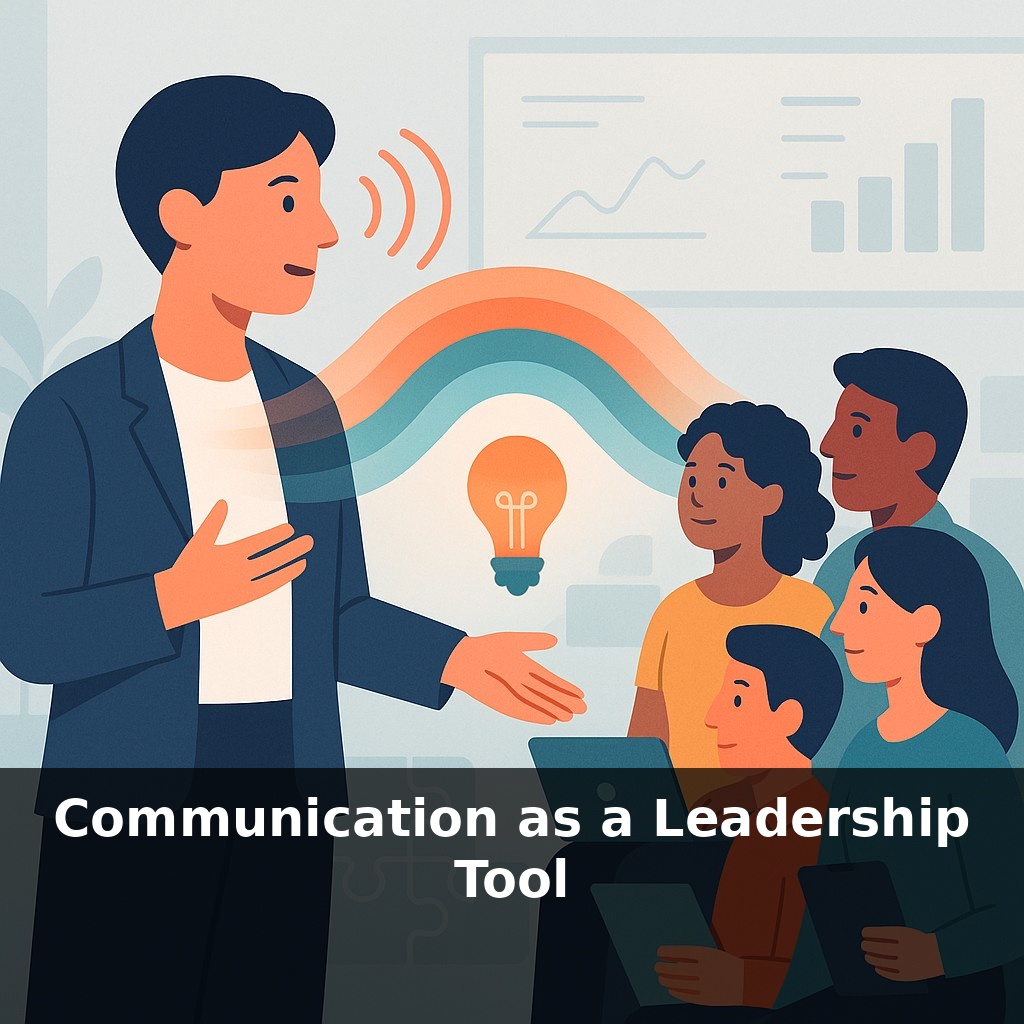
Leaders often assume communication is about transmitting information: “Here are the goals, here’s the plan, here’s the deadline.” But across dozens of studies, the leaders who actually move people don’t just pass along updates—they shape how others *experience* the work. The same message can land as noise, or as meaning. The difference lies in three things: how clearly you frame direction, how consistently you connect people to one another, and how intentionally you manage the emotional “temperature” of the room. That matters even more now, when a growing share of collaboration happens through screens, chat windows, and asynchronous updates. In that environment, every word, pause, and channel choice either sharpens or blurs what people think is most important—and how much of themselves they’re willing to bring to it.
In practice, this means your role shifts from “person who knows the answers” to “person who shapes the conversation.” Research on high-performing teams shows they have leaders who don’t just talk *at* people, but constantly translate: between executives and frontline, between long-term bets and this quarter’s trade-offs, between what’s said in public and what’s whispered in side chats. Think less town-hall speech, more ongoing series of short, intentional signals—across email, Slack, video, and in-person—that keep pulling attention back to what truly matters, and why it’s worth the effort.
The leaders who do this well treat every interaction as doing one of three jobs: **making meaning**, **reducing noise**, or **creating momentum**. When they speak, they’re not trying to sound smart; they’re trying to make it easier for people to decide, prioritize, and act.
**1. Making meaning: turning tasks into a story**
Research on resilient organisations shows that people endure pressure better when they can place their work inside a coherent narrative. That’s why McKinsey finds a clear change story tied to outperformance: stories compress complexity into something the brain can remember and repeat. When Satya Nadella took over at Microsoft, he didn’t start with product roadmaps; he repeated a simple storyline—“mobile-first, cloud-first” and a “growth mindset” culture—until people could finish the sentences for him. Your version doesn’t need to be poetic, but it does need to be *portable* enough that others can retell it without you in the room.
**2. Reducing noise: choosing *how* and *where* to say it**
Most leaders underestimate how much misalignment comes from channel confusion: critical priorities buried in chat threads, nuanced feedback sent as a one-line text, emotionally charged topics handled in status meetings. Mehrabian’s work on tone and body language isn’t a license to obsess over posture; it’s a reminder that some messages demand richer signals. Saying “this change will be hard, and I’m here with you” lands very differently when people can see your face, hear your pauses, and ask questions in real time. The medium teaches people how seriously to take the message.
**3. Creating momentum: using emotion as a resource**
Gallup’s engagement data isn’t just about happiness—it’s about energy. Leaders who link day-to-day work to a larger mission see lower turnover partly because they’re replenishing that energy instead of only withdrawing it. This doesn’t require cheerleading. It looks like naming the tension in the room, celebrating *specific* progress, and being explicit about what’s at stake for customers, not just KPIs.
In this sense, your calendar becomes a strategic instrument: one conversation sets the direction, the next strips away ambiguity, the next injects courage. Over time, the pattern of your words becomes the culture’s default playlist—what people hear in their heads when you’re not there.
Instead of a grand speech, think about a routine Monday standup. One product lead starts with: “Three priorities: ship feature X, fix outage Y, hit target Z.” People nod, open laptops, and mentally check out. Another starts with: “This week we’re stress-testing how fast we can learn. By Friday, I want three real customer reactions to this prototype—names, not numbers.” Same time slot, but now engineers see where to focus, designers know whom to talk to, and ops understands why speed matters more than polish.
Or take a team that’s just been through a reorg. A VP can recite the org chart and timelines, then wonder why rumors explode. A different VP walks through three decisions they *won’t* change this quarter, invites the toughest questions first, and ends by asking each manager to share one risk they’re worried about. People leave not with certainty, but with a sense that their concerns are part of the official story, not a side channel.
Gallup’s 23% engagement figure hints at a coming divide: leaders who treat communication as a design problem vs. those who treat it as housekeeping. As AI tools surface live sentiment, your “leadership signal” will be as trackable as a marketing funnel. That transparency cuts both ways. Consistency between message and behavior will function like compound interest: small mismatches quietly erode trust; small alignments, repeated, create reputational capital you can draw on in a crisis.
Your leadership edge will come from treating every message as a prototype: test it, watch how people respond, then refine. Like tuning a recipe, a small tweak—one clearer “why,” one better-timed question—can change the whole flavor of a project. Over time, this deliberate iteration turns routine updates into signals people actively seek out.
Here’s your challenge this week: In your next three team interactions (one email, one 1:1, and one meeting), deliberately use the “leader’s communication loop” from the episode: state the intention, share the context, say the message in one clear sentence, and then ask one clarifying question (“What are you hearing in this?”). After each interaction, score yourself from 1–5 on clarity, brevity, and alignment with your leadership vision, just like the host suggested. By Friday, pick the lowest-scoring of those three and rewrite that exact message using the episode’s tips on stripping out filler, softening defensiveness, and ending with a concrete next step, then send the improved version to the same audience.