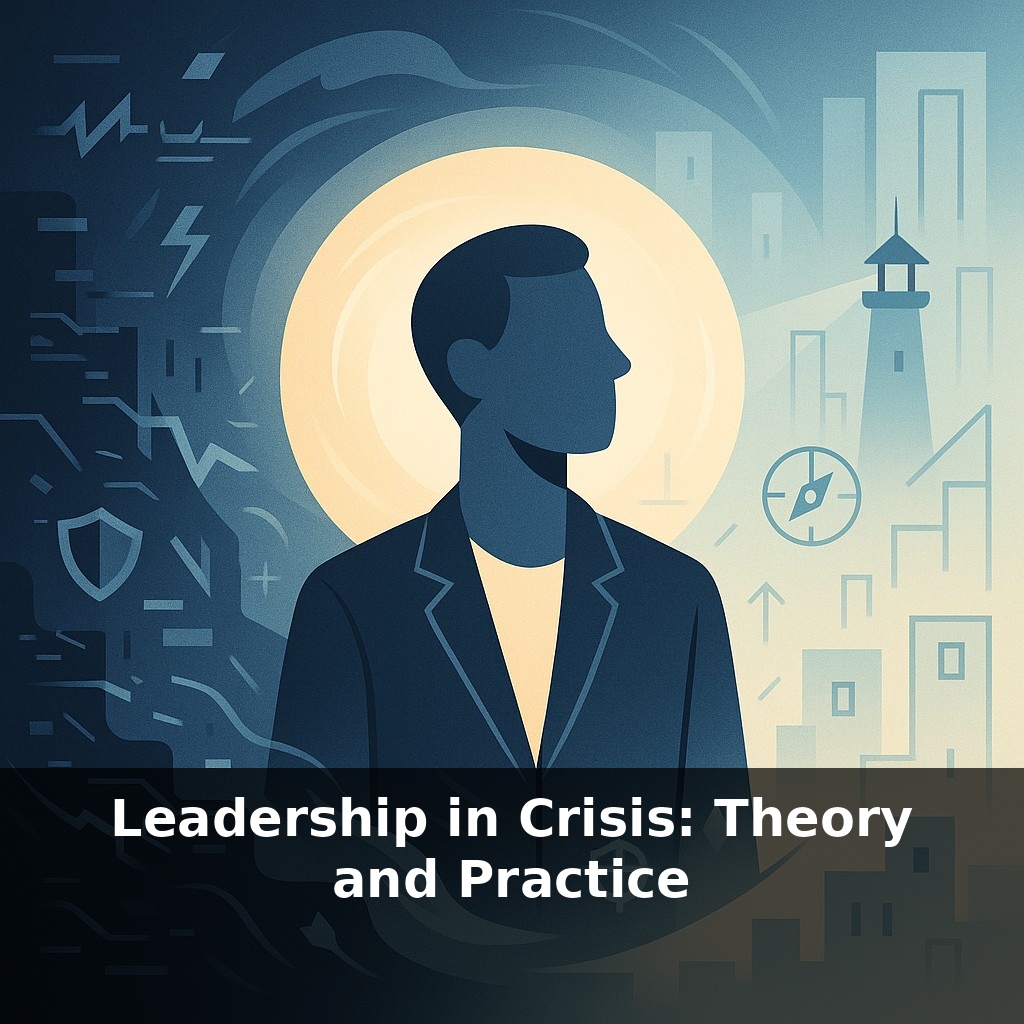
“Never waste a good crisis.” Churchill said it, but here’s the twist: most leaders *do*. A sudden outage, a scandal, a viral complaint—some careers implode, others quietly level up. Same chaos, same pressure. The real mystery is: what are the few doing differently in those first tense hours?
FEMA says every $1 you invest before a disaster can save $6 after it hits. That ratio applies to your *career* as much as it does to hurricanes. The leaders who come out of crises stronger aren’t just “good in emergencies”—they’ve pre-built muscles: fast thinking, calm presence, and a habit of over-communicating when stakes spike.
In this episode, we’re shifting from “how to survive chaos” to “how to turn it into a long-term leadership asset.” We’ll look at why trust, speed, and visibility consistently separate promotions from scapegoats—and how leaders like Johnson & Johnson’s James Burke used those levers to protect both people and business during the Tylenol crisis. You’ll also see how simple frameworks like the OODA loop quietly underpin the careers of leaders who seem unshakeable when everything goes sideways.
Most people think “crisis leadership” only kicks in during headline moments—data breaches, recalls, pandemics. In reality, your apprenticeship starts in the smaller shocks: a key hire quits, a major client churns, a product launch misfires. Those moments are low-stakes labs where you quietly test your skills. As your scope grows, the pattern scales: the same behaviors that steady a tense team meeting often determine how you’ll handle a public crisis later. So in this episode, we’ll treat each disruption as signal, not noise—a practical rehearsal for the bigger storms you haven’t met yet.
In practical terms, leading through crisis comes down to three repeatable moves: narrowing the problem, shortening the loop, and widening the lens.
Narrowing the problem means refusing to fight “the crisis” as one giant monster. The best leaders cut it into work-sized questions: “What must be true in the next 60 minutes?” “What must not happen under any circumstances?” Johnson & Johnson didn’t debate “How do we save Tylenol forever?” in 1982. They started with: “How do we keep one more person from dying today?” That single constraint made bold actions—like a full recall—feel obvious instead of heroic.
Shortening the loop is about compressing the time between signal and response. Leaders who handle crises well don’t just react faster; they deliberately design information flows beforehand so they **can** react faster. In organizations that outperform under stress, three things are usually in place before anything goes wrong: - A standing “tiger team” or incident cell that can assemble within minutes - A clearly named decision owner for each domain (people, tech, customers, regulators) - Pre-agreed thresholds that trigger action without waiting for meetings
When something breaks, everyone already knows who speaks, who decides, and what “bad enough” looks like. That’s how companies manage live outages in minutes instead of hours.
Widening the lens is the paradoxical move: even as you narrow and accelerate, you deliberately zoom out on *who* is affected and *how long* the shadow might be. Leaders who only chase today’s fire create tomorrow’s scandal. The stronger pattern is: stabilize → then immediately ask, “If we handle this *well*, what do we want people to say about us six months from now?” During COVID-19, the organizations that protected trust didn’t just send daily updates; they framed every trade-off (layoffs, office closures, policy changes) against a long-term promise to employees and customers.
This is where decentralization quietly becomes an advantage rather than a risk. Under clear intent—“no customer left stranded,” “no safety corners cut,” “no silent suffering on the team”—local leaders get permission to move first and justify later. That’s how a mid-level manager’s choices during a rough week can either quietly erode the brand or become a small-scale version of the Tylenol response.
Your job as an emerging leader is to start practicing these moves when the stakes are still small: a failed sprint, a delayed shipment, a public bug, a hiring mistake. Each “mini-crisis” is a chance to rehearse narrowing, looping, and widening—so that when the spotlight eventually swings your way, you’re not improvising from zero.
In tech, you can see these moves in a simple production outage. An engineering manager doesn’t declare “system failure”; they isolate one misbehaving service, lock a small swarm of people on it, and freeze nonessential work. Someone else owns updates to support and sales. Another person tracks customer impact, noting which workflows break first. Nothing glamorous—but that structure quietly turns a chaotic hour into a sequence of solvable problems and clear messages.
A useful way to stress-test your own approach: watch how you handle a messy cross-team dependency. Do you lump everything into “they’re blocking us,” or do you separate what’s unclear, what’s late, and what’s actually risky? Do you create a fast, focused channel with one named counterpart, or let scattered threads pile up? That small pattern is often exactly how you’ll behave later, when the stakes include reputation, not just a slipped milestone.
FEMA’s 6x payoff on preparedness hints at the next shift: crisis leadership won’t be a specialist skill; it will be a core part of every manager’s job. As AI flags weak signals and dashboards glow red sooner, your value moves from *spotting* crises to negotiating trade‑offs in full view of your team. Think less “heroic fixer,” more like a disciplined portfolio manager, reallocating attention and resources as shocks keep coming—while your ethics stay non‑negotiable.
Your next frontier isn’t learning *what* to do in a crunch; it’s training *who you are* when pressure hits. That identity is built in small, dull moments: owning minor bugs, narrating tough calls, admitting “I don’t know—yet.” Like rebalancing an investment portfolio, the leaders who review their “crisis moves” regularly are the ones compounding credibility over time.
Try this experiment: In your next team meeting, deliberately run a 10‑minute “crisis drill” by presenting a specific, plausible scenario (e.g., your main system goes down for 6 hours on the last day of the quarter) and tell the team you’re treating it as real for those 10 minutes. Ask each person to state, out loud and in order, (1) what they’d do in the first 30 minutes, and (2) one resource or person they’d immediately need. You just listen, clarify, and summarize the plan back to them without solving anything yourself. Afterward, privately note who stayed calm, who defaulted to blame, and who moved straight to coordination—those patterns are your live data on how your group (and you) actually lead under pressure.