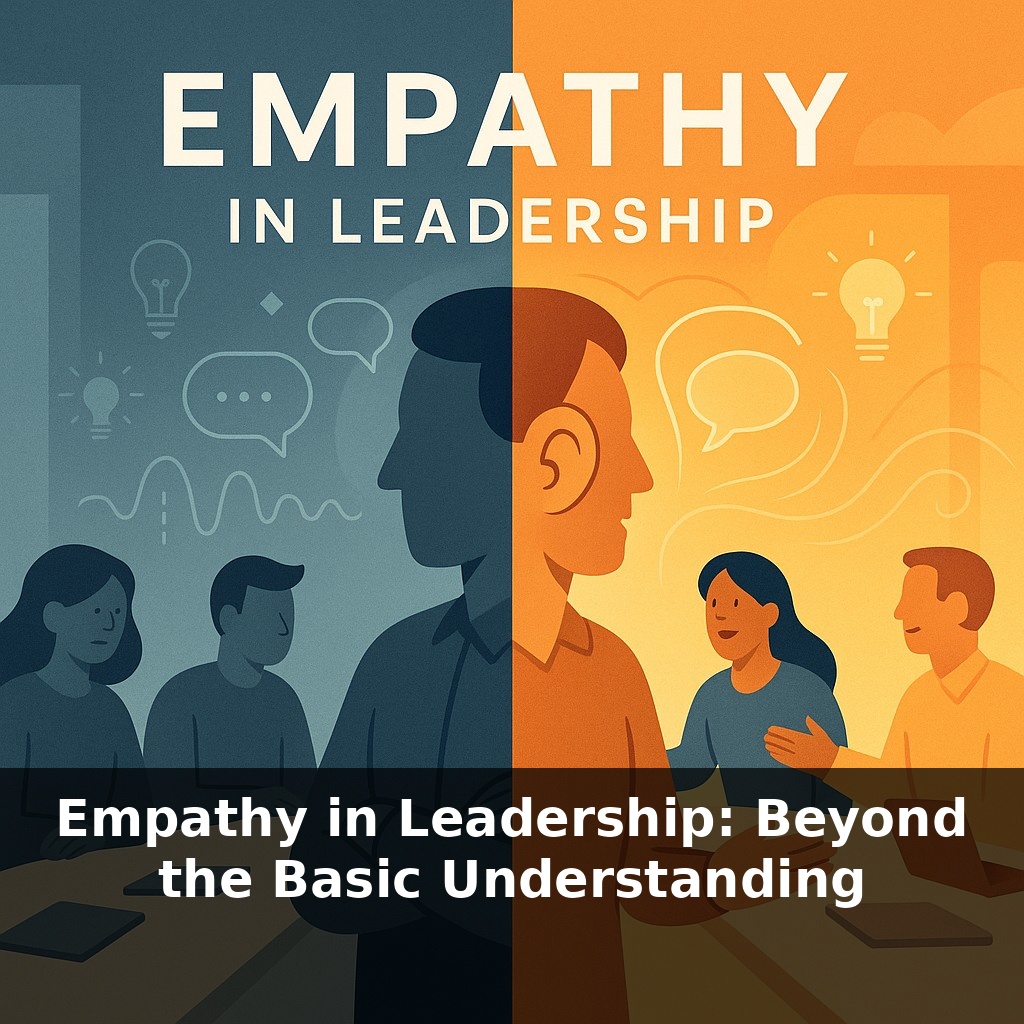
“In one global survey, most employees said they’d rather earn less money than work for a cold, uncaring boss. Now, picture two meetings: in one, ideas die the moment they’re shared; in the other, even wild thoughts get explored. Same company. The only real difference? How the leader listens.”
Sixty‑one percent of employees say they’d trade some salary for a more empathetic employer. That’s not softness—that’s a market signal. As you move up in responsibility, technical decisions start to blur together; what separates average from exceptional leaders is how precisely they read the human dynamics underneath the work.
This is where empathy often gets misunderstood. It’s not “being nice,” agreeing with everyone, or absorbing every emotion in the room. At its best, empathy is a data‑gathering superpower: a disciplined way of sensing what people aren’t yet saying out loud and feeding that insight directly into choices about priorities, pacing, and pressure.
Used this way, empathy reshapes how you run performance reviews, assign stretch work, even how you respond when someone quietly starts turning their camera off in every meeting.
The twist is that this “superpower” only matters when you actually do something with what you pick up. Noticing that a high performer has gone quiet, for example, is just the opening move. The next moves are choices: Do you adjust a deadline? Redistribute work? Name the tension in the next team meeting so others don’t fill the silence with fear?
Research backs this up. In a Catalyst study, employees with empathetic leaders weren’t just happier—they were more engaged and innovative. That’s the leap: moving from momentary understanding to deliberate shifts in workload, norms, and goals that compound over time.
Start with a paradox: the leaders people describe as “the most understanding” are often the same ones known for hard calls—reorgs, performance exits, aggressive pivots. The difference isn’t that they feel less; it’s that they use what they notice to choose *how* they make those calls.
This is the step most managers skip. They nod, they say “I hear you,” but nothing in their calendars, metrics, or decisions moves. Colleagues quickly learn: *my reality is interesting, but not operational.* Psychological safety erodes one unacted‑on conversation at a time.
Operational empathy has three layers:
**1. Sensing patterns, not just moments.** An isolated comment about burnout is a flag; three similar comments from different pockets of the org is a signal. The Cleveland Clinic study showed that training changed physicians’ brains *and* patient outcomes because doctors started to detect patterns in distress, not just individual episodes.
**2. Turning insight into design.** Microsoft didn’t just talk about “growth mindset and empathy.” They rewired systems: how they do performance reviews, how they run meetings, what they reward. When you learn that parents are routinely working late to sync with another time zone, do you: - Keep the schedule and offer generic wellness tips? or - Redesign handoffs so the burden rotates?
**3. Balancing care with stretch.** Empathy doesn’t mean shielding people from discomfort; it means distinguishing between *productive* stretch and *destructive* strain. A manager who understands someone’s fear of public speaking might still assign them a high‑stakes presentation—but with rehearsal time, guardrails, and clear debrief. That’s very different from “I know you’re anxious, so I’ll never put you in that spot.”
Think of it like refactoring legacy code: you don’t rewrite the whole system every time you spot a bug. You fix the part of the architecture that keeps generating the same error. Empathic leaders do that with their team’s recurring pain points—updating norms, not just soothing symptoms.
Over time, this builds a quiet contract: “If you tell me the truth about how this is landing, I’ll treat that as input into how we work, not background noise.” That contract is what keeps talented people leaning in when the pressure inevitably spikes.
A practical way to spot where your empathy is (and isn’t) shaping decisions is to watch the “edges” of your team: the newest hire, the quietest voice, the person juggling the most outside of work. For example, one engineering director noticed that release-night pages always went to the same two reliable seniors. Rather than praising their “dedication” yet again, she asked them to walk her through the actual cost. That led to rotating on‑call schedules, better documentation, and a junior cohort that finally had space to grow.
Another leader saw brainstorms dominated by three extroverts. Instead of lecturing on inclusion, he added a five‑minute silent writing phase before anyone spoke. Within a quarter, his team doubled the number of experiments shipped—not because people suddenly cared more, but because the conditions finally matched what they’d needed all along.
As AI takes over more routine work, emotional nuance becomes a competitive edge, not a “nice to have.” Markets will start treating relational skills like an asset class: investors scanning for early signals in retention curves, internal mobility, even Glassdoor narratives. Expect tools that surface “relational debt” the way CRMs surface churn risk—flagging teams where silence has replaced conflict. Your future peers may be promoted less for individual brilliance and more for how predictably they unlock others’ best work.
When you treat people’s unspoken context as seriously as their output, your role subtly shifts—from traffic controller to pattern detective. Over time, you’ll start noticing tiny inflection points: a question left hanging, a camera switched off, a risk quietly withdrawn. Follow those threads and you often find the real roadmap for where your team can go next.
To go deeper, here are 3 next steps:
1. Block 20 minutes today to watch Brené Brown’s short RSA animation “The Power of Empathy” on YouTube, then compare her four elements of empathy with the leadership behaviors discussed in the episode (especially how you handle 1:1s and performance feedback). 2. Install the free “Everyday Empathy” deck from Greater Good in Action (UC Berkeley) and use one prompt in your next team meeting to practice perspective-taking on a real work challenge your team is facing. 3. Pick up *Leadership Is Language* by L. David Marquet and, before your next check-in with a direct report, script three “curious, non-fixing” questions from the book to use instead of your usual status questions, then notice how it changes the depth of the conversation.