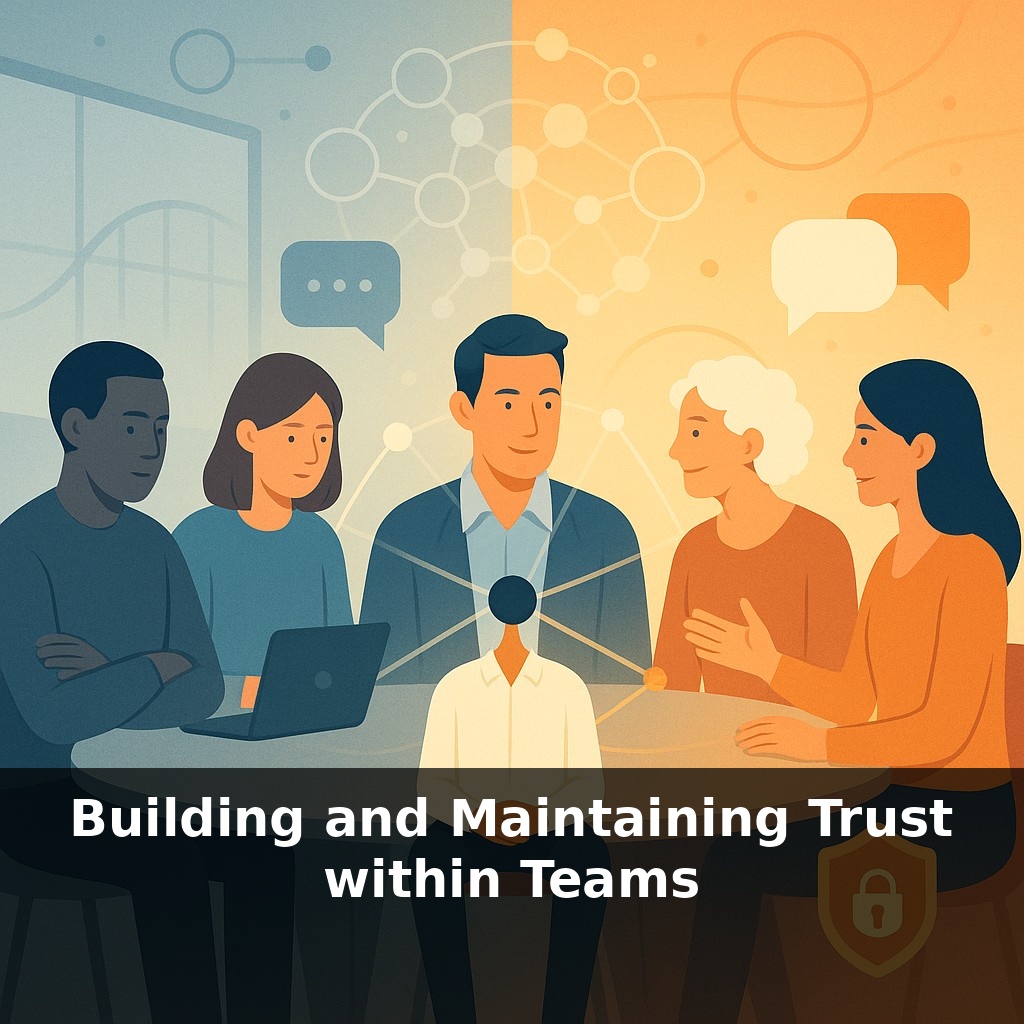
Only about one in five employees strongly trust their leaders. Now drop into a team meeting: cameras off, slow responses, updates that sound polished but hollow. As a leader, you think work is “fine.” Your team is quietly protecting themselves instead of the mission.
Harvard data shows that high‑trust companies experience 74 % less stress and 50 % higher productivity. Yet most leaders still overinvest in tools, processes, and incentives—and underinvest in trust. The result is a strange contradiction: organizations chase “high performance” while quietly running on a fragile foundation.
Trust isn’t a feeling you hope for; it’s a set of observable behaviors you can design, measure, and manage. Four drivers matter most: consistent competence, visible benevolence, lived integrity, and open communication. Miss one, and results lag even when people look busy.
In this episode, you’ll translate those drivers into specific leadership moves: how to run meetings that raise psychological safety, how to respond when you’re wrong, and how to repair trust quickly after a misstep—before it calcifies into disengagement or silent resistance.
Most leaders still misdiagnose trust issues as “skill gaps” or “personality clashes.” A salesperson sandbags forecasts, an engineer “forgets” to raise risks, a manager sugarcoats bad news—these look like performance problems, but they’re often rational responses to low safety. In Google’s research, teams that felt safe were 35 % more likely to share hard truths early. That’s your leverage point. In this section, you’ll move from abstract trust drivers to three concrete arenas: how you run 1:1s, how you handle bad news, and how you follow through on visible commitments.
Start with your 1:1s. Most leaders treat them as status reports; high‑trust leaders treat them as signal amplifiers. Three practical shifts:
1) Structure: Reallocate time. In a 30‑minute 1:1, spend at least 20 minutes on the person and at most 10 on projects. That 20:10 ratio forces you to ask, “What’s getting in your way?” instead of “Are we on track?” Over a month, that’s 80 minutes of explicit safety‑building per person instead of 20.
2) Question design: Use questions that make it costly to hide problems and safe to surface them. For example: - “On a 1–10, how confident are you we’ll hit your goals this quarter? What makes it not a 10?” - “What’s one thing you’re worried I’m underestimating?” - “Where have I made your work harder in the last two weeks?” Track answers. If confidence stays below 7 for three weeks and nothing changes, people learn that honesty has no impact—and stop offering it.
3) Commitments: End every 1:1 with two written bullets: - “You own:” (their next step, in their words) - “I own:” (your specific support, with a date) If you have six direct reports and miss your “I own” item for three of them in a given week, that’s a 50 % public miss rate. People notice, even if they never mention it.
Next, how you handle bad news. The first 90 seconds matter disproportionately. When someone brings you a problem: - Breathe. No interruptions for the first 30 seconds. - Name the value: “Thank you for bringing this early; that’s exactly what I want.” - Ask one clarifying question before offering any opinion. Leaders who jump straight to “Why didn’t you…?” train teams to delay truth by weeks. Across a quarter, that can mean discovering a slipping project in week 11 instead of week 4.
Finally, visible follow‑through. Choose three “public promises” each quarter: commitments you know your team is watching (e.g., “We’ll fix decision‑making in cross‑team work by April 30”). Track them on a simple shared doc with dates and status. Hitting even 2 of 3, and transparently explaining the third, beats making 10 vague assurances and delivering on 5. Consistency at this small scale compounds into a reputation: “When they say yes, it happens.”
A practical example: a VP of Product at a 300‑person SaaS company realized her org was stuck in “polite silence.” She piloted a new 1:1 pattern with just 5 direct reports for 6 weeks. Each 30‑minute session followed the 20:10 rule, ended with the two‑bullet “You own / I own” summary, and started with one fixed question: “What’s one thing you’re worried I’m not seeing?” Within 4 weeks, she logged 17 specific risks that had never appeared in status decks. Acting on just 4 of them prevented an estimated 6–8 weeks of rework across engineering and design.
You can do the same at smaller scale. Pick 2 behaviors to track numerically for 30 days: (1) “I own” items completed on time (target: ≥ 90 %), and (2) number of unsolicited risks or dissenting views raised in meetings (aim to increase by 25 %). Treat this like A/B testing your own leadership “operating system”: small, deliberate tweaks, measured impact, then expand what works.
High‑trust leaders will soon be measured, not just admired. Expect dashboards that track “trust signals” the way CRMs track pipeline: response time to bad news, percentage of met “I own” commitments, cross‑team referrals. A leader whose team surfaces 30 % more risks but ships with 20 % fewer defects becomes visibly more valuable. Your challenge this week: decide 2 trust metrics you’d be proud to have on a public scorecard—and start quietly tracking them.
Treat trust like any other performance variable: design small tests, measure outcomes, and iterate. For the next 30 days, run one experiment: adjust a single behavior (e.g., how you respond to bad news) and track 3 signals—issue detection speed, defects, and rework hours. If even 1 improves by 10–15 %, keep and scale that change.
To go deeper, here are 3 next steps: (1) Block 25 minutes today to skim “The Five Dysfunctions of a Team” by Patrick Lencioni (or read the free summaries on Atlassian’s Team Playbook) and highlight 3 ideas you want to test with your current team. (2) Pick one upcoming meeting and run the “Team Health Monitor” from Atlassian’s Team Playbook, focusing specifically on the “Trust” dimension, then share the visual results with your team in your next standup. (3) Before your next 1:1, open Radical Candor’s “Get Stuff Done” guide (available on their site) and choose one specific question to ask that invites your direct report to safely disagree with you, then note how that changes the tone of the conversation.