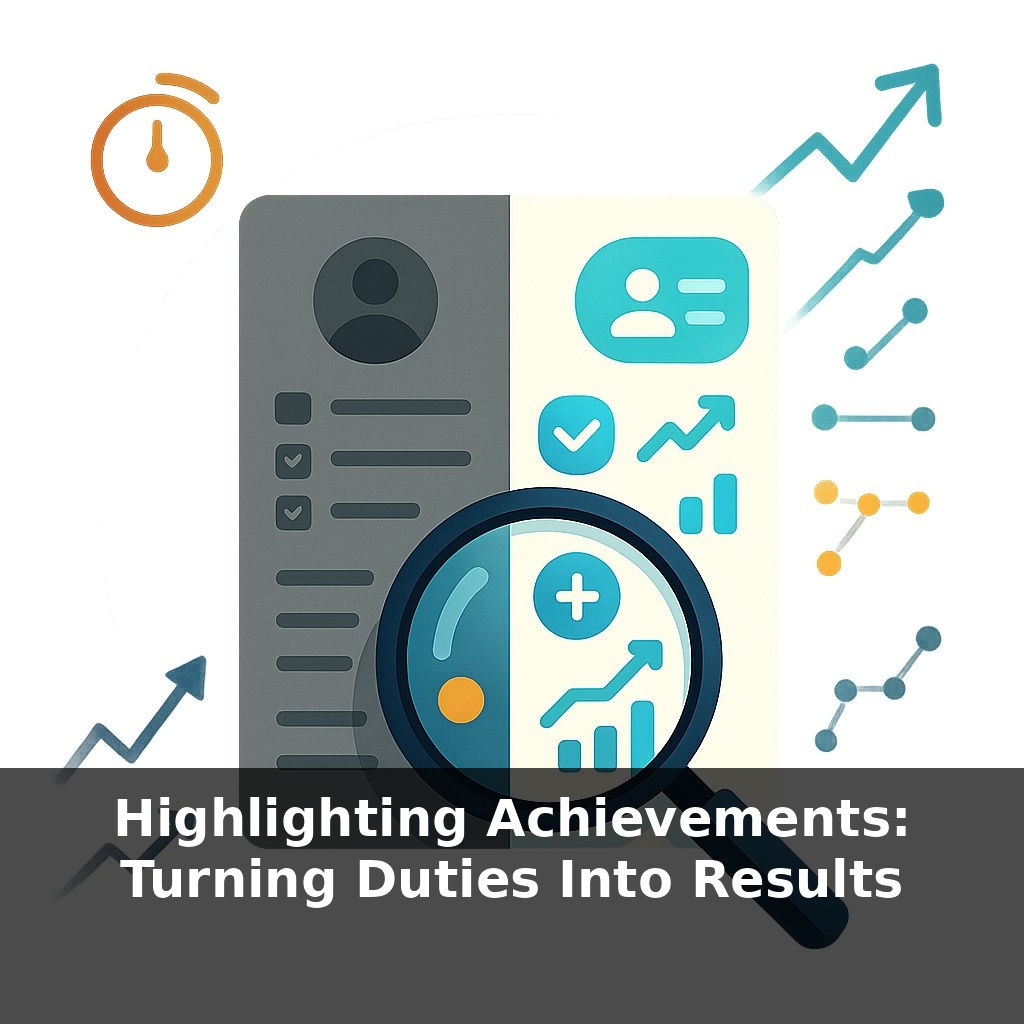
A recruiter glances at your résumé for barely eight seconds… then decides your future. In one version, they see a list of duties. In another, the same job sparkles with results and impact. Same career, same person—totally different reaction. Which version are they meeting today?
Recruiters aren’t hunting for perfect careers; they’re hunting for patterns of impact. They’re asking: “When this person shows up, what *changes*?” That’s why frameworks like STAR and PAR are so powerful—they force you to move beyond “what I was responsible for” and into “what actually happened because I was there.”
Most people skip this step because they think they lack big wins: no huge revenue numbers, no dramatic turnarounds, no shiny awards. But employers care just as much about micro‑improvements: shaving five minutes off a recurring process, reducing small errors, calming frustrated customers, tightening a messy workflow.
Think of each workweek as a box score. If you don’t capture the stats—time saved, mistakes prevented, people helped—you’ll have nothing to point to when it matters most.
Here’s the twist: your strongest achievements often hide inside the “boring” parts of your job. The steady client you kept from churning, the onboarding checklist you quietly fixed, the weekly report you streamlined so your manager actually reads it now—these rarely feel like headline wins in the moment. That’s because your brain labels them as “just doing my job.” But recruiters can’t see inside that label. They only see what you translate into concrete outcomes. Treat your day-to-day like a running experiment: “If I change this one thing, what improves—and by how much?”
Here’s the shift most people miss: the “achievement version” of your work doesn’t require a different job—it requires different *language* and a bit of detective work.
Start with a single duty you already know is on your résumé or LinkedIn. For example: - “Answered customer emails” - “Updated spreadsheets” - “Attended project meetings” - “Ran weekly stand‑ups” - “Processed invoices”
On their own, these lines tell a recruiter *what* you touched, not *what changed* because you touched it. To upgrade them, you need three things: context, a lever, and a number.
**Context** is the “before” snapshot: - How often did this happen? (daily, weekly, monthly?) - Who or what was affected? (team size, number of customers, volume of data?) - What was annoying, slow, confusing, or risky about how it worked before?
Now look for the **lever**—the specific action you took that wasn’t strictly scripted: - Did you reorder steps so they flowed better? - Did you create a simple template, checklist, or script? - Did you teach someone else how to do it faster or with fewer questions? - Did you spot and remove a redundant step?
Finally, hunt for a **number** that shows movement. If you don’t know exact stats, estimate responsibly and anchor it in a time frame: - Time: “cut response time from about 2 days to same‑day” - Volume: “handled 30–40 tickets per shift instead of 20” - Quality: “reduced common errors from daily to about once a week” - Satisfaction: “turned 3–4 escalations per week into near zero over two months” - Reliability: “took a process that broke every Friday and made it boringly stable”
You’re not fabricating heroics; you’re surfacing cause‑and‑effect that’s already there.
A useful way to think about it: you’re refactoring your career story like a developer cleans up code—same functionality, clearer structure, easier to read, and far more convincing.
Here’s the pattern you’re aiming for: - Duty → “Owned monthly billing reports” - Upgraded → “Consolidated four billing spreadsheets into one template, cutting monthly report prep from ~6 hours to 2 and reducing last‑minute corrections.”
One line, same job—but now your impact is visible, testable, and memorable.
Now let’s make this concrete. Take three ordinary lines from a real job and run them through this “context–lever–number” lens:
- “Handled front‑desk calls” → “Reworked the call log so we could tag reasons for contact, surfacing the top 5 issues and cutting repeat calls by about a third over one quarter.”
- “Joined weekly sprint reviews” → “Proposed a 10‑minute ‘risk round’ at the end of sprint reviews, which helped the team flag blockers earlier and cut last‑minute scope changes for two consecutive releases.”
- “Updated inventory records” → “Set up simple naming rules and a shared tracker that reduced duplicate items by roughly 40% and saved the team from mid‑month stock surprises.”
Notice: none of these require a new title, promotion, or budget. They’re just slightly sharper descriptions of the same work, framed so a hiring manager can see momentum, not maintenance.
Your challenge this week: For five workdays in a row, pick one “boring” task per day and: 1) Jot down the **context**: how often you do it and who it affects. 2) Identify one small **lever** you can pull to make it faster, clearer, or less error‑prone. 3) Track any **number** that moves, even roughly: minutes saved, problems avoided, people helped, steps removed.
On Friday, turn those five upgraded tasks into five bullet points using this template: “[Action] + [how you changed it] + [what improved and by roughly how much].”
You’re not just collecting lines for a future résumé—you’re training yourself to notice and create impact in real time.
Soon, your “achievement detective” habit won’t just polish your profile—it’ll power live evidence. As tools quietly log response times, defect trends, or handoff delays, you’ll be able to replay a project like watching match footage, pausing on the exact play where you changed momentum. That means hiring managers won’t just read claims; they’ll scrub through proof. The people who practice turning small shifts into clear narratives today will be fluent in tomorrow’s impact dashboards.
Over time, these tiny upgrades form a highlight reel you can replay in any interview. Instead of vague claims, you’ll have concrete “before and after” moments—like rewatching a game and spotting the quiet assist that changed the score. Keep experimenting, keep tracking. The more curious you are about your own impact, the more stories you’ll have ready when it counts.
Start with this tiny habit: When you open your laptop for work, reread one bullet from your resume or LinkedIn and add just four words to make it more results-focused (for example, change “managed social media” to “managed social media, boosting saves”). When you finish a meeting, whisper to yourself one sentence that starts with “This helped…” and finish it with a concrete outcome (like “sales understand the new feature”). When you send a routine status email, slip in one short “so that we can…” phrase to connect your task to a visible result.