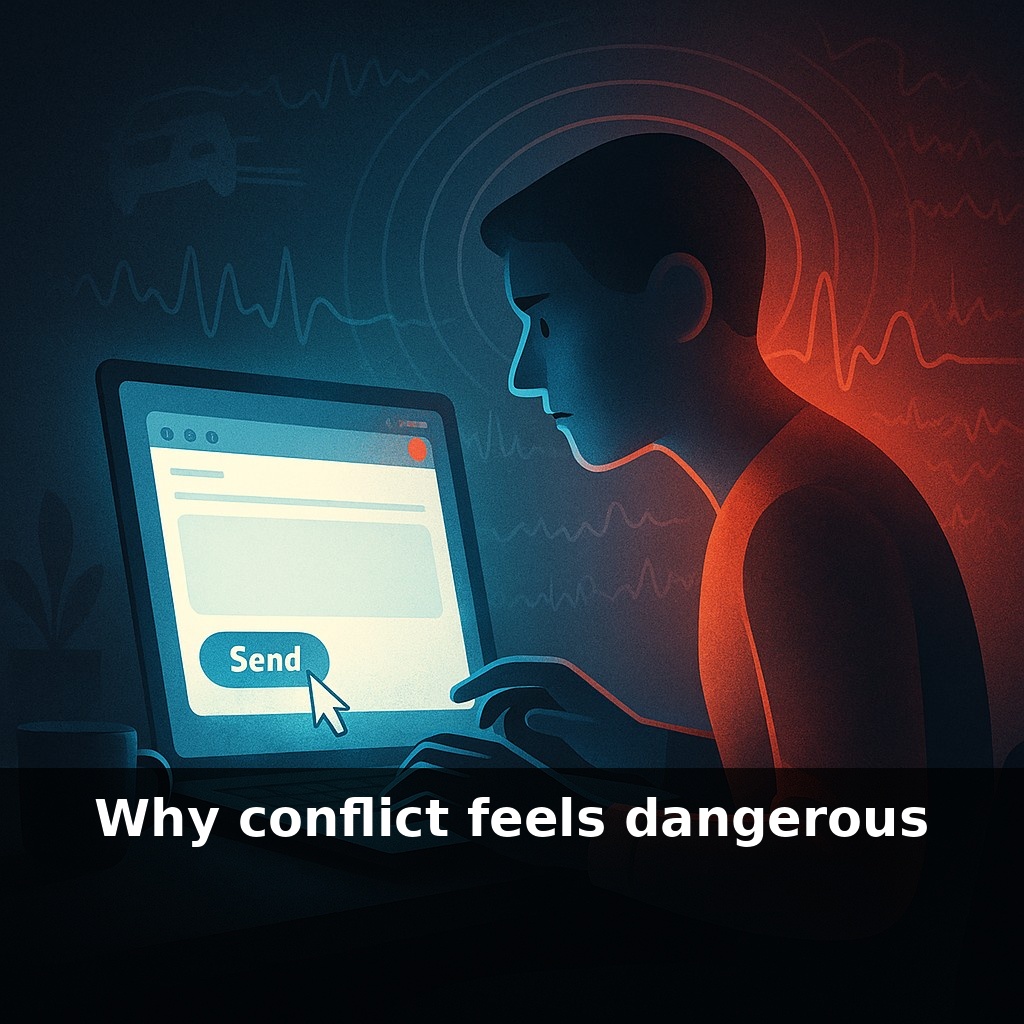
Why conflict feels dangerous
📝 Transcript
A single tense email can light up your brain’s threat system in a tiny fraction of a second—almost as fast as if a car swerved toward you. You’re at your desk, not in danger, yet your heart races. Why does simple disagreement feel so risky, even when nothing physical is at stake?
So there you are: staring at the screen, cursor blinking over a message you *know* you should send. It’s not hostile. It’s not even dramatic. It’s just… honest. Yet your fingers hesitate like you’re about to hit a self‑destruct button.
In modern work and relationships, this moment—whether it’s a status update to your boss, a boundary with a friend, or feedback to a teammate—has become a kind of silent choke point. Projects stall, resentment simmers, and creativity shrinks, not because people don’t care, but because that tiny pause turns into a full stop.
We call it “keeping the peace,” but often it’s just conflict-avoidance in a nicer suit. The cost is subtle: meetings where no one says what they really think, partnerships that feel polite but shallow, teams that play not to lose instead of playing to win.
Part of the trouble is that our nervous system hasn’t updated to the age of calendars and keyboards. It still acts like every hard conversation might exile us from the tribe that keeps us fed and safe. So instead of raising the awkward point in the meeting, we smooth it over. We nod along when we actually disagree. We change the subject when tension appears, like skipping the “off” track on an album. Over time, this quiet editing of ourselves doesn’t just protect relationships; it flattens them. The very frictions that could sharpen ideas and deepen trust get cut in the name of short‑term comfort.
Under the surface of that hesitation to speak up, something very old and very fast is running the show. A colleague questions your proposal in a meeting, or your partner raises an issue about how you’ve been dividing chores, and before any words come out of your mouth, your body has already voted.
Maybe your jaw tightens. Maybe your mind suddenly goes blank, or—on the contrary—starts building a rapid‑fire closing argument. These aren’t “bad habits” so much as automatic settings. The brain is constantly scanning for cues: tone of voice, facial micro‑expressions, timing, even punctuation in a message. In a few milliseconds it sorts them into simple buckets: safe / unsafe, ally / threat, move toward / move away.
Here’s where things get tricky: the same circuitry that flags a physical shock also reacts to being criticized, ignored, or contradicted. Social pain and physical pain share neural real estate. That’s why a curt “We need to talk” can land in your body like a punch you never actually received.
Now add context. If you grew up in a family where raised voices meant the conversation was about to explode, your system may read *any* intensity as danger. If you’ve been punished for speaking up at work, even mild disagreement can feel loaded. Over time, your brain starts “predicting” conflict outcomes before they happen and quietly steering you away from anything that looks similar.
The good news is that another set of capacities lives alongside these reflexes. Self‑awareness lets you notice, “My chest is tight; I’ve switched into defense mode.” Self‑regulation lets you buy a few seconds—one slow breath, one clarifying question—so the fastest, most fearful part of your brain doesn’t get the microphone alone. Empathy lets you entertain the possibility that the other person’s intent isn’t as hostile as your body insists.
Healthy conflict, then, isn’t about never feeling threatened. It’s about recognizing that first wave for what it is: data, not destiny. Just as a skilled musician can feel stage nerves and still lean into the performance, you can feel the spike of discomfort and still choose curiosity over combat.
Think about real teams you’ve seen: one product group where meetings are eerily calm, decisions take forever, and the “real” conversations happen in side chats afterward. Everyone’s technically aligned, yet deadlines slip and nobody feels truly responsible. That’s conflict‑avoidance in action, but from the outside it just looks like “nice culture.”
Now contrast that with a startup where two co‑founders regularly disagree in front of the team—but you can feel the difference. They ask each other, “What am I missing?” They pause when voices rise. They circle back after tense debates to name what went well and what stung. People still feel that first internal jolt, yet they’ve built small rituals that keep it from running the meeting.
Notice what’s happening: instead of trying to *eliminate* that spike of discomfort, they treat it as a signal that something important is on the table—maybe a risky idea, a hidden assumption, or an unmet need that finally surfaced. The goal shifts from “make this feeling go away” to “use this energy wisely.”
When more of our conflict moves into email, DMs, and AI‑mediated platforms, that split‑second “danger” read doesn’t vanish—it just has fewer human cues to counterbalance it. A short reply can feel like a slammed door. The opportunity is to design buffers: tools that flag rising hostility, prompts that suggest questions instead of comebacks, even VR “flight simulators” for disagreement so we can practice staying present when every instinct says “duck and run.”
So the next time tension spikes, treat it less like a stop sign and more like a yellow light: slow down, look around, then choose your lane. Over time, each small decision to stay present rewires what “danger” means in conversation. You’re not aiming for friction‑free; you’re training for sturdy enough to stay in the room when it really counts.
Before next week, ask yourself: 1) “In my last uncomfortable conversation, what *exact words* or tone from the other person made my nervous system go on high alert, and what story did I instantly tell myself about what that meant (e.g., ‘I’m wrong,’ ‘I’m unsafe,’ ‘they’ll leave’)?” 2) “The next time I feel my heart race or my chest tighten in a disagreement, what’s one sentence I can calmly say out loud—like ‘I’m feeling defensive, can we slow down?’—that honors my body’s reaction without shutting the conversation down?” 3) “If I treated conflict as information instead of danger, what’s one specific situation this week (a meeting, a text thread, a decision at home) where I could experiment with asking a curious question—such as ‘Can you tell me more about what’s important to you here?’—instead of immediately defending my position?”
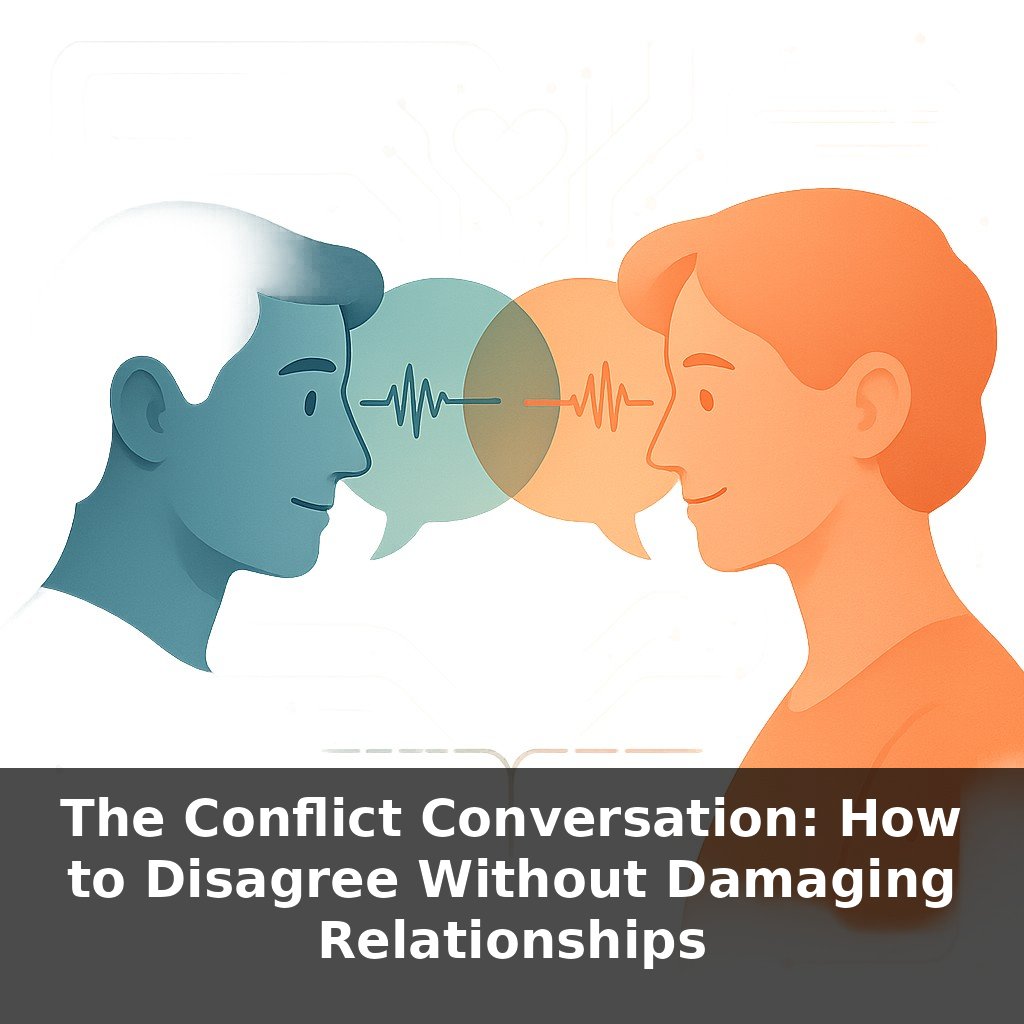
Unlock all episodes
Full access to 6 episodes and everything on OwlUp.
Subscribe — $1.99/monthLess than a coffee ☕ · Cancel anytime

