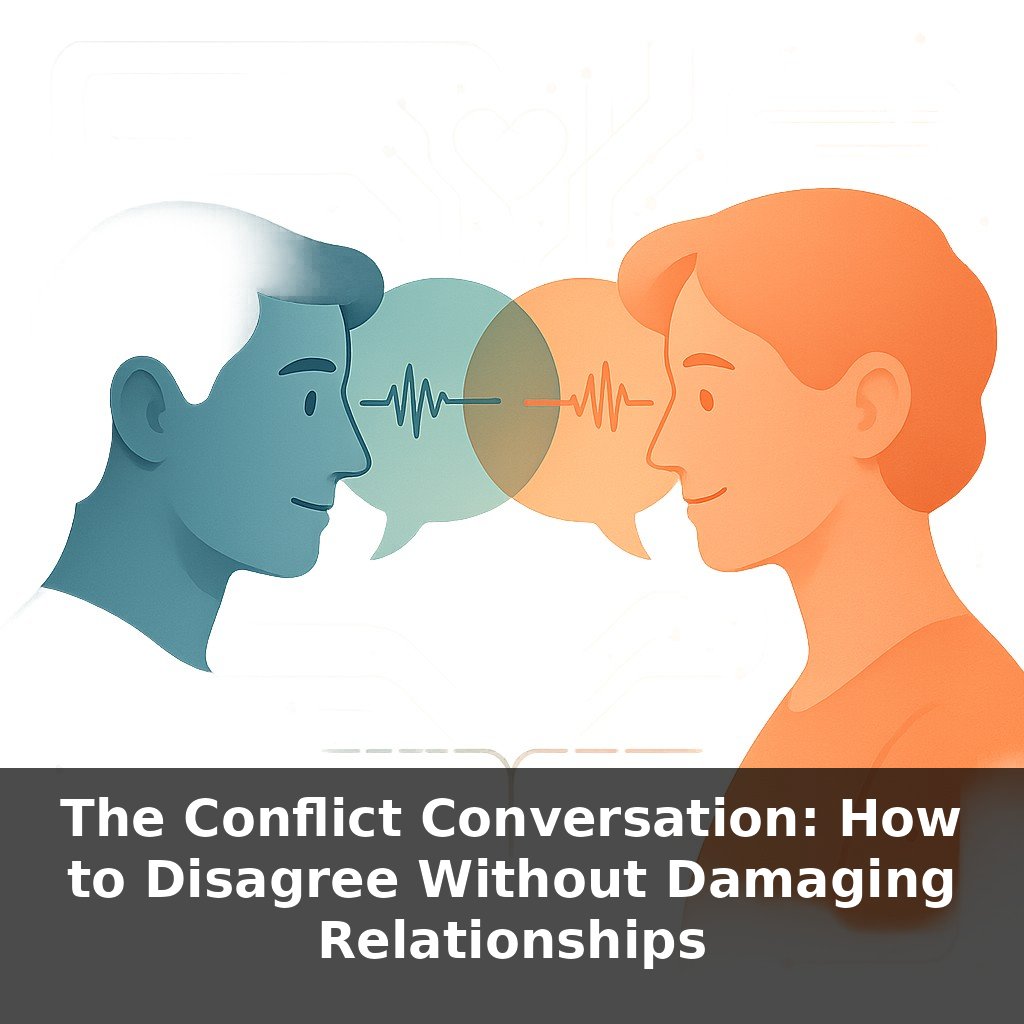
Teams that argue well can actually make decisions about a quarter faster than teams that “keep the peace.” One manager walks into a tense meeting and leaves with resignations. Another walks into the same heat—and leaves with new allies. This episode asks: what made the difference?
So what did that second manager actually do differently in the room? Not magic. Not “being a natural people person.” They were running a framework—often unconsciously.
In this episode, we’ll surface that hidden playbook.
We’ll look at conflict as a skill you can practice, not a personality trait you’re stuck with. That skill rests on three pillars: setting boundaries that keep people safe enough to be honest, using communication tools that prioritize curiosity over combat, and steering heated moments toward shared goals instead of dueling egos.
Think of it like learning a new instrument: at first it’s awkward and noisy, but with a few core chords and steady practice, you can play almost any song—or in this case, navigate almost any clash without burning trust.
Most workplaces never move beyond vague advice like “speak up more” or “be professional,” which is a bit like giving someone a scalpel and no surgical training. In this series, we’ll treat conflict less like a personality test and more like a craft, with specific moves you can learn, test, and refine. We’ll connect what happens in a tense 10‑minute exchange to the systems, incentives, and unspoken rules around it. That means zooming out to see how power, culture, and technology shape clashes—and zooming in to the exact words, micro‑pauses, and questions that either escalate friction or quietly unlock progress.
Let’s put some structure around what actually happens in a hard conversation, so it’s not just “be better at conflict” but a sequence you can recognize in real time.
Most clashes follow a quiet pattern:
First, there’s a *spark*—a missed deadline, a blunt email, a decision made without you. That spark lands on a pile of assumptions: “They don’t respect my time,” “Leadership doesn’t care,” “She’s trying to control the project.” The spark is observable; the assumptions are invisible. Technology often blurs this line: short chat messages, delayed replies, and quick emoji reactions invite people to fill in emotional gaps with their own worst‑case stories.
Next comes *stance*. Within seconds, people slide into positions: “This is unacceptable,” “We’re doing it my way,” “This is non‑negotiable.” Notice these are headlines, not full articles. They’re rigid, slogan‑like statements that hide the underlying reasons, fears, and constraints. Online, stance hardens faster: a Slack thread or email chain lets everyone polish their take before hitting send, so positions arrive pre‑armored.
Underneath stance lives *stake*: what each person actually needs to protect or achieve. That might be time (“I’m already at capacity”), identity (“I’m the one accountable if this fails”), or values (“Cutting corners here feels wrong”). Stake is rarely named directly, yet this is where genuine alignment is most likely.
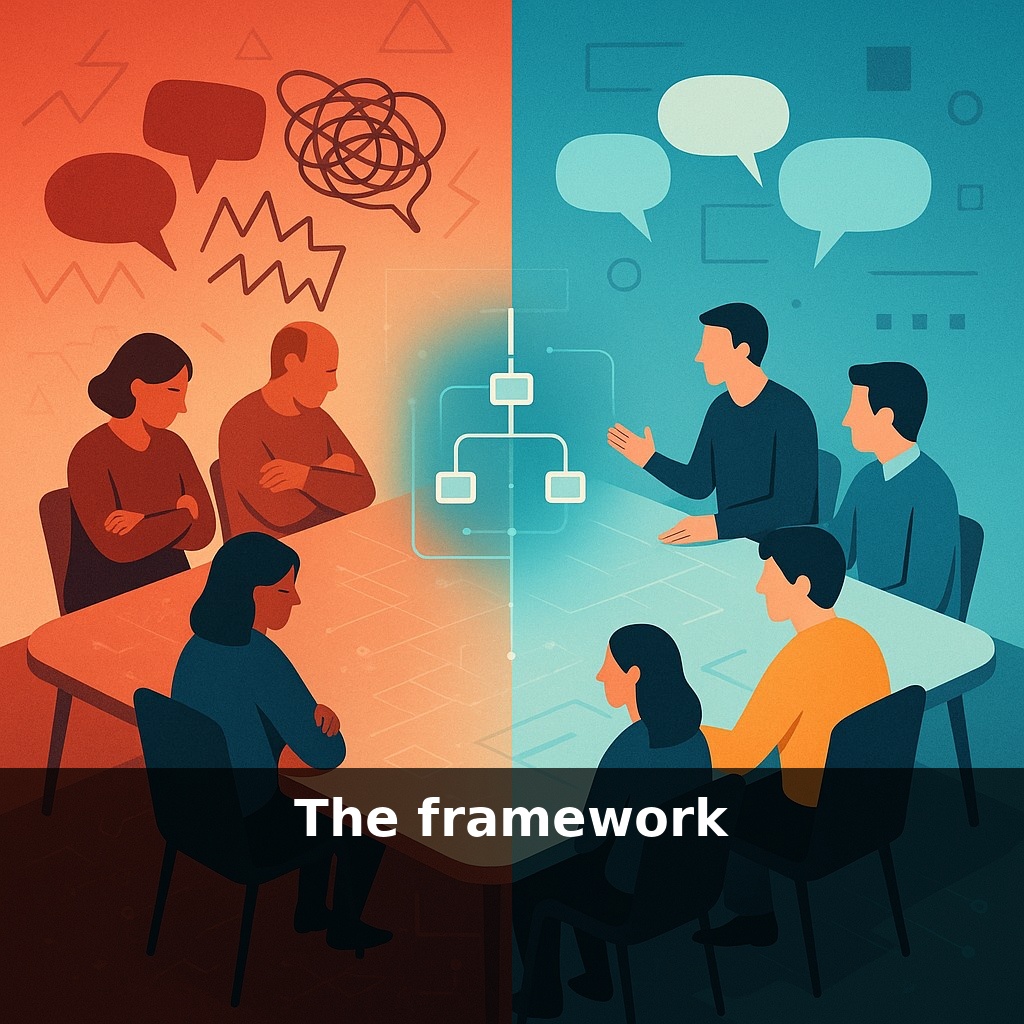
The framework you’ll practice in this series is about noticing which layer you’re in—and deliberately moving the conversation downward, from spark → stance → stake. Not by playing therapist, but by using concrete moves: naming the observable spark without accusation, acknowledging stances without getting trapped in them, and then inviting people to surface what’s truly at stake in practical language.
One useful mental check: ask yourself, *“Am I arguing about the headline or the article?”* Headlines clash; articles can be edited. When you learn to pivot toward the article level—especially in fast, tech‑mediated exchanges—you create room for disagreement to sharpen thinking instead of shredding trust.
In practice, that spark‑stance‑stake pattern shows up in places you might not label as “drama.” A designer leaves terse comments in Figma: “This doesn’t meet the brief.” Spark. The product manager replies in the thread: “We’re not redoing this; launch is Friday.” Stance. What’s actually at stake? For the designer, quality and reputation. For the PM, timeline promises already made to sales.
Or take a remote team where two engineers keep reopening the same Jira ticket. One writes, “This is a hack.” The other closes it again: “Ship now, refactor later.” Under the surface: one is guarding system reliability, the other is defending a commitment to a customer who’s already waiting.
Your leverage point is noticing which layer the conversation is stuck in. In fast, tool‑mediated work, people rarely announce, “Here’s what I’m protecting.” You infer it from patterns: who always invokes risk, who keeps mentioning deadlines, who lights up when values like “fairness” or “craft” are named—and then you gently invite that layer into the open.
Disagreements are about to get more instrumented. As AI systems learn your team’s rhythms, they’ll be able to flag patterns—who always responds last‑minute, which topics trigger terse one‑liners—and surface them gently, before they harden into grudges. Think of it less as a referee, more as a studio soundboard letting you isolate tracks: tone, timing, power, cultural norms. The risk isn’t “too much data,” but mistaking dashboards for consent, or metrics for meaning.
As tech starts surfacing patterns in how you clash and collaborate, your role shifts from “avoiding drama” to “conducting the noise.” The next step isn’t more rules—it’s more experiments: shorter messages, clearer subject lines, explicit check‑ins on tone. Treat each tense thread like a rough demo track you can remix, not a verdict on the band.
To go deeper, here are 3 next steps: 1) Download the free Miro or Whimsical whiteboard tool and actually map *your* version of the Framework (Awareness → Diagnosis → Design → Execution → Feedback) as a visual flow, then screenshot it and set it as your laptop/phone wallpaper for the week. 2) Grab a copy of “Thinking in Systems” by Donella Meadows and read just Chapter 1 with your Framework diagram next to you, underlining any concept (loops, leverage points, delays) that you can plug directly into the “Diagnosis” stage of your model. 3) Open Notion (or a free Notion template for project pipelines) and build a single-page dashboard with five sections named after the Framework stages, then drop ONE current project into it and reorganize all its tasks under those five headings so you can literally run that project through the Framework starting today.