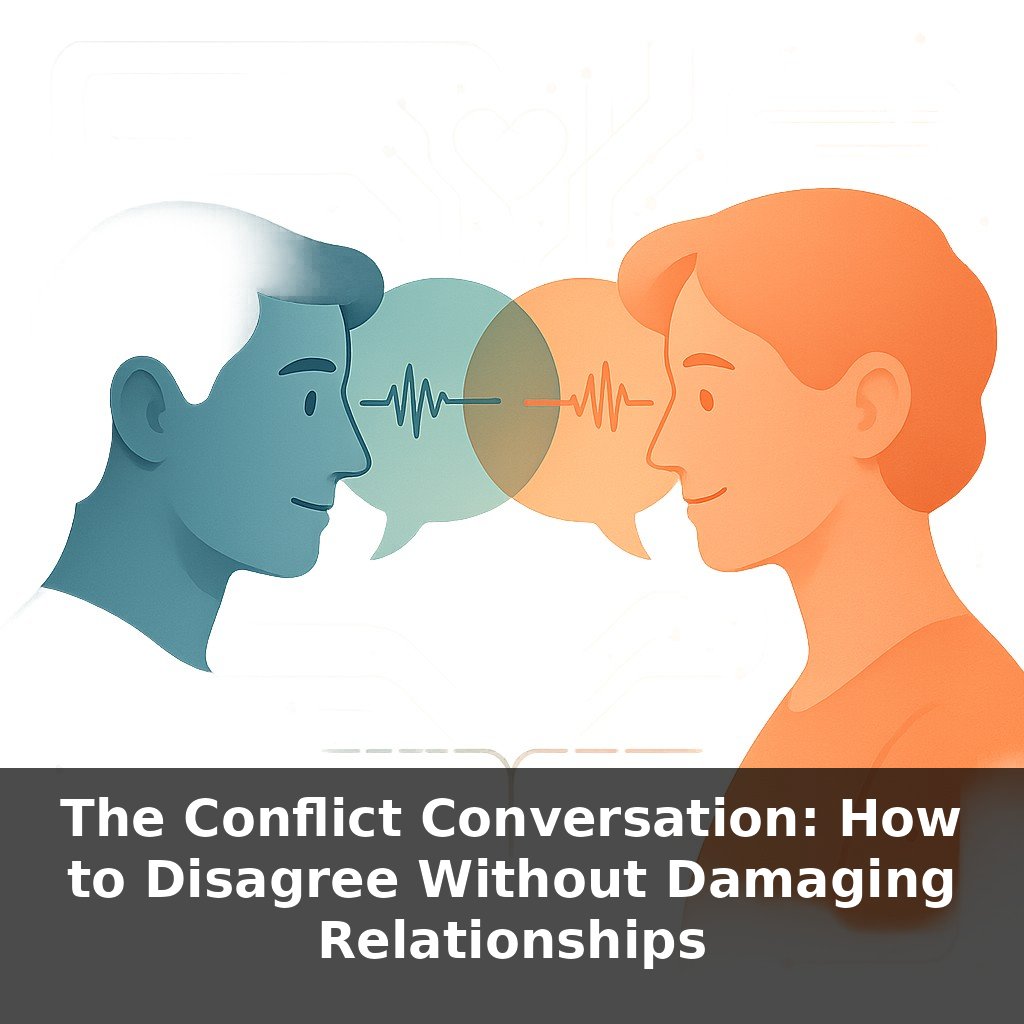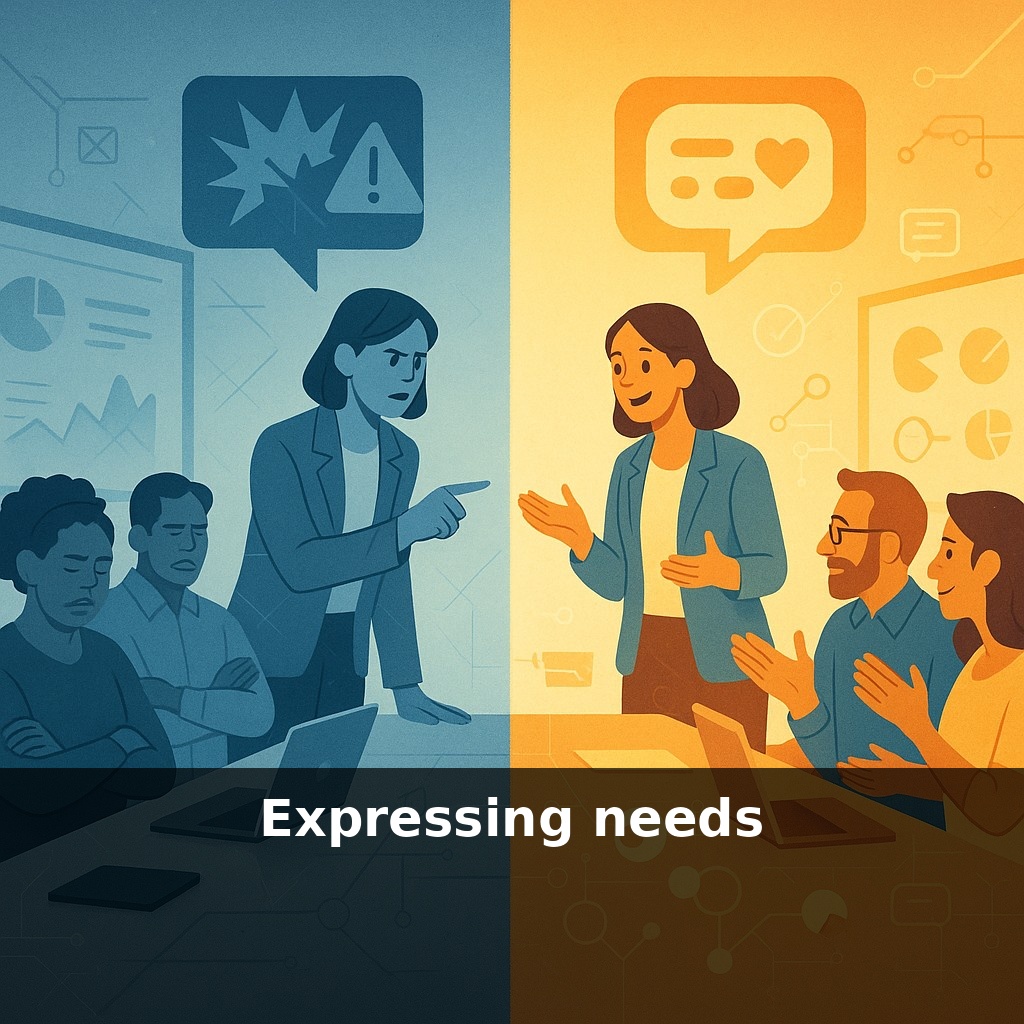
A Microsoft manager cut almost a third of her team’s conflict meetings without changing a single policy—she just changed how she asked for what she needed. Now, step into two scenes: same request, same people, but in one version, the room chills; in the other, it warms.
“People are not against you; they are for themselves,” wrote psychologist Abraham Maslow. When we express our needs clumsily, others often hear a threat to their autonomy, status, or competence—even when we think we’re being “clear.” Their body reacts before their logic does: heart rate bumps up, shoulders stiffen, replies get shorter. That subtle physiological shift is where many conflicts quietly begin.
So instead of focusing on “how do I get them to do this?”, it’s more useful to ask: “how do I share what matters to me in a way their nervous system can actually receive?” This is where precision, non-verbal congruence, and timing work together. In fast-paced digital teamwork—pings, emails, quick calls—tiny tweaks in phrasing or tone can be the difference between “Got it, let’s solve this” and a three-day spiral of defensiveness in the group chat.
In daily work, most of our “needs” arrive wrapped in quick phrases: “Can you jump on this?”, “We need this fixed,” “This can’t happen again.” They sound neutral in our own heads, but to someone already juggling priorities, they land like a sharp chord in the wrong key. The research on assertiveness and NVC suggests a different micro-skill: slowing down just enough to separate what we saw, how it impacted us, what would help, and when. It’s less about becoming soft and more about becoming specific—so others don’t have to decode our subtext while under pressure.
“Emails that start with ‘You didn’t…’ are 17% more likely to be read as blame.” That tiny pronoun can flip a perfectly reasonable need into a perceived attack. So the core skill here isn’t “speaking up more”; it’s changing *how* the need is framed, word by word.
A practical way to do this is to split your message into four micro-steps:
1. **Observation** – what happened, as neutrally as possible 2. **Feeling** – your inner reaction 3. **Need** – the underlying value or constraint 4. **Request** – a clear, doable action
Notice what’s *not* on that list: character judgments, predictions about their motives, or sweeping generalizations.
Watch the difference:
- “You keep ignoring our deadlines. This can’t happen again.” versus - “When the report arrived after yesterday’s deadline, I felt anxious because I’m trying to give the client 24 hours to review. Could you send me a quick status update by 3 p.m. on days a deadline might slip?”
Both point to the same problem. The second one, though, ties your ask to a concrete event, a specific emotion, and a business need. That combination lowers the odds that the other person hears “you’re irresponsible” instead of “I’m under pressure and need more predictability.”
This is where verbal precision shows up in small, repeatable moves:
- Swap **“you” + accusation** for **“I” + specific impact**: - From: “You never tell me what’s going on.” - To: “I feel blindsided when priorities change without a heads-up.”
- Replace vague verbs with observable ones: - From: “You were unprofessional in that call.” - To: “When you interrupted the client twice while they were speaking…”
- Anchor needs in shared goals rather than personal preference: - From: “I just need things on time.” - To: “I need draft versions a day early so I can catch issues before they reach the client.”
Think of it as tuning an instrument: you’re adjusting small knobs—pronouns, verbs, timeframes—until the message stops sounding like a threat and starts sounding like an invitation to solve a problem together.
Your challenge this week: for three key conversations, draft your message in the four-part structure first (observation, feeling, need, request) before you speak or hit send. Then deliver it as written, and note how the response differs from your usual pattern.
When people struggle to express needs, they often default to two extremes: silence until resentment builds, or abrupt “blurt and regret.” Neither creates the conditions for real problem-solving. The middle path is more like composing music: the same notes in a different order, tempo, and volume can either soothe or provoke. Here, the “notes” are *when* you speak, *which* details you include, and *how* you frame what matters to you.
Consider a product lead saying, “Stop missing handoffs,” in a rushed standup versus waiting until a 1:1 and saying, “I want to map your workload so we can protect time for thorough handoffs.” The need—reliable transitions—is similar, but the delivery in the second version signals partnership instead of surveillance.
Technology can amplify either pattern. A terse Slack message lands louder than its author intended; a short voice memo that includes one sentence about why something matters can soften the same message enough that the other person leans in instead of bracing.
“People trained in basic need-expression skills report fewer doctor visits within a year,” one health insurer quietly noted in its internal data. That’s the quiet frontier: as tools start suggesting phrasing like “I feel / I need / I’m asking…,” they don’t just polish messages—they may shift long-term health, turnover, and even how kids argue on playgrounds. Your future HR policy, marriage counseling app, and school handbook may all share one backbone: teach people to name what they need before they explode.
Needs don’t vanish when we ignore them; they reroute. Left unnamed, they leak out as sarcasm, “forgetting,” or sudden exits from calls. Stating them clearly is less like winning a debate and more like turning on a reading lamp: everyone can finally see the same page. Over time, that simple habit rewrites who feels safe speaking up—and who secretly checks out.
Before next week, ask yourself: 1) “Where in my life right now (with my partner, boss, or close friend) am I hinting, over-explaining, or people-pleasing instead of clearly saying, ‘I need [rest / reassurance / alone time / help with X]’?” 2) “If I imagine that my needs are valid by default (like the podcast suggested), how would I rephrase one recent complaint or resentment into a simple ‘I feel… and I need…’ sentence I could actually say out loud?” 3) “What’s one low-stakes situation this week—like choosing dinner, planning the weekend, or setting a meeting time—where I can practice stating a preference first, without apologizing or waiting to see what everyone else wants?”