Right now, as you’re listening to me, your brain is already deciding what you’ll forget. Studies show we remember only about a quarter of what we hear, yet most conflicts blow up not over facts, but over one simple question: “Did you actually hear me just now?”
So if your brain is editing while you listen, what actually makes someone feel heard? It’s not nodding. It’s not repeating their last three words like a podcast host. High-stakes professionals—from FBI negotiators to top mediators—rely on a specific skill set that looks subtle from the outside but is incredibly precise on the inside.
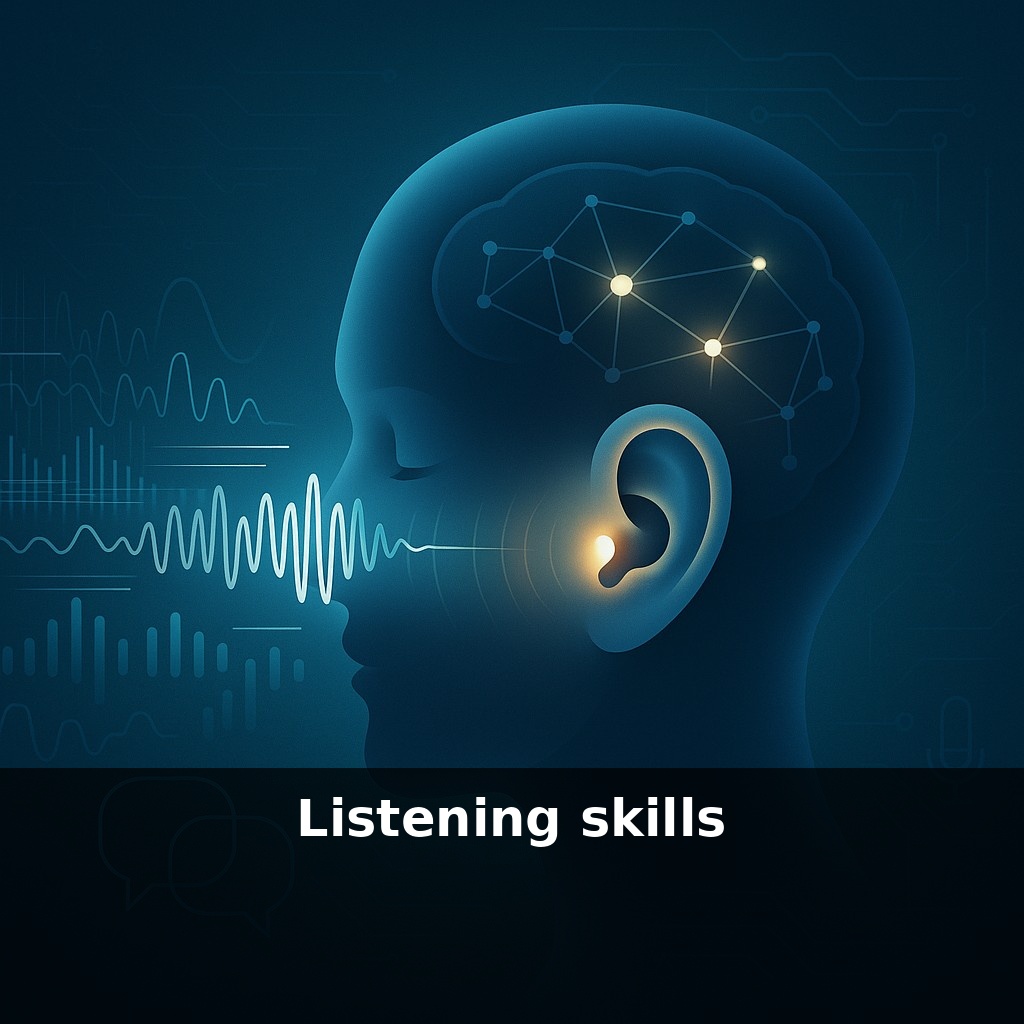
They’re tracking word choice like a data analyst, noticing tone shifts like a sound engineer, and reading micro-pauses the way a chess player studies the board. Neuroscience shows that when people perceive this kind of granular attention, their threat response drops and their problem-solving circuitry comes back online.
In everyday conflicts, we usually do the opposite: we listen just long enough to prepare a reply, then mentally “tab away” to our own argument. This episode is about closing that tab and learning to keep your attention anchored where it matters most: on the signal, not the noise.
In real conflicts, this “signal” is rarely clean. People mix three layers at once: what happened, what it meant to them, and what they fear will happen next. Most of us grab the first layer—the story of events—and argue there, like debating a movie by only talking about the plot. But the emotional soundtrack and the unspoken “trailer” for the future are where tensions actually live. Technology hasn’t helped much; chat, email, and rapid-fire meetings compress nuance into bullet points, so we respond to headlines instead of human beings. The result: quick replies, slow trust, and stubborn, looping disagreements.
Let’s zoom in on what people are actually sending you in a heated moment. Under the surface, almost every charged statement contains three different “tracks”:
1. **Data** – concrete details, times, actions 2. **Emotion** – how those details land for them 3. **Identity** – what it seems to say about who they are or how they’re valued
Conflict escalates when you only answer the first track. Replying to data while ignoring emotion and identity is like responding to a fire alarm by debating whether the speaker is calibrated correctly.
To shift this, treat listening less like a pause before your turn and more like a real‑time decoding process. You’re not just hearing words; you’re inferring which track is loudest for them right now—and responding at that level.
You can do this with a simple mental checklist:
- **Track the topic:** Are they focused on *what happened*, *how it felt*, or *what it implies* about the relationship, their role, or their future? - **Track the stakes:** What would be lost for them if nothing changed—status, security, credibility, belonging, autonomy? - **Track the shift:** Where do they speed up, go vague, get precise, or suddenly go quiet?
Technology can help or hinder this decoding. On a video call, you might see micro-expressions but miss under‑the‑table fidgeting. In chat, you lose tone but gain an exact transcript of their word choice. Instead of wishing for a perfect medium, adapt your listening to each channel.
On **video**, prioritize small, targeted reflections: - “You mentioned this deadline twice—sounds like the timing risk is the big thing for you.”
In **email or chat**, use the text itself as data: - “You used ‘blindsided’ and ‘out of the loop’—can we focus on how decisions are being shared?”
Think of this as the skill of “tuning” in a recording studio: you’re isolating different tracks, then bringing up the ones that matter most to the other person, not to you. The paradox is that the more deliberately you focus on their internal mix, the more room you ultimately get to express your own. Listening this way doesn’t erase disagreement; it earns you the right to be heard just as clearly.
Think about a tense project meeting where someone says, “You changed the scope again, and now my team looks incompetent.” If you only hear “scope changed,” you’ll jump to timelines and tickets. But listen on all three tracks and you’ll respond differently. The **data** is the shifting scope. The **emotion** is embarrassment and frustration. The **identity** piece is, “My team’s credibility is on the line.”
A tuned-in reply might sound like: “So yes, the scope moved, but what’s really biting is that it made your team look unreliable in front of stakeholders. Did I get that right?” Notice you’re not agreeing or apologizing yet—you’re surfacing what’s actually burning.
Or take a terse chat message: “Fine, I’ll handle it myself.” No exclamation point, no emoji, but three tracks again. Data: they’ll take the task. Emotion: resignation or resentment. Identity: “I’m the only dependable one here.” A useful follow-up: “I’m hearing you feel like this keeps landing on you. Before you take it on again, can we talk about how the work is getting divided?”
Meetings where people surface all three tracks—data, emotion, and identity—tend to move faster *later*, even if they feel slower up front. That’s where tech will quietly reshape listening: tools that flag interruptions, skewed talk time, or rising tension in your voice will act like a discreet coach in your ear. Your challenge this week: pick one recurring tense conversation and treat it as a “listening lab” where you test one new behavior each time you interact.
As AI tools start transcribing, tagging tone, and flagging stuck loops in our talks, your role shifts from being the recorder to being the interpreter. Your challenge this week: in that “listening lab” conversation, try one small twist—ask one more follow‑up than feels comfortable, like stepping one stone further across a stream, and see what new ground appears.