A single rulebook helped turn scattered national markets into one vast trading web—so much so that global trade now makes up well over half of world economic activity. Yet today, governments talk about pulling back. How did we get here—and what happens if that web starts to unravel?
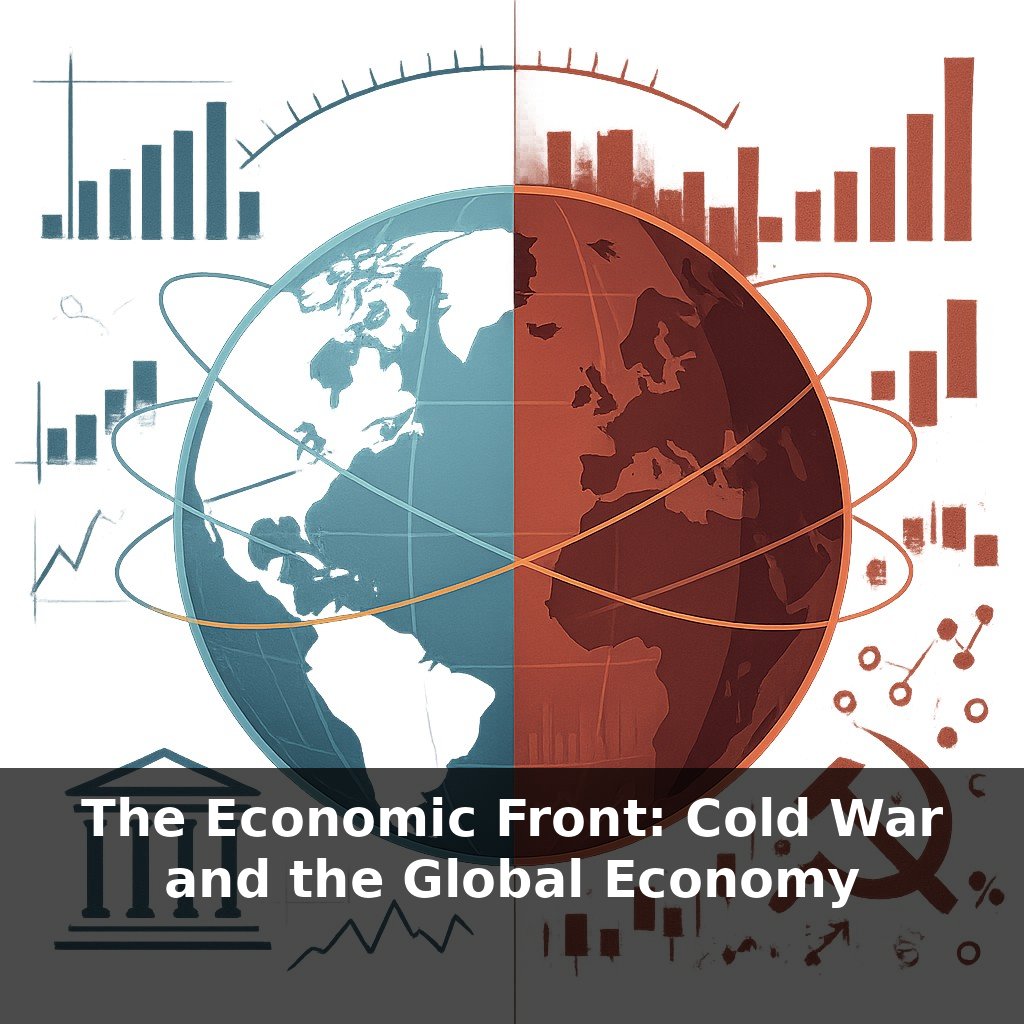
By the late Cold War, something remarkable was happening quietly in the background: the average tariff on manufactured goods among today’s WTO members had fallen to under 5%, down from about 22% in 1947. At the same time, the share of trade in world GDP more than doubled. This wasn’t just “more business as usual”—it marked a shift from rival economic camps to a shared set of rules under GATT and later the WTO.
But rules didn’t erase power. The United States, Europe, and—later—China all tried to steer this opening to their advantage, deciding where to specialize, what to protect, and which partners to tie themselves to. That’s why the same system that helped NAFTA trade more than triple also enabled China’s export surge after 2001.
Think of it as countries diversifying an investment portfolio: the mix of openness, protection, and alliances determined both returns and risk exposure—especially when shocks began to hit.
Yet as barriers fell, what counted as “trade” was changing. Goods crossed borders multiple times as parts, designs and data, not just finished products. Services—software, finance, logistics—quietly became the backbone of these networks. Supply chains threaded factories in Mexico to ports in China and design labs in California. When NAFTA deepened North American links and China joined the WTO, firms didn’t just export more; they rewired production itself, turning national industries into cross‑border projects that were efficient, but also vulnerable to political shocks and bottlenecks.
If Cold War trade was about choosing a camp, the late‑20th‑century shift was about choosing a strategy inside a shared arena. Once most rich economies locked in low tariffs, the real game moved to what economists call “the behind‑the‑border stuff”: regulations, subsidies, standards, and intellectual property rules that quietly tilt the playing field without raising a customs wall.
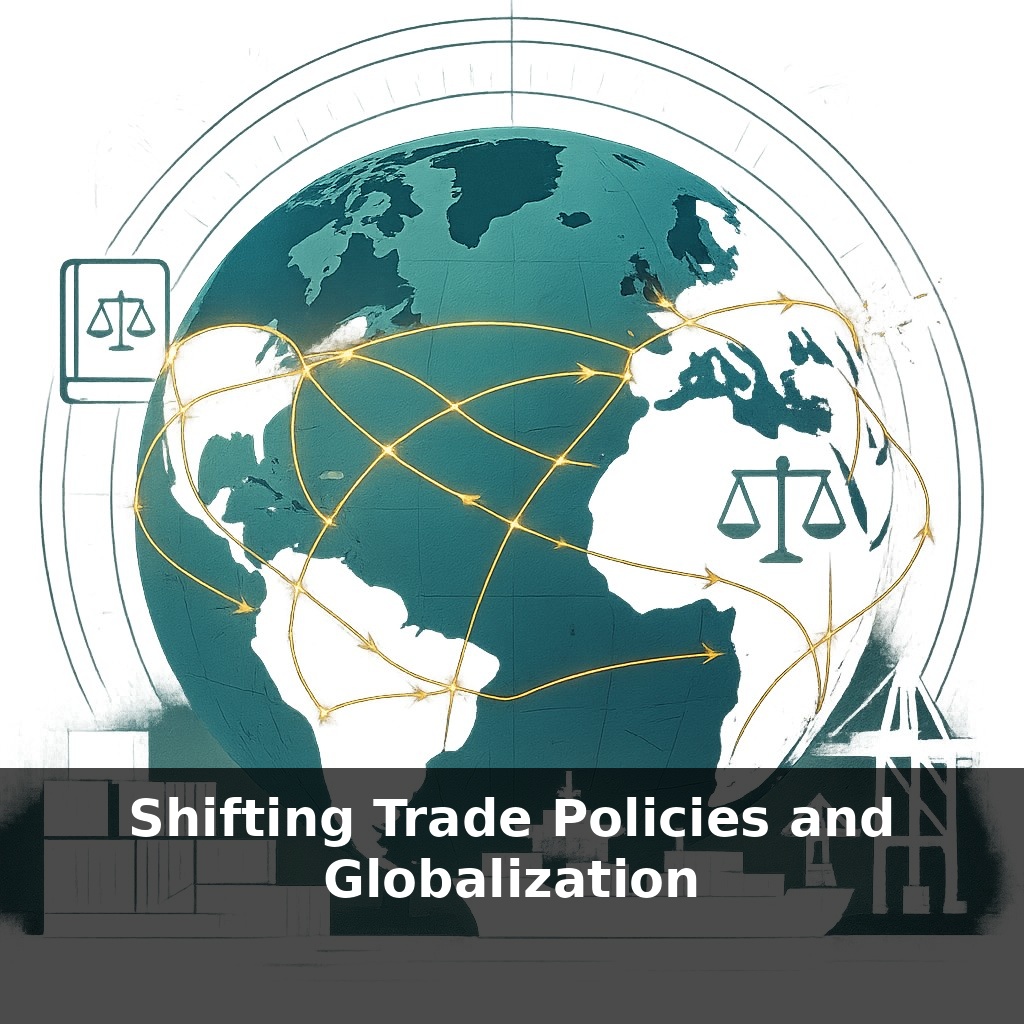
One front was legal architecture. The 1995 creation of the WTO bound major powers into a formal dispute system. Between 1995 and 2020, its appellate body issued more than 150 reports, turning quarrels over steel, bananas, or aircraft into litigation instead of tariff wars. This didn’t eliminate power politics, but it changed the currency of power from embargoes to legal arguments and coalition‑building. Smaller states used that system to challenge giants—Brazil against U.S. cotton subsidies, or tiny Antigua and Barbuda against U.S. online‑gambling restrictions—leveraging rules they hadn’t written.
A second front was regional pacts and supply‑chain design. NAFTA didn’t just expand trade; it locked North American manufacturers into tightly choreographed production, where a car part could cross the U.S.–Mexico border half a dozen times before final assembly. In Europe, the Single Market and euro fostered similar deep integration, binding firms to continent‑wide networks. In Asia, looser “noodle bowl” agreements and, later, mega‑deals like RCEP underpinned webs linking Japanese, Korean, and Taiwanese components to Chinese and Southeast Asian assembly hubs.
A third front was entry and rise of new heavyweights. China’s WTO accession signaled that the world’s most populous country would accept those common rules—at least on paper—while using state‑directed credit, land policy, and industrial plans to accelerate its export machine. Its share of global manufacturing exports climbed rapidly, squeezing some producers in Mexico, Eastern Europe, and the U.S. industrial belt, even as retailers and consumers worldwide benefited from cheaper goods.
Then came stress tests. The 2008–09 financial crisis briefly shrank cross‑border flows, but the system bent rather than broke; countries flirted with protection but mostly stayed within agreed limits. The COVID‑19 shock was different. Border closures, lockdowns, and sudden demand spikes for medical gear and electronics exposed how concentrated production had become. Debates over “strategic autonomy,” “friend‑shoring,” and industrial policy erupted as governments scrambled to secure semiconductors, vaccines, and critical minerals.
Yet even as leaders spoke of decoupling, trade in many sectors rebounded or even hit new highs. Geopolitical rifts slowed some links—especially U.S.–China technology flows—while accelerating others, like shifts of assembly to Vietnam, India, or Mexico. The same frameworks built to liberalize now host arguments over national security, data control, and climate policy, suggesting that the next phase of globalization will be less about removing barriers and more about deciding which connections are too risky, and who gets to decide.
Consider two firms reacting differently to the same global opening. In the 1990s, Walmart refined a model of sourcing from dozens of Asian producers, adjusting orders weekly as tastes and exchange rates shifted. By contrast, Boeing’s 787 program locked in a narrow set of suppliers for key components, from Japanese wings to Italian fuselage sections, with long‑term contracts and complex coordination. Both depended on the same rules‑based environment, but one treated it like a flexible marketplace, the other like an engineering project that couldn’t easily be re‑routed.
Or take how countries reacted after supply shocks. Japan’s decision to subsidize domestic chip plants, the EU’s push for “green industrial” projects, and India’s phone‑assembly incentives all show states experimenting with selective rewiring rather than outright retreat. They try to reduce exposure in a few pressure points—pharmaceutical inputs, rare earths, high‑end chips—while keeping most commercial channels open, blurring the line between efficiency and resilience.
Rival trade “clubs” may soon overlap like competing streaming services: states could subscribe to U.S‑led digital rules, an EU‑centered green regime, or China‑anchored standards, while firms juggle multiple log‑ins. Disputes over data access, carbon content, and subsidy races will shape which alliances pay off. As more bargaining power shifts to the Global South, tomorrow’s rulebook may look less like a Western manual and more like a negotiated patchwork, constantly updated mid‑game.
The next phase may feel less like a single highway and more like overlapping train lines: slower in places, rerouted in others, but still moving people and goods. For citizens, that means careers, prices, and even climate policy will hinge on which tracks their country joins—and how well it can switch lines when the timetable suddenly changes.
Start with this tiny habit: When you open a news site or social app, pause and read just one headline about trade policy or tariffs instead of scrolling past it. Then, in one sentence, quietly say to yourself how it might affect either prices in your grocery store or your job/industry (for example, “This new semiconductor export rule could make electronics pricier here”). If the episode mentioned a specific region like ASEAN, the EU, or Mexico, try to spot that word in headlines and do the same quick one-sentence link. Over time, you’ll train your brain to connect shifting trade policies to your real life without adding anything heavy to your to‑do list.