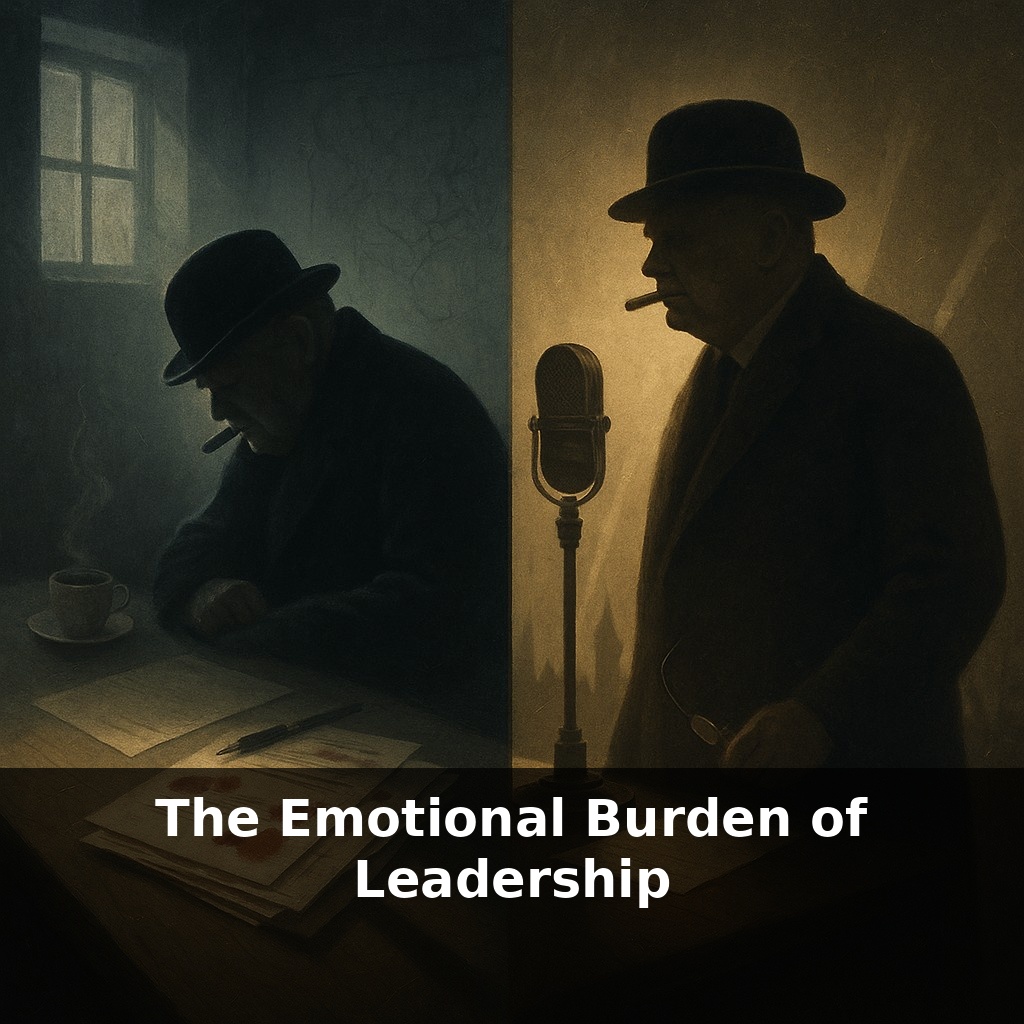
Winston Churchill read casualty reports over breakfast—then stood up hours later to promise victory on the radio. Same man, same morning. In this episode, we step inside that split-screen reality, and ask: what does it really cost, emotionally, to lead through catastrophe?
Churchill didn’t just battle Hitler; he battled his own mind. Behind those defiant speeches was a man who, some nights, barely slept and, some mornings, could barely get out of bed. Colleagues recorded him falling silent in meetings, staring at the table for long stretches before snapping back into command mode. He called his depression the “black dog,” but he never allowed it to sit in the War Cabinet chair.
This is the paradox we’re exploring: how someone visibly larger than life could be privately held together by fragile routines—painting late into the night, dictating memos from bed, taking rigid afternoon naps like a daily reboot. Think of a high‑performance athlete who must tightly manage rest, diet, and recovery just to show up on game day; Churchill’s emotional regime was similarly deliberate. In this episode, we’ll look at how he structured his days, his coping mechanisms, and the hidden costs of staying “on” for a nation.
Churchill’s private staff saw more than a heroic leader; they watched a man constantly adjusting dials on an inner control panel—lowering exposure to bad news one hour, demanding brutal honesty the next. He’d delay reading certain reports until after key speeches, not out of denial, but to protect his focus at critical moments. Modern researchers might call this “emotional sequencing”: choosing when to face which feelings. That sequencing shaped not only his mood, but the timing of major decisions—when to pressure Roosevelt, when to confront generals, when to risk telling the public hard truths.
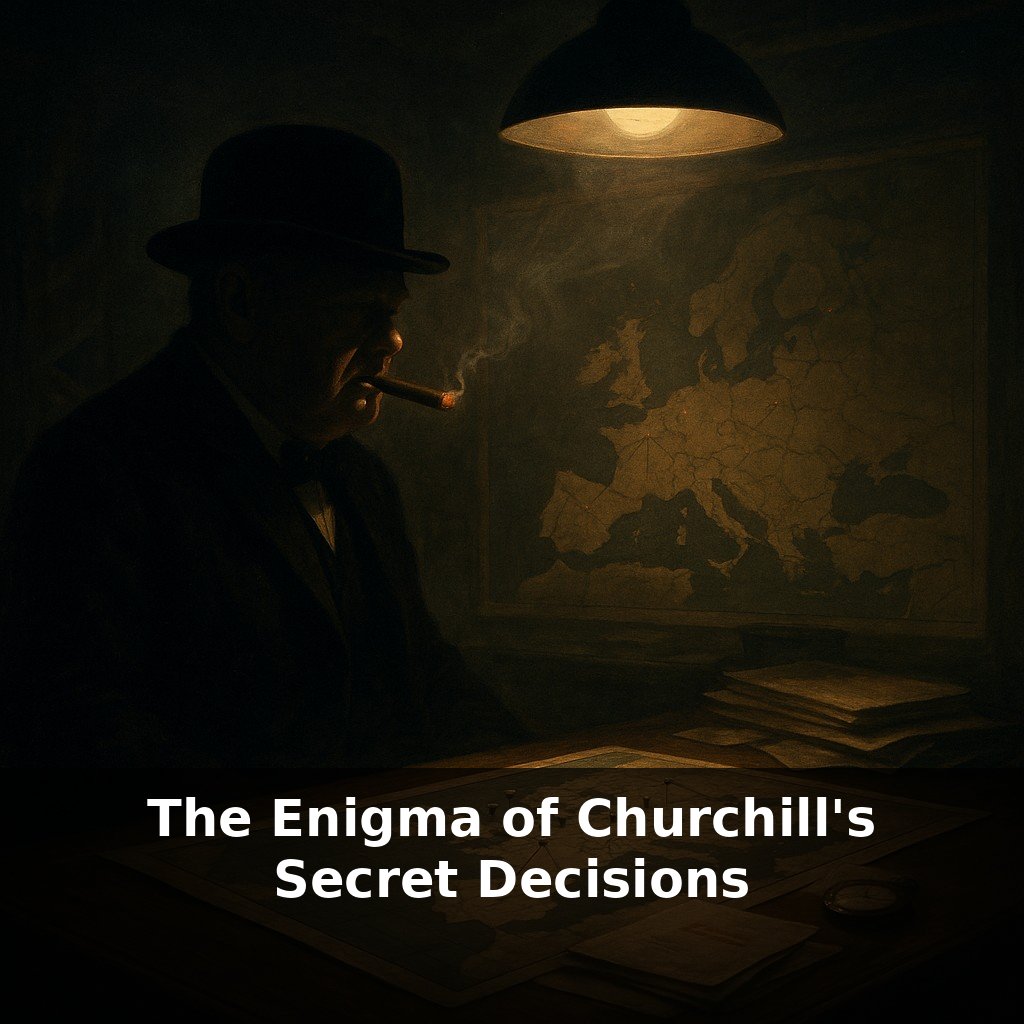
Churchill’s emotional life as a leader becomes clearest when you follow him through a single decision cycle. Take those mornings in 1940–41 when casualty reports from the Blitz landed on his desk. Before he saw any numbers, his private secretaries filtered, summarized, and stacked the papers in a deliberate order. Tactical updates first, human losses later. Not to spare his feelings, but to ensure he argued strategy before he was submerged in grief.
Once he finally reached the pages listing civilian deaths—tens, sometimes hundreds of names—staff noted a visible change: long silences, sharper questions, abrupt shifts in tone. He often asked for precise locations, then cross‑checked them on maps he kept nearby. Those maps were not just tools of war; they were quiet ledgers of personal responsibility, each pin or pencil mark a reminder that his choices redrew people’s lives overnight.
That internal ledger helps explain another pattern: his private flirtation with resignation. War Cabinet minutes and later testimonies suggest he raised the possibility of stepping down when losses felt especially senseless—after failed operations, botched coordination, or missed warnings. He was rarely overruled on policy, but he was repeatedly talked out of quitting. Colleagues understood that his willingness to consider walking away was itself evidence of how seriously he took the moral weight of command.
His drinking, so often caricatured, sits in this context too. The steady whisky and brandy intake wasn’t just lifestyle; it coincided with spikes in nighttime work, air raids over London, and critical diplomatic exchanges with Washington and Moscow. Whether or not we’d label it self‑medication today, it functioned as part of an improvised pharmacology he used to regulate nerves, energy, and sleep when conventional rest was impossible.
Modern biographies sometimes flatten this into a simple toughness narrative: he bore the strain and prevailed. The record is messier and more revealing. He didn’t “rise above” emotion so much as negotiate with it, hour by hour, while continuing to sign orders that would inevitably create more of the very pain he was struggling to contain.
Churchill’s closest aides noticed a strange pattern: the darker his private mood, the more determined he often became in public. After nights of near‑sleeplessness, staff would brace for volatility—and instead watch him deliver some of his firmest radio addresses. One secretary later recalled that his harshest self‑criticism usually preceded bold decisions, as if inner doubt forced him to sharpen his arguments before he exposed them to the nation.
You can see a modern echo of this in founders who guide companies through crisis layoffs or product failures. The most effective ones rarely feel calm; they feel responsible. They schedule bad‑news meetings at times when they know they can still think clearly afterward, build small “recovery pockets” into their day, and rely on one or two confidants who are allowed to see the unfiltered worry.
In architecture terms, they design emotional load‑bearing walls into their routines: habits, people, and boundaries that quietly hold up the weight no speech can show.
Future leaders might be trained less like solo heroes and more like members of a cockpit crew, where monitoring each other’s stress is part of the job, not a personal failing. Boards could track “decision fatigue” the way they track cash flow, adjusting authority when strain peaks. Political systems might even formalize rotating “recovery mandates,” where stepping back after major crises is expected, so the role becomes sustainably human instead of theatrically superhuman.
Churchill’s story leaves us with an unsettling possibility: maybe leadership isn’t about feeling fit for the role, but showing up anyway, with safeguards. The emotional strain doesn’t vanish; it’s redistributed—into habits, teams, quiet rituals. In your world, that might mean treating your calendar, not your courage, as the main tool for carrying heavy decisions.
To go deeper, here are 3 next steps: 1) Pick up *The Motive* or *The Advantage* by Patrick Lencioni and read the chapter on “responsibility vs. reward” leadership, then jot down 3 emotional responsibilities you’ve been avoiding (like hard feedback conversations or owning team conflict) and schedule time for each this week. 2) Start using a structured reflection tool like the “Leader’s Log” template from Michael Hyatt (or a simple Notion/Google Doc version) to debrief one emotionally heavy moment from today—what happened, what you felt, what you made it mean, and how you want to respond next time. 3) Join a space where leaders openly process the weight of leadership, like a Leaders’ Circle on BetterUp, a local Vistage/EO forum, or a small peer group on the “Chief” or “The Leader’s Edge” communities, and commit to bringing one real emotional challenge from this week to your next meeting instead of just talking strategy.