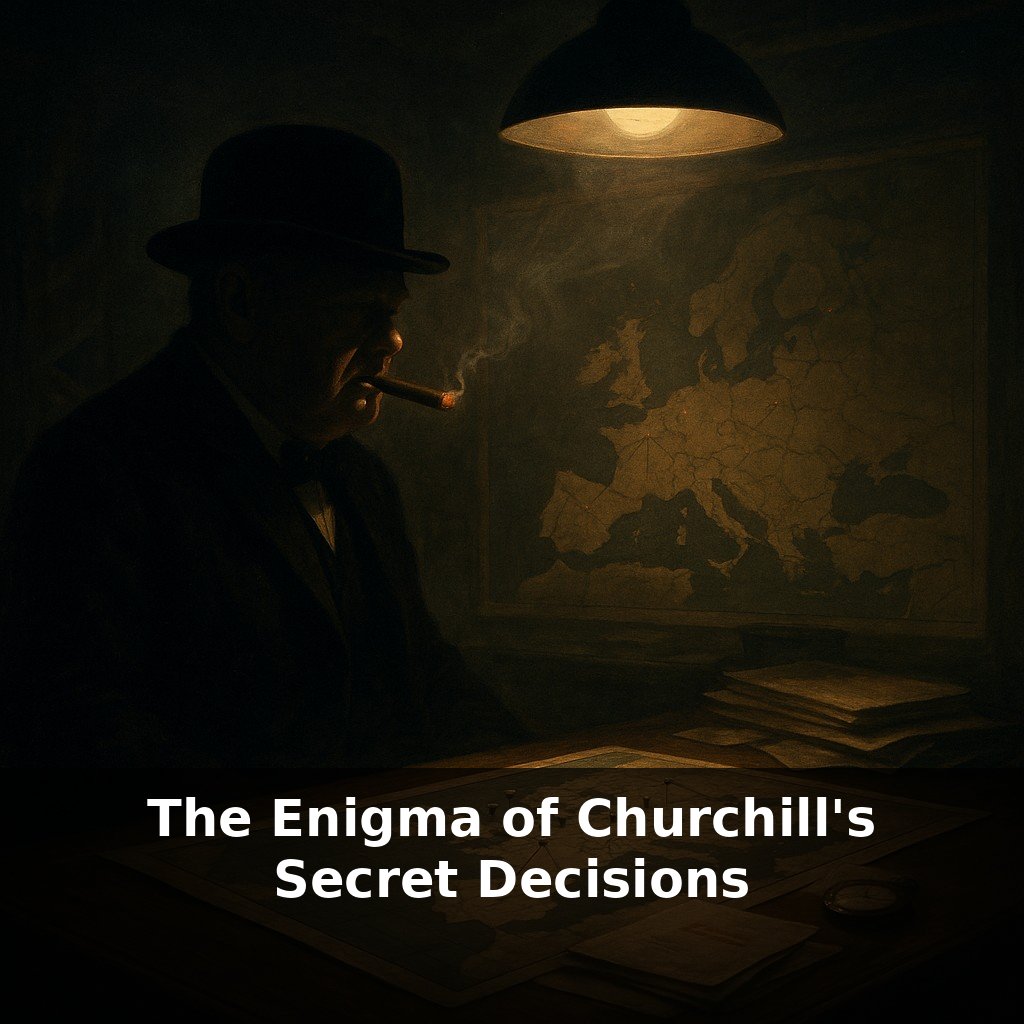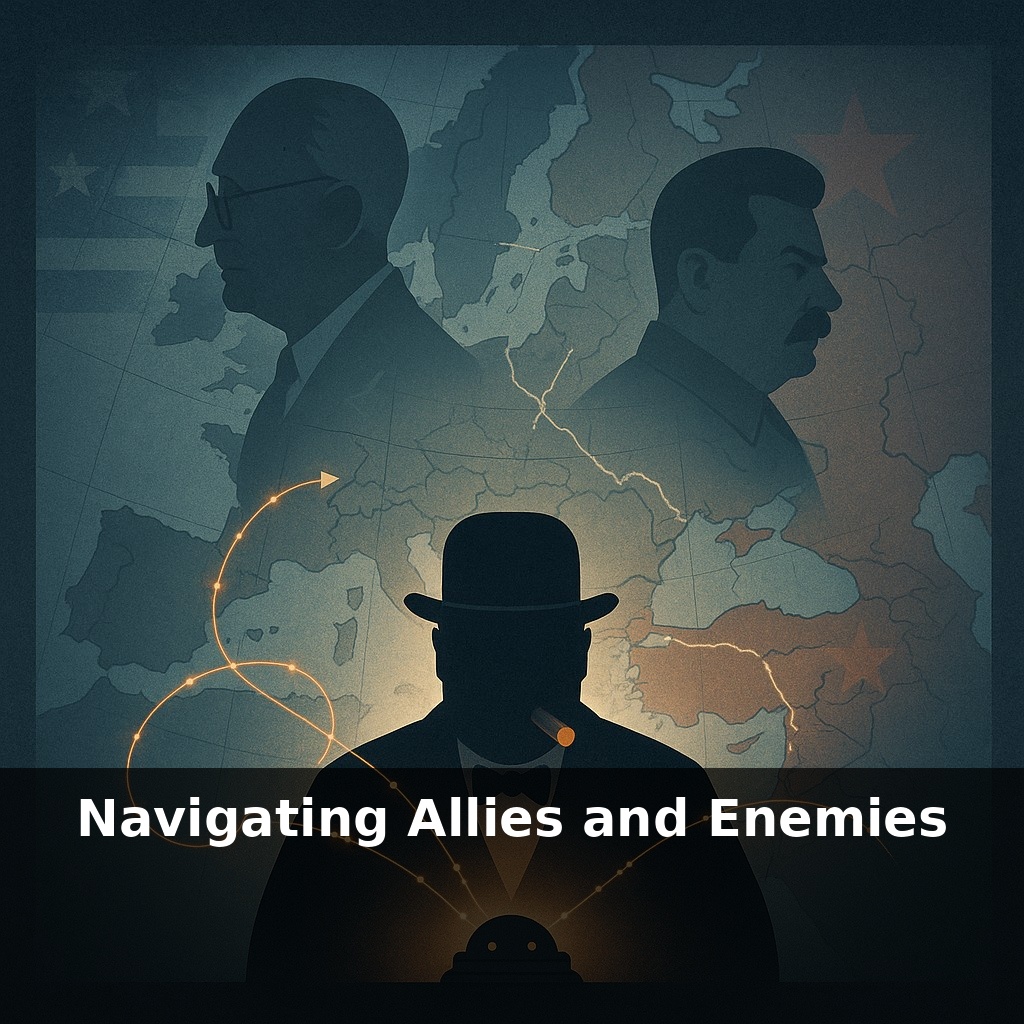
In the winter of 1941, Winston Churchill was wiring urgent messages to two leaders who distrusted each other almost as much as they feared Hitler. One was a democratic ally, the other a ruthless dictator—yet Churchill needed both, without losing Britain’s soul in the bargain.
By 1942, Churchill was juggling partners who not only disliked each other, but also imagined completely different futures after the war. Roosevelt dreamed of a liberal world order, Stalin of buffer states and control, British planners of somehow keeping an empire on life support. Yet all three needed the same things right now: ships, fuel, food, and time. Churchill’s real genius was seeing that logistics could be turned into leverage. Lend-Lease wasn’t just charity; it was a pipeline that tied strategies together, like a shared power grid that forces neighbors to coordinate their appliances. Behind the soaring speeches, there were hard spreadsheets: tonnage across the Atlantic, bombing priorities, which resistance groups actually bled the Wehrmacht. The story of the Grand Alliance is less about handshakes in front of cameras and more about how Churchill quietly priced every favour, concession, and delay.
Churchill’s problem wasn’t just who to work with, but in what order to care about things. He ranked goals like a ruthless project manager: survival of Britain, defeat of Germany, then everything else. That’s why he could back Tito’s communists in Yugoslavia once ULTRA showed they were hurting the Axis more than royalist allies—performance trumped preference. The Arcadia decision to hit Germany first locked in a kind of strategic operating system: every new crisis had to “run” on that code. Within that frame, Churchill improvised constantly, trading prestige, promises, even postwar influence to keep that core sequence intact.
Churchill applied that “Germany first” code in ways that often startled his own colleagues. When British commanders asked for more in the Mediterranean, he pressed Washington instead to accelerate planning for a cross‑Channel blow—because every ship or bomber sent south was, in his mental ledger, delayed pressure on Hitler’s western front. He didn’t always win those arguments, but he kept forcing decisions to be tested against the same question: does this shorten the road to Berlin?
With Roosevelt, the friction line was different. Churchill wanted the symbols of great‑power status—joint declarations, named operations, visible proof that Britain still mattered. Roosevelt wanted freedom of action and a freer hand in shaping the postwar order. So Churchill paid for political theatre with strategic concessions. He would accept American priorities in the Pacific or colonial questions, then carefully “invoice” that compliance in requests for convoys, landing craft, or earlier American commitments in Europe. The more aid flowed one way, the more he tried to make influence flow back.
Stalin posed a separate puzzle. The Red Army was doing most of the dying, and he knew it. Churchill couldn’t match Soviet blood with British divisions, so he offered time, technology, and sky cover instead: bombing campaigns, Arctic convoys, promises of a second front on future dates he fought to keep vague. In private notes, he treated these pledges like options contracts—valuable, but written to leave room for delay if resources or politics shifted.
Running these relationships demanded a kind of emotional range most leaders never practice. On Monday he might be reassuring Parliament that Britain would never yield on Poland; by Thursday he was in a Tehran side‑room sketching lines on a map that effectively accepted Soviet gains there. He moved between roles—persuader, supplicant, guarantor—less out of ego than out of a running calculation about which persona unlocked which door.
If this sounds cold, his staff diaries show the strain. Many nights ended with him cursing the very partners he courted by day. Yet he clung to a simple hierarchy: better to swallow a smaller defeat now than face a larger one later, fought alone.
Churchill’s method looks abstract until you translate it into concrete moves. Think of how he handled smaller states on the Allies’ fringe. With De Gaulle, he alternated between freezing him out of conferences and suddenly elevating him with symbolic gestures—letting Free French forces enter Paris early, or backing French claims in Syria—whenever he needed French cooperation in North Africa or Italy. With Turkey, he dangled modern weapons, security guarantees, and postwar status, not because Ankara would win battles in 1943, but because its airfields and straits might matter in 1944 or 1945. His calculus extended even to former enemies’ officers: captured German and Italian specialists were sometimes quietly studied for technical know‑how that could plug gaps in British planning. The pattern is closer to a software architect refactoring old, messy code: instead of deleting every legacy piece on principle, Churchill wrapped some of it in new “interfaces” and reused it to support the main program—victory over Hitler.
Churchill’s choices hint at a future rule: coalitions are less like contracts than evolving software—bursts of code patched under pressure, then refactored when crises ease. For AI safety, climate pacts, or Ukraine’s security, that means designing alliances with an exit lane and an upgrade path. Who gets to “rewrite” terms after victory? Who owns shared tools and data? Leaders who map these questions early can avoid winning the war, then losing the peace to recriminations and quiet sabotage.
Churchill’s deeper lesson is that today’s rival may be tomorrow’s indispensable partner. In a world of cyber threats, pandemics, and climate shocks, you don’t get to choose allies from a wish list; you inherit them from reality. Like a city sharing storm drains, states must link systems early—or watch their separate defenses fail under the same rising water.
Here’s your challenge this week: Pick one “quiet ally” in your world (someone who’s been supportive but not actively involved) and, within the next 24 hours, send them a specific request for help on a real situation you’re facing—spell out exactly what you need (an intro, feedback on an idea, or backing in a meeting). Then, choose one “likely enemy” or skeptic and schedule a 15-minute conversation where you ask them two things: what they’re most worried about regarding your role/project, and what a “win” would look like for them. Before the week ends, act on one concrete suggestion from each conversation and let those two people know exactly what you did with their input.