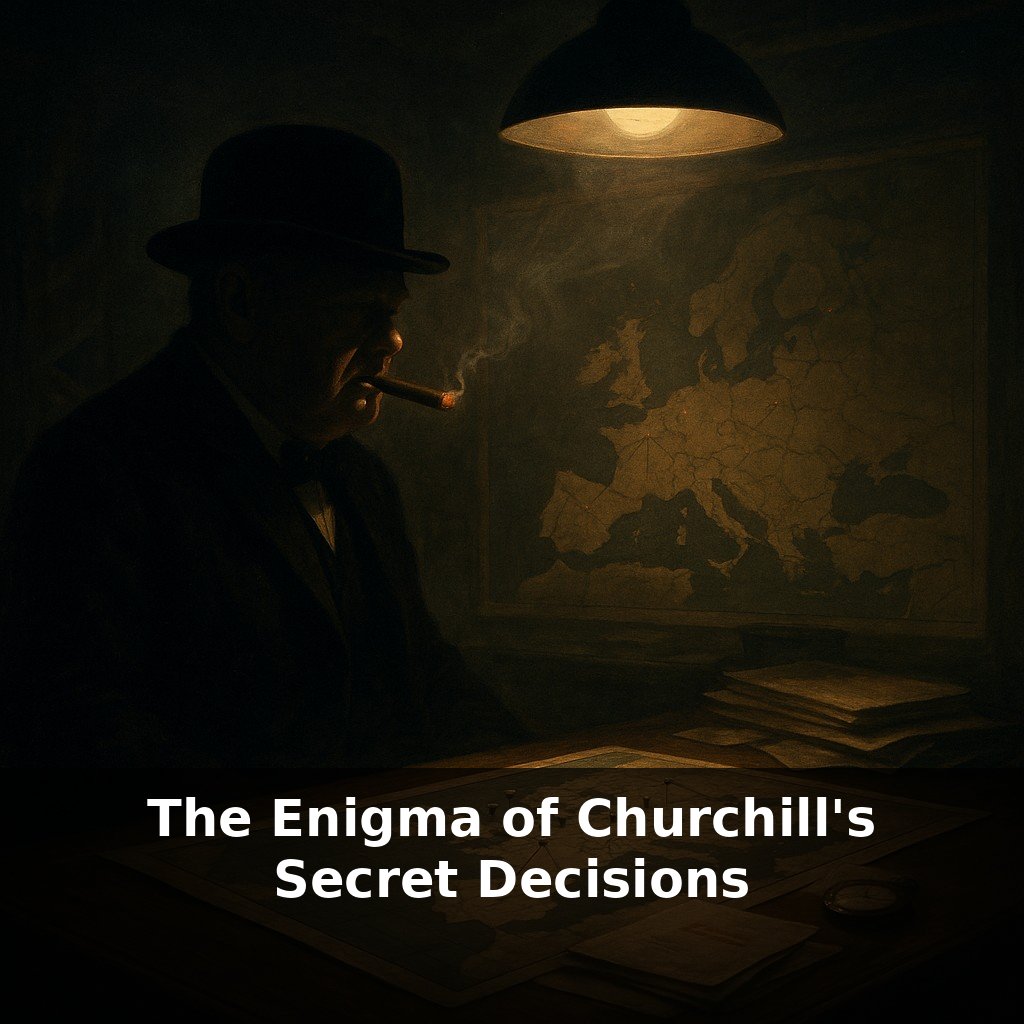
Churchill once worked such brutal hours that his doctor quietly code‑named a secret hospital stay “Operation Hope Not”—as in, “let’s hope he doesn’t die.” So here’s the puzzle: how did a man that fragile become the unshakable face of Britain’s finest hour?
He didn’t just work late; he rebuilt his entire day around the war. Churchill split his time into strange, overlapping shifts—dictating from bed in the morning, chairing war meetings by afternoon, then restarting a second “day” near midnight while the rest of London slept. To his staff, it felt less like serving a prime minister and more like plugging into a constantly humming power station. Yet that current had a cost. His doctors tracked his blood pressure like a bomb-disposal team; Clementine monitored his moods the way radar crews scanned for incoming raids. And the more exhausted, short-tempered, and medically fragile he became, the more carefully he crafted the illusion of inexhaustible strength—because he believed any visible crack in him might widen the fractures already running through Britain.
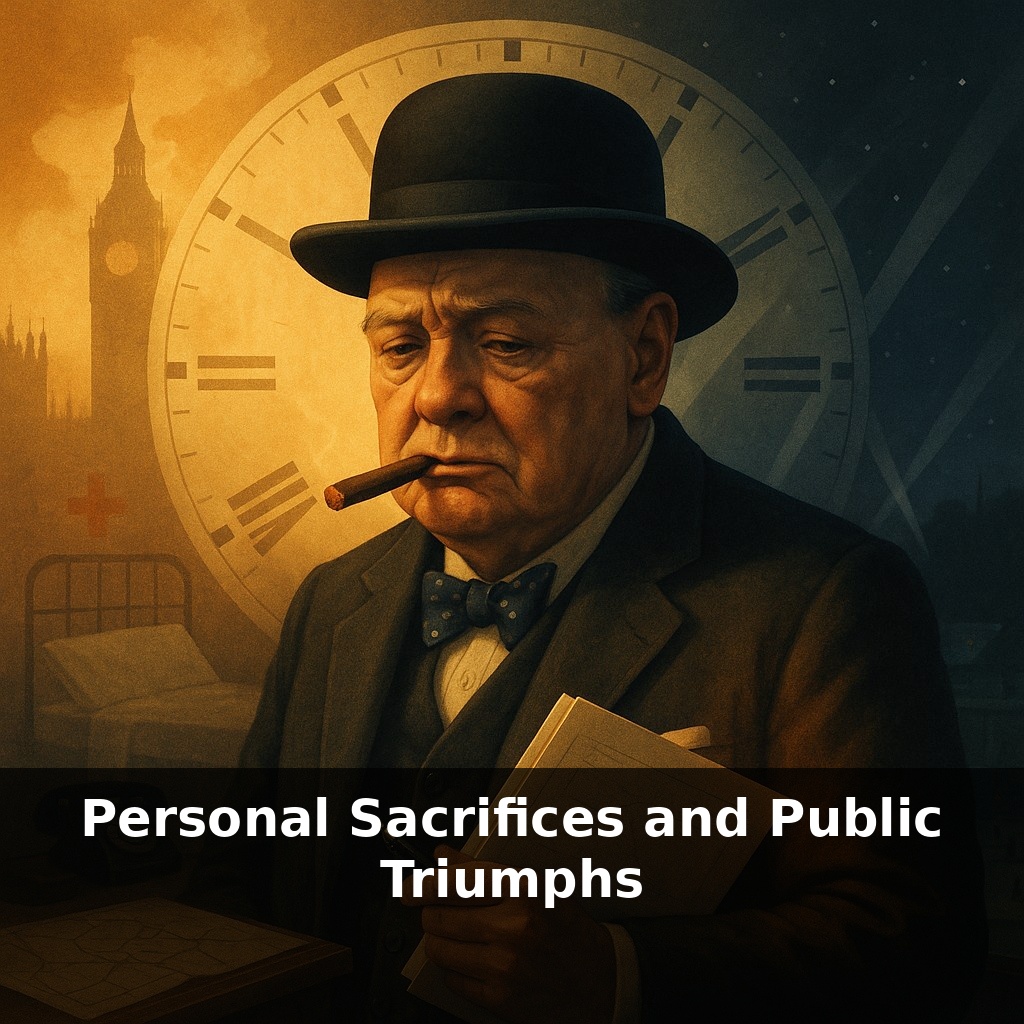
Churchill’s private life during the war looked nothing like the granite monument we’re used to. His finances were so fragile that lucrative book contracts and newspaper pieces quietly underwrote the bulldog image in the posters. His health was precarious enough that every serious infection raised succession questions inside Downing Street. Family life frayed: his surviving children saw more of him in newspaper photographs than across the dinner table. Yet he clung to routines—the bath dictation, the cigars, the whisky—as if they were sandbags holding back a flood he dared not show the country.
Four hours after a late‑night Cabinet meeting, Churchill would be back in bed—not resting, but dictating. Secretaries stood at the foot, notebooks poised, while he paced verbally through troop movements, speeches, and letters. At 5 p.m., he’d finally collapse into his “daytime sleep,” then re‑emerge in silk romper suit and dressing gown to start again. This wasn’t eccentricity for its own sake; it was a deliberate trade‑off. He was burning future health to buy present focus, knowing the bill would come due later.
The bill was already mounting. His “black dog” episodes did not disappear during the war; they threaded between victories. After Dunkirk, in quiet moments, he spoke of being “overwhelmed by a sense of impending disaster.” After the fall of Singapore, colleagues noticed he withdrew into abrupt silences between jokes and jibes. Yet in public, each radio broadcast was sanded free of hesitation. The country heard granite; his private staff saw the cracks being mortared, line by line.
Financial strain pressed in at the same time. His Chartwell estate sat idle and expensive, a constant reminder of peacetime obligations he could barely meet. To service the debts, he signed contracts for future memoirs and histories, effectively mortgaging his unwritten past while still living it. The man approving bombing plans at 2 a.m. was also worrying—quietly—whether a post‑war public would still want to read him.
Grief was the background hum. The loss of his daughter Marigold haunted his reactions to casualty lists. Years later, when he toured blitzed streets and stroked a child’s soot‑streaked face, aides noted a sudden softness, then a brusque turn away. He knew from savage experience that some of those children would not survive. The public photo showed resolve amid ruins; internally, he was walking back through a grave he’d never stopped visiting.
Even his calculated visibility during air raids—standing on rooftops, walking bomb‑scarred alleys—came with unspoken risk. His presence inspired Londoners, but it also made him a conspicuous target. Security chiefs pleaded for more caution; he overruled them often. He had decided that being seen to share danger was worth increasing his personal odds of not seeing victory at all.
Your challenge this week: watch one modern leader—at work, in politics, or even in your community—and ask, “What might this person be privately sacrificing to project strength?” Then, once, do the opposite in your own life: admit a strain you usually hide, and notice how people respond.
A modern parallel lives in how leaders curate their feeds and calendars. Publicly, you might see flawless keynotes and crisp press photos; privately, there’s a brutal inbox, strained marriages, and cardiologists warning about blood pressure that never quite comes down after the latest crisis. One Fortune 500 CEO reportedly schedules “performance days” months ahead—packed with town halls, plant visits, media hits—then vanishes for quiet medical checks and recovery the following week, off the radar so the stock price never twitches. Another political leader insists on being photographed in flood zones within hours, even when security teams advise against it; the optics of shared danger are treated as non‑negotiable strategic assets. In tech, founders often front‑load risk the way architects sometimes over‑stress a test bridge: they push their bodies, reputations, and relationships to the edge to see what the structure—company, campaign, country—can bear, hoping it doesn’t collapse before the load eases.
Future leaders may find Churchill’s private costs harder to hide. Constant cameras, biometric wearables, and real‑time leaks turn reputations into live dashboards; a faltering pulse or cancelled speech can move markets within minutes. Voters might gain honesty but lose candidates unwilling to live inside that glass box. Journalism, too, will face choices: probe every tremor, or allow “off‑stage” space so humans can lead without broadcasting every wobble like a stock price in permanent after‑hours trading.
In the end, Churchill’s wartime mask was less a lie than a uniform he put on so others could keep going. Today, we ask leaders for both transparency and steadiness—a hard mix. Perhaps the lesson is not to copy his hidden burdens, but to notice our own thresholds, like load limits on a bridge, before quiet sacrifices turn into silent collapses.
Here’s your challenge this week: Block off one evening to list three personal comforts or routines you’d be willing to temporarily sacrifice to move your “public win” (like launching your project, speaking up at work, or volunteering) forward, then actually give up ONE of them for the next seven days. Replace that exact time or energy with a specific public-facing action: send three emails asking for support, publish one post sharing your work-in-progress, or sign up for a concrete volunteer shift. At the end of the week, record one measurable outcome from that sacrifice (a reply, a signup, a meeting booked, or an event date confirmed) and decide whether to renew, adjust, or retire that sacrifice for the next week.