“Most people spend more time planning a two-week vacation than planning their entire financial life.”
Right now, someone is quietly working toward quitting their job decades early—not from winning the lottery, but by spending far less than they earn and treating freedom as their main bill to pay.
A 50% savings rate sounds extreme until you realize many in the FIRE movement don’t see it as deprivation at all—they see it as swapping “default” life settings for custom ones.
Instead of asking, “How much can I afford each month?” they ask, “What’s worth trading my limited life energy for?” That flips the script: the goal isn’t just a bigger net worth, but a life where your calendar, not your boss, reflects your real priorities.
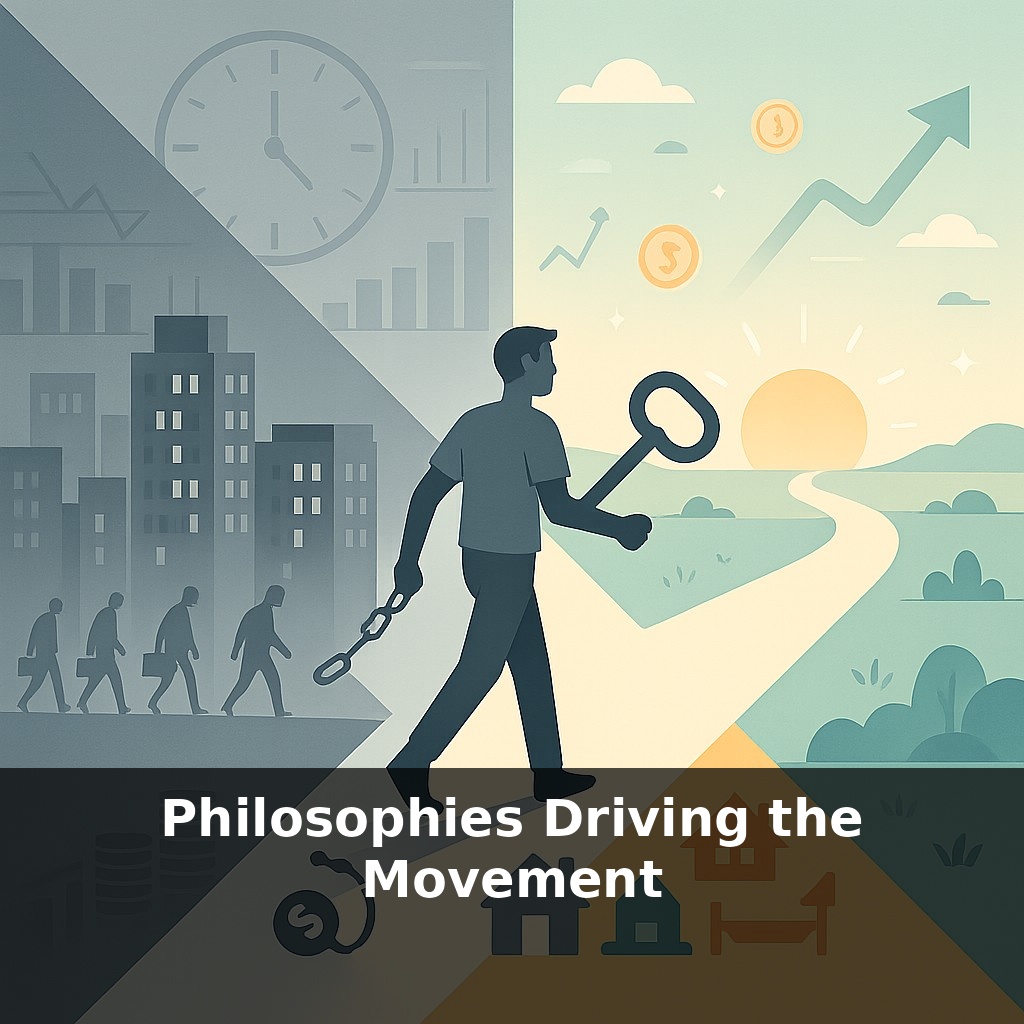
This is where the core philosophies of FIRE show up: anti-consumerism, yes—but also deep intentionality, environmental concern, and a quiet skepticism of the “work hard, then retire tired” script.
In this episode, we’ll unpack the belief systems that drive people to save aggressively, invest simply, and design lives that make early freedom not just possible, but purposeful.
FIRE thinkers don’t just question *how much* they spend; they question *what money is for* in the first place. Many start by noticing a gap between what truly matters to them and what their bank statements reveal—like opening your streaming apps and realizing you only watch two, yet pay for seven. Others are pushed into this reevaluation by burnout, layoffs, or caring for a loved one, which exposes how fragile “normal” can be. That tension becomes fuel: if the standard script isn’t built for resilience or meaning, what kind of financial philosophy would be?
When people in FIRE talk about “enough,” they’re not being vague or mystical—they’re being ruthlessly specific. A typical target is 25–30 times annual spending, not income. That’s why a household living well on $40,000 a year might aim for about $1 million, while someone spending $120,000 might quietly need three times that. The philosophy underneath is simple: define “enough” by the life you want, not the income you happen to earn this year.
This is where the math and the mindset lock together. The Trinity Study—often cited in FIRE circles—looked at historical market returns from 1926–1995 and found that withdrawing 4% of an initial portfolio, adjusted for inflation, survived about 95% of 30‑year periods. FIRE adapts that into a working rule: if you can live on roughly 4% of your invested assets, you’re likely in a zone where work becomes optional. Not guaranteed, not risk‑free—but historically resilient.
How do people get there faster than the norm? One lever is the savings rate. While the U.S. personal savings rate hovered around 7% in 2022, hardcore practitioners routinely push past 50%. That jump isn’t just “saving more”; it radically shortens the years you need to work, because you simultaneously lower your required lifestyle *and* increase how much you invest. A 60% saver isn’t just ahead—they’re playing a different game.
Another lever is eliminating financial drag. Instead of chasing hot stock tips, many FIRE followers favor low‑cost index funds and boring, automated contributions. Paying 0.09% in fees at a provider like Vanguard versus 1%+ in many active funds sounds minor—until you stretch it over 30 years of compounding. That fee gap can quietly eat six figures you might have counted on for your freedom.
Then there’s geo‑arbitrage: intentionally choosing where you live to stretch each dollar without lowering your quality of life. Moving from a high‑cost U.S. city to certain parts of Portugal, for example, can trim core expenses by an estimated 40–60% according to recent crowd‑sourced cost data (which still needs careful local verification). The philosophical move isn’t “run away to a cheap country”; it’s “refuse to anchor your life to one expensive ZIP code if it doesn’t serve your values.”
A useful way to see these philosophies in action is to zoom in on small, concrete choices. One person decides they care more about long, unhurried dinners than new gadgets. So they keep their older phone, but they’ll happily spend on fresh ingredients and invite friends over every week. Another chooses a tiny apartment a short bike ride from work, then funnels the “saved” commuting time into learning a new skill that might one day fund a micro‑business.
You also see people rethinking social defaults. Instead of “retail therapy” on weekends, they host board‑game nights or hiking meetups. Instead of climbing the title ladder forever, someone might intentionally cap their career at a mid‑level role that still funds a high savings rate, but leaves mental bandwidth for volunteering or art.
Think of it like rewriting an app’s settings: the code (your income) might be the same, but the configuration—where your hours, attention, and dollars go—creates a completely different user experience of life.
As these ideas spread, “success” may start looking less like a promotion and more like a portfolio of mini‑retirements, career pivots, and sabbaticals. Employers could adapt with part‑time tracks, project‑based roles, or benefits that support downshifting rather than constant climbing. Money tools might evolve too: apps that nudge you toward values‑aligned spending, like a nutrition label for your wallet, showing not just where cash goes, but how each choice feeds or starves your future options.
Treat this philosophy as a lab, not a law. You get to run small experiments—one month of saying no to impulse buys, one weekend testing a slower schedule—and watch what actually feels richer. Over time, those tweaks stack, like seasoning a simple dish until the flavors click. The “right” version of FIRE isn’t universal; it’s the one that makes your days feel more like your own.
Here’s your challenge this week: Choose one philosophy from the episode (for example, mutual aid over charity, abolition over reform, or “nothing about us without us”) and apply it to a concrete issue in your community by Friday. Reach out to one existing local group aligned with that philosophy (a bail fund, tenant union, disability justice collective, or mutual aid group) and ask them for one specific, needed task you can do this week (like delivering groceries, making calls, or data entry). Do that task, then spend 10 minutes noticing how acting from that philosophy (rather than charity, saviorism, or reformism) changes how the work feels and what you pay attention to.