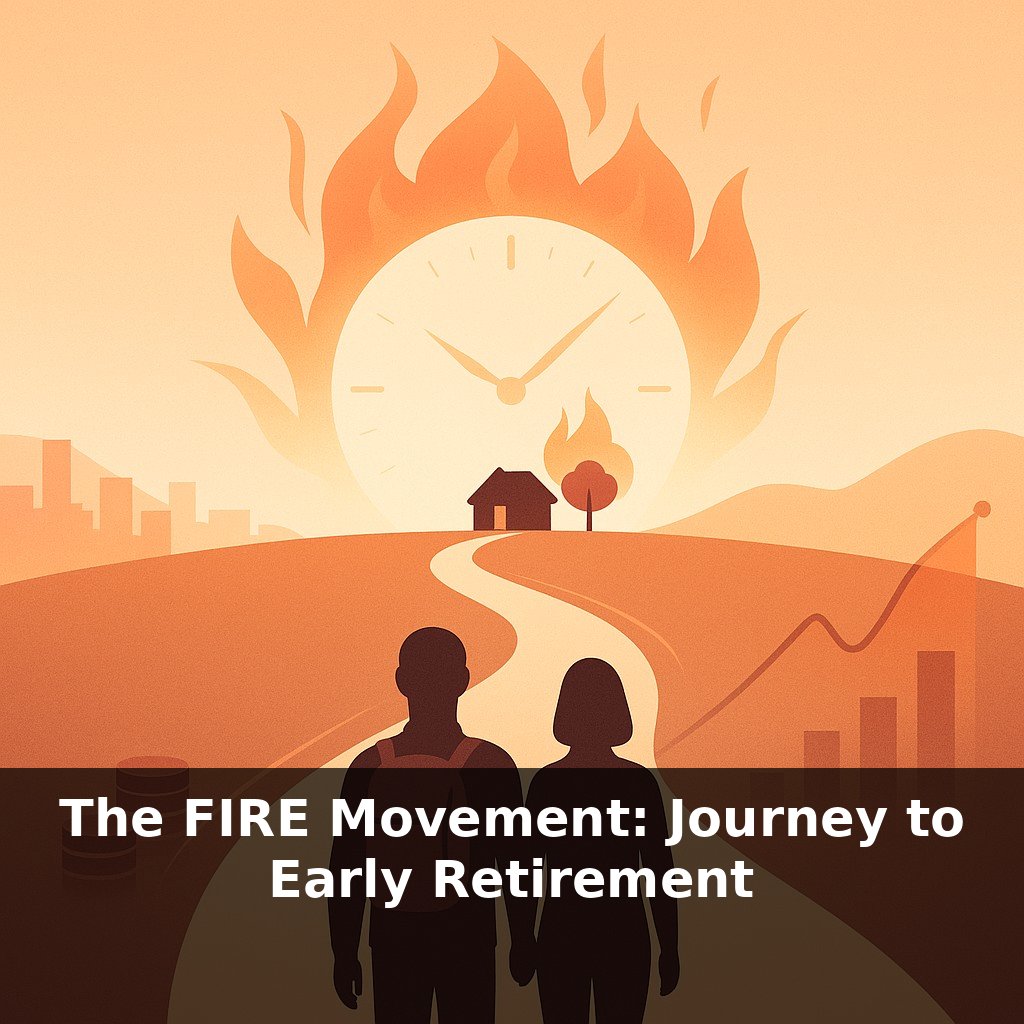
About half of people chasing early retirement are doing it as a couple—yet many say FIRE nearly broke them up. One partner wants radical frugality, the other fears losing status. Same goal, shared money, totally different dreams. That tension is where today’s story lives.
TD Ameritrade found that most people chasing FIRE aren’t doing it alone; nearly 6 in 10 are in committed relationships. That means every money decision is also a relationship decision. But the ripple doesn’t stop at home. Friend groups shift when you start turning down expensive dinners or stop venting about bosses because you quietly left the game. Some friendships deepen around shared experiments—batch cooking, house hacking, side projects—while others fade as schedules and priorities drift apart.
Meanwhile, millions gather in online spaces like r/FIRE, where strangers feel more “normal” to you than your co‑workers do. And when people actually reach their number, they don’t just disappear. Many reappear as volunteers, part‑time creators, or small‑business owners, subtly reshaping who has free time on weekdays, who coaches youth teams, and who fills the cafés at 10 a.m.
FIRE also quietly rewrites how you *use* time, and that’s where relationships start to stretch or snap. Weekdays that used to be carved up by commutes, meetings, and school runs can suddenly feel wide open for one person and just as cramped for another. One partner might treat those extra hours like bonus “family time,” while the other guards them as solo focus time for projects. Friends still on the 9‑to‑5 treadmill may see your flexible calendar as endless availability, like a shared spreadsheet anyone can edit, and resentment can creep in when your “no” doesn’t match their expectations.
“Forty‑nine percent of people chasing FIRE are millennials, and most of them are doing it with a partner.” That single stat hides a messier truth: the math is straightforward, but the *human* side is where things get complicated.
Start with that 25× target. On a spreadsheet, it’s just: annual spending × 25 = “enough.” In a kitchen at 10 p.m., it’s two people arguing over whether “enough” includes future kids, private school, helping aging parents, or upgrading a cramped apartment. Tanja Hester has written about couples taking years to land on a shared number; those years are often full of trial budgets, test moves to cheaper cities, and repeated “are we sure?” conversations that re-open old worries about security, identity, and fairness.
Risk tolerance is where many relationships hit turbulence. One person sees quitting as a reasonable bet based on safe-withdrawal studies; the other sees the same decision as rolling dice on healthcare, inflation, and black-swan events. They’re not just debating asset allocation; they’re revealing different childhood experiences of money, different fears about dependence, and different definitions of what being a “responsible adult” looks like.
Zooming out, FIRE also reorders whose time gets protected. A partner who leaves their job first might quietly slide into doing more housework, errands, and invisible planning, even if that wasn’t the intention. Resentment doesn’t show up as “I hate FIRE”; it shows up as “Why am *I* still this exhausted?” unless both sides explicitly renegotiate roles, not just budgets.
Beyond couples, FIRE increasingly reshapes social circles. A OnePoll survey found nearly a third of Americans now know someone personally on this path; that familiarity can normalize choices like downsizing or saying no to pricey vacations. But it can also trigger comparison, envy, or defensiveness in friends who feel implicitly judged. Some will lean in, asking about savings rates and low-cost hobbies. Others will quietly drift away, preferring relationships that don’t challenge their own spending stories.
On a broader scale, r/FIRE’s explosive growth—now around 1.9 million members—means the movement isn’t a fringe blog niche anymore; it’s a visible subculture with its own jargon, role models, and lifecycle. Early adopters post “we did it” threads, then years later share how their identities evolved after the initial high faded. Newcomers watch that arc in real time and start to ask not just, “Can I get out?” but “Who am I once I’m out?”
A group of friends plans a “big 40” celebration: two want a resort, one suggests a cabin, and the FIRE‑minded friend proposes a potluck weekend funded by credit card points. The disagreement isn’t really about the venue; it’s about what counts as a “good” life milestone. Over time, micro‑moments like this sort people into looser tribes—those who feel energized by trade‑offs and those who’d rather not think about them.
In some communities, the pattern is flipped. A teacher who quietly optimizes savings might become the unofficial “time coach” at school, the person colleagues ask about sabbaticals, mini‑retirements, or cutting back hours without blowing up their finances. Neighborhoods notice, too. A street with three households working unconventionally ends up with daytime chess games on front porches, shared childcare rotations, and pop‑up repair clubs. None of that shows up in stock charts, but it can change who kids see as “normal adults” and what ages they expect major life shifts to happen.
Thirty‑two percent of Americans already know someone on this path; as that share rises, “standard adulthood” may start to look more modular. Careers could feel less like ladders and more like subway maps—people hopping lines, switching directions, or pausing between stops without as much stigma. Cities might compete not just on salaries, but on how easy they make it to live on less: walkable streets, public libraries, tool‑sharing, and clinics that keep healthcare from hijacking everyone’s long‑term plans.
As more people quietly reroute their lives this way, you might see subtle shifts: weeknight book clubs full of people between “chapters,” grandparents starting podcasts, neighbors swapping skills like recipes. Your challenge this week: notice who around you already bends the script on work and time, and ask what trade they made to get there.