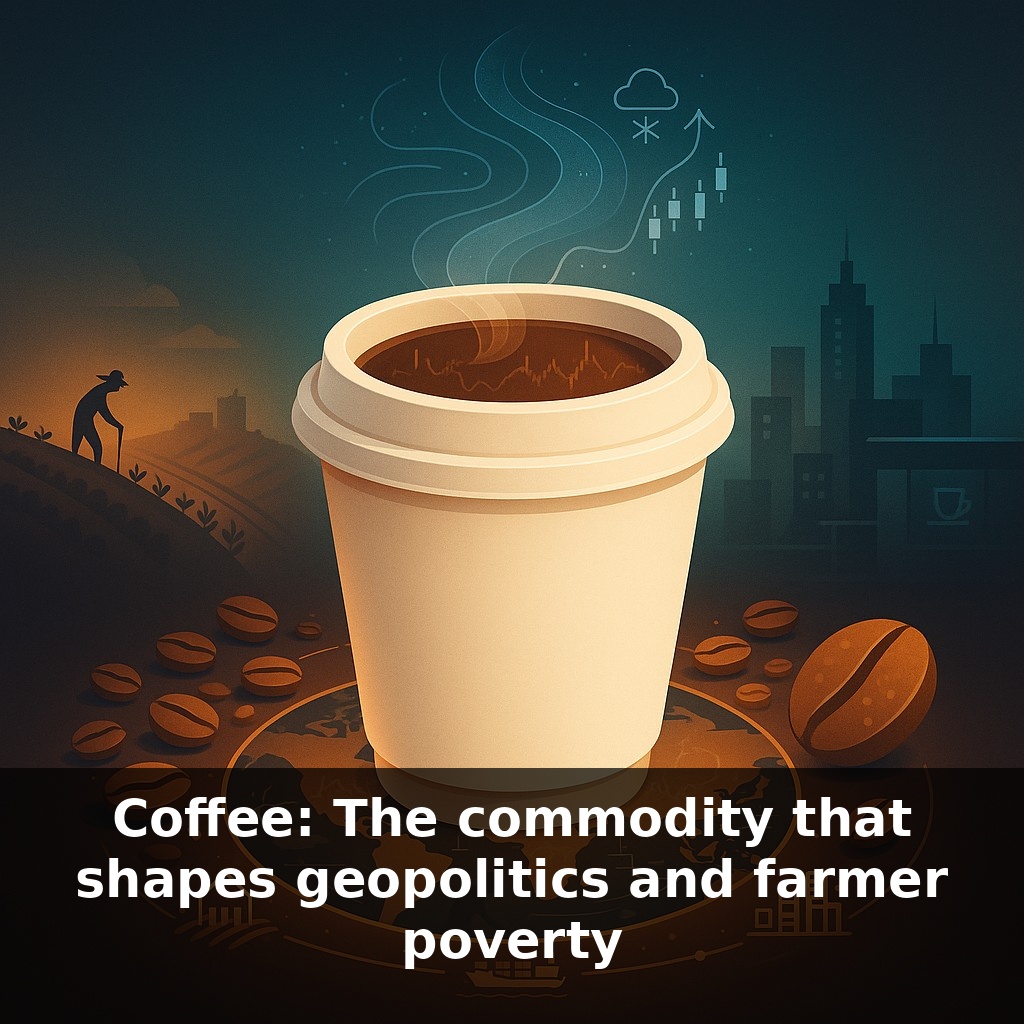
Right now, somewhere in the world, a farmer is earning just a few dollars for the beans in the five-dollar latte you’ll buy this week. Same crop, same cup, two completely different worlds. How did coffee become both a daily comfort and a quiet engine of global inequality?
Your cup doesn’t start at a café counter; it starts with a weather forecast in Brazil, an interest-rate decision in Washington, and a shipping schedule out of Vietnam. Coffee’s price can jump because of a frost thousands of kilometers away or a war that chokes a single shipping lane. Traders in New York and London watch these signals the way gamers watch a live leaderboard, buying and selling contracts for beans they’ll never touch. A few cents up or down on those screens can decide whether a farmer replants trees, pulls a child from school to save on costs, or gives up on coffee entirely. Meanwhile, governments quietly use coffee deals to secure alliances, trade concessions, and diplomatic goodwill. In this episode, we’ll follow the route from farm to futures market to foreign ministry to see how this everyday habit became a tool of power.
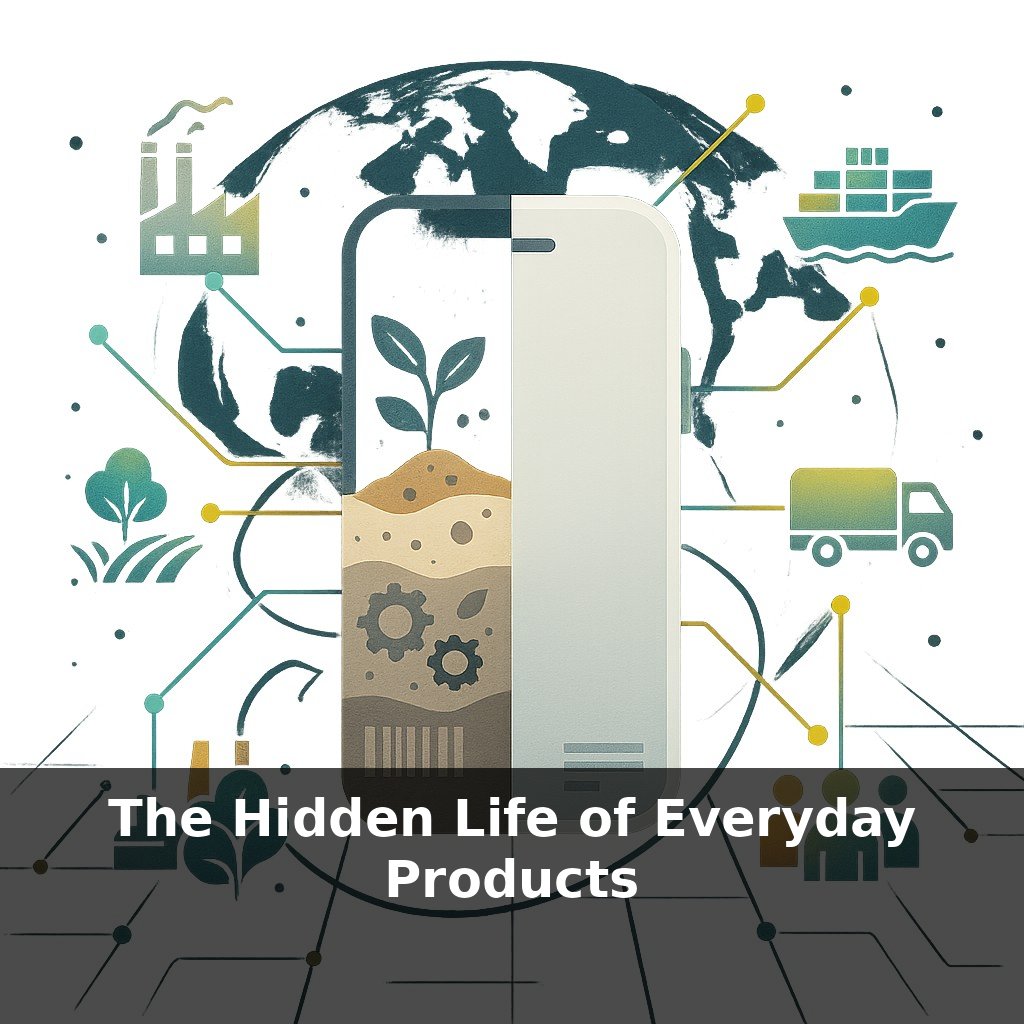
Zoom in one layer and the story gets even stranger. Most of the world’s beans come from farms small enough to walk across in a few minutes, yet the flavor of your drink is often decided thousands of kilometers away in a sterile cupping lab or a corporate boardroom. A handful of brands choose which origins to spotlight, which to blend into anonymity, and which to drop entirely when costs rise. Barcodes, loyalty apps, and capsule systems quietly track your habits, turning your morning routine into data that helps roasters negotiate harder with exporters—while the people growing the crop rarely see those gains.
Walk backward from your cup. Before beans reach traders or diplomats, they pass through a bottleneck where most of the power – and profit – is decided: the hourglass “neck” of exporters, importers, and roasters. At the farm gate, coffee is still just a perishable cherry that must be processed within hours. That urgency is leverage. Middlemen can offer cash on the spot, set quality grades, and quietly deduct for defects farmers can’t easily contest. In many regions, a grower’s “choice” is not between buyers, but between selling today at a weak price or watching fruit rot.
From there, coffee encounters its first real transformation: from food into finance. Export-quality green beans are sorted, standardized, and bundled into contracts that fit the rules of commodity exchanges. To qualify, lots have to match a narrow specification—moisture, bean size, defect count. Anything that doesn’t fit is either discounted or diverted into opaque secondary markets. This is where individuality starts to disappear. A hillside in Ethiopia and one in Colombia may produce wildly different coffees, but once they’re coded as “washed arabica, exchange grade,” they’re interchangeable units on a screen.
Corporate buyers exploit that fungibility. When prices move against them, they can switch origins, tweak blends, or hedge with financial instruments in minutes. Farmers can’t switch crops or varieties nearly as fast; they’re locked into trees that take years to mature. It’s the difference between steering a speedboat and turning a fully loaded cargo ship. That asymmetry shows up in contracts too. Multiyear supply agreements often fix volumes and quality requirements while leaving pricing tied to volatile benchmarks the companies help shape through their own trading.
Layered on top are certifications and sustainability claims. Labels promise “ethical” or “climate-smart” beans, but compliance costs—training, recordkeeping, audits—are frequently pushed downstream. Cooperatives pay to keep paperwork perfect; brands pay to print a logo. Even when premiums exist, they may be shaved away by debt repayments, mandatory fees, or simple lack of transparency about how much extra money actually arrived, and where it stopped.
A practical way to see this hidden power structure is to follow one specific bean. Start with a lot from western Ethiopia, sold by a cooperative that has taken out credit to buy fertilizers and pay pickers. Those debts are often backed by future coffee deliveries, so if yields fall, the co-op may be forced to accept worse terms next season just to roll the loan. The buyer might be a European trader that has already pre-sold the shipment to a multinational roaster, locking in a margin months before any consumer tastes it. By the time the coffee reaches a capsule or a branded pod, its farm-gate story has been compressed into a marketing slogan. In contrast, a Brazilian estate with its own mill, export license, and direct relationships with specialty roasters can negotiate for long-term contracts, quality bonuses, and shared risk on climate shocks. Think of that difference as the gap between playing in an orchestra and having the leverage of a soloist who can set their own tempo, repertoire, and fee.
Climate, code, and cartels may soon matter as much as soil. Drought-resistant trees and gene-edited “super varieties” could redraw who grows what, and who owns the patents. Apps that match roasters directly with farmers might work like dating platforms: promising better matches, but only for those with connectivity, data, and time. On the geopolitical stage, a coordinated “coffee bloc” could one day treat export quotas like diplomatic pressure points, not just trade policy.
Your challenge this week: treat every coffee like a tiny voting booth. One day, try a brand that publishes farm-gate prices; another, a café that lists producers by name; another, a supermarket blend with no info at all. Notice how price, transparency, and taste line up—and which trade-offs you’re quietly endorsing with each sip.