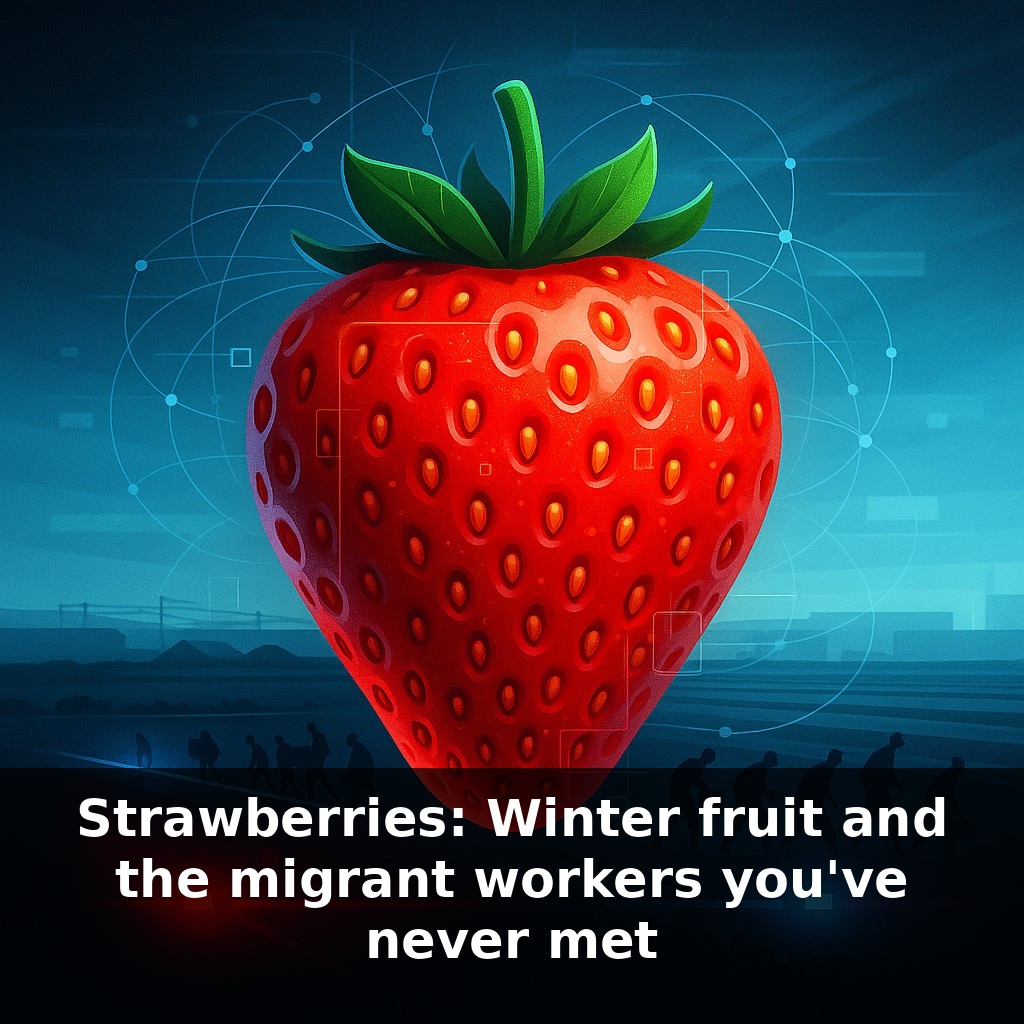
Somewhere right now, a ripe strawberry is crossing a border at midnight under police lights. In a few days, it’ll glow on a winter supermarket shelf. The paradox is simple: soft, sweet fruit… built on hard, often invisible, migrant labor. Stay with me—this story gets personal.
By the time a winter strawberry hits your cereal bowl, it has already lived a faster, more choreographed life than most business trips. Breeders select plants like casting directors, pushing for berries that can survive thousands of miles without bruising. Logistics teams watch weather maps the way pilots scan radar, shifting harvest and shipping windows by hours to dodge frost or storms. Supermarkets quietly adjust prices and promotions week by week, nudging your cravings into alignment with whatever region is peaking. And underneath all of this, immigration rules, fuel prices, and trade agreements act like the sheet music: mostly invisible, but dictating the tempo. Change one note—a new visa rule, a cold snap in Florida, a diesel spike—and the entire strawberry “season” you see in January can wobble, or disappear, almost overnight.
So let’s zoom in on one ordinary winter carton of strawberries and treat it like a travel diary. Its “story” usually starts months earlier in a nursery, where young plants are raised in one region, then shipped and transplanted into another like students sent abroad for a crucial semester. Weather apps, not almanacs, now decide their daily schedule: a two‑degree temperature swing can move harvest by hours. On the ground, crews, trucks, cold rooms, and border checks all run on tight, overlapping shifts. Miss one connection, and the berries don’t just arrive late—they arrive unsellable.
Here’s the twist with winter strawberries: the “technology” running the show isn’t just trucks and refrigeration—it’s paperwork, debt, and timing, all wrapped around human bodies.
Start with where the winter berries actually come from. If you buy them in January in Chicago or Boston, odds are high they spent the last few days in California’s coastal valleys, Florida’s sandy fields, or Mexican states like Baja California and Michoacán. Each region slots into a narrow calendar window. When California’s days shorten and nights chill, Florida steps up. When Florida faces a freeze or hurricane, Mexican growers rush to fill the gap. From your perspective, nothing changes: same red clamshell, same aisle.
For the workers, though, the calendar is a maze. A picker who arrives on an H‑2A visa to pick in Florida may have borrowed hundreds or thousands of dollars for travel, agency fees, even bribes. Missing a season isn’t just lost wages; it can mean losing their land back home or pulling a child out of school. That’s part of why you see such intense productivity: 1–2 quarts per minute, bent over for hours, chasing enough volume to turn an hourly rate into rent, food, remittances.
On the business side, farms invest heavily in things you never see. Soil is managed like a rotating portfolio: one year strawberries, then a break with another crop to control disease. Drip irrigation lines, plastic mulch, and fumigants are calibrated so berries hit peak quality right when buyers in distant cities have planned ads and shelf space. Miss that window, and prices collapse.
Then come the cold rooms and trucks. A single refrigerated trailer can carry about 20,000 one‑pound clamshells across the continent in two days, burning hundreds of gallons of diesel. Multiply that by thousands of trips per season, and your winter treat becomes part of a quiet but very real carbon budget.
Even the plastic box is tuned for speed: vent holes, stackable shape, just stiff enough to protect soft fruit. It’s designed less like a bowl and more like a temporary exoskeleton that lets something fragile survive a hard journey.
All of this orchestration delivers a simple outcome: you can reach for summer in the middle of winter, without thinking about who bent, knelt, borrowed, and gambled to make that possible.
In the middle of this system sit businesses that look, on paper, like ordinary farms but function more like small tech startups. A grower might juggle contracts with three supermarket chains, each demanding different berry sizes, sugar levels, and packaging. One chain wants extra-large fruit for bakery displays; another prefers smaller, uniform berries that stack well for online grocery orders. Data from handheld scanners in the field flows into dashboards that forecast how many pallets will be ready by midnight, which truck they’ll ride, and which distribution center they’ll hit before dawn.
Now layer on the financial side. Many growers borrow millions each season, betting on weather, demand, and labor availability. Miss a payment to a retailer—because rain delayed picking or a border backup spoiled a load—and future contracts shrink. For workers, apps increasingly track hours, row assignments, even “pick speed,” turning each shift into something closer to a gamified shift in a warehouse than a day in a field.
Robots and gene-edited plants could soon reshape who gets winter berries and on what terms. Vision-guided pickers may prioritize consistency over speed, filtering out “imperfect” fruit and nudging retailers toward stricter cosmetic standards—or, if paired with clever marketing, toward embracing blemished but cheaper berries. Climate shifts may redraw growing maps, pushing jobs and water use into new regions, much like a concert tour that quietly changes continents but keeps the same setlist.
Next time you see berries glowing under grocery lights, try reading them the way you’d read a concert poster: tiny print hiding who’s on stage, who’s funding the tour, who’s left out. Your challenge this week: pick one winter fruit, trace where it came from, and ask: whose story is missing from this label—and what would it change if you knew it?