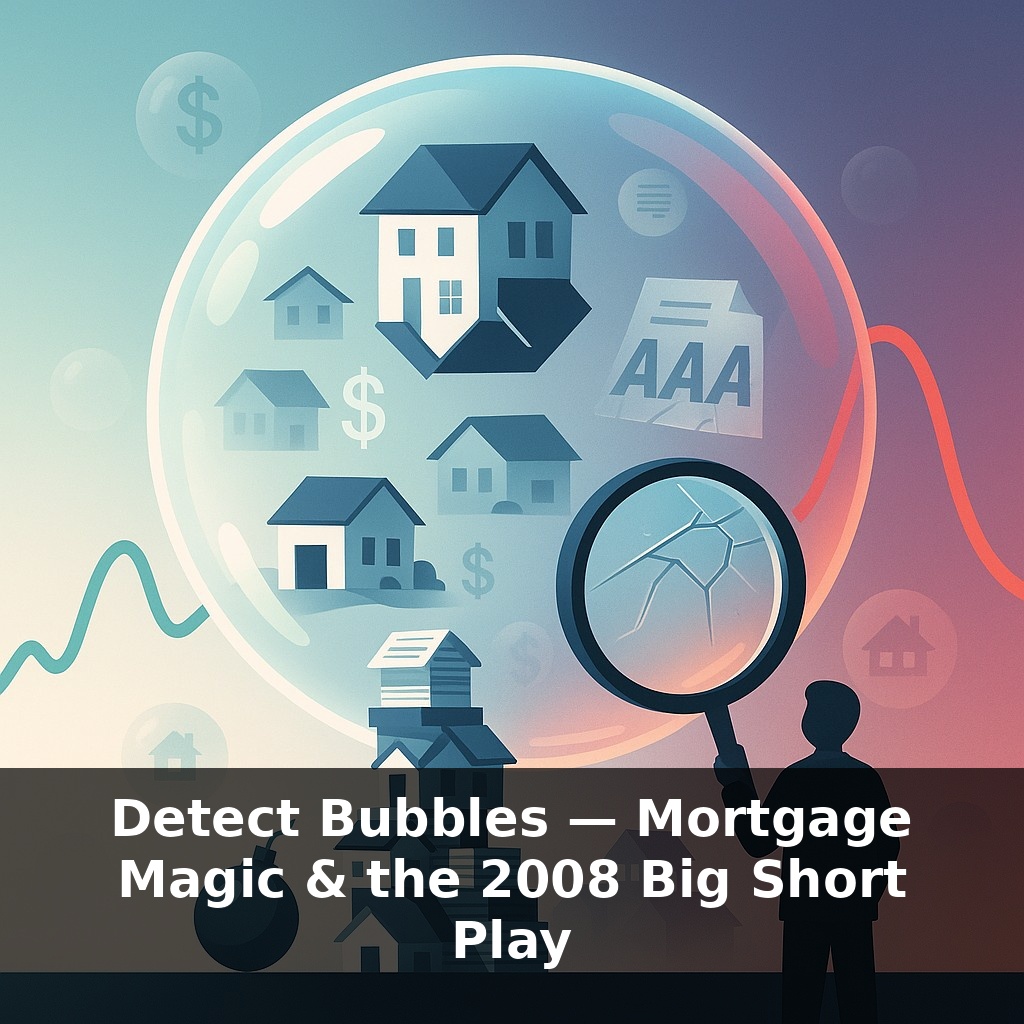
In 2006, investors built mortgage bets worth almost as much as every home in America. Yet a few outsiders looked at the same market and thought, “This whole thing is upside down.” In this episode, we step into their shoes—before the crash, before the panic, before they were proven right.
By 2005, something bizarre was happening: mortgage risk was supposedly “safer” than U.S. government debt. Ratings stamped huge piles of housing exposure as AAA, while the underlying borrowers often couldn’t survive a small rate hike or a dip in home prices. It was like a cookbook claiming a dish was “zero‑risk” despite cups of sugar and a blazing oven buried in the recipe.
The outsiders who questioned this didn’t just predict a crash—they reverse‑engineered how the entire structure could fail. They studied loan tapes line by line, tracked how quickly borrowers defaulted after refinancing, and noticed how often income numbers looked fictional.
In this episode, we’ll follow how they connected those quiet details to a global fault line—and how you can train yourself to spot similar fractures in today’s “can’t lose” stories.
To see what the outsiders saw, you have to zoom out from individual mortgages and watch how stories turned into statistics, then into “facts.” Brokers promised “no‑doc” loans would be fine because “home prices always go up.” Banks bundled that optimism, underwriters wrapped it in formulas, and rating agencies blessed the final product with letters everyone trusted. Each step shaved off context, like peeling layers from an onion until only a shiny label remained. By the time traders saw the finished bonds, the messy human reality underneath was barely visible.
Here’s what changed the game: once those mortgage pools existed, banks didn’t stop at selling them. They started stacking, slicing, and cloning the exposure into layers most people never saw. The basic bonds tied to monthly payments were just the first floor. Above them, engineers built collateralized debt obligations—CDOs—that re‑packaged pieces of many deals and sold “new” slices to investors hungry for yield.
Then came the twist that turned a bad idea into a bomb: synthetic CDOs. These didn’t even need fresh loans. They were built from side‑bets on existing mortgage bonds using credit default swaps. That meant the same shaky risk could be referenced again and again, multiplying the impact of every future default. A modest rise in missed payments could echo across balance sheets that never touched an actual homeowner.
The outsiders started asking questions most people skipped. Instead of accepting a glossy “diversified” label, they drilled into what really sat inside those structures: How concentrated were the underlying bets? How many deals relied on the same originators, regions, or borrower types? How fast had standards deteriorated from one deal to the next?
They also watched incentives. Brokers were paid per loan, not per successful payoff. Structurers were paid per deal, not per decade of performance. Rating agencies were paid by issuers lining up for the highest possible grade. When every major player gets rewarded for volume and complexity, you don’t need fraud in every corner; you just need everyone leaning in the same careless direction.
So the big short wasn’t magic timing. It was a pattern‑recognition exercise. Where were assumptions copied from yesterday’s calm into today’s far riskier world? Where were models treating short, sunny history as if storms had been outlawed? The few who pushed on those weak spots didn’t just see a downturn—they saw how an ordinary housing slump could be amplified into a systemic break.
Think about how this pattern shows up outside housing. In corporate debt booms, you’ll see “covenant‑lite” loans quietly become standard, then funds layering exposure through leveraged loans, CLOs, and total‑return swaps. On the surface, they’re all “diversified credit strategies.” Underneath, it’s often the same handful of over‑borrowed companies, echoed across structures.
Or look at growth‑stock manias. Fund reports highlight “different risk models,” but when you map the top ten holdings across funds, the overlap is huge—same sectors, same names, same story that past volatility was “just noise.” The vulnerability isn’t any single position; it’s crowded belief, financed with leverage, wrapped in complexity.
Your job as an observer is to ask: if this core story breaks, how many places does that pain reappear? How much of the system is actually betting on one underlying trend, just sliced, rebranded, and sold as variety?
Post‑2008, safeguards grew, but risk still migrates to the shadows. Private credit funds, structured products on tech revenue, even climate‑linked mortgages can repeat old patterns in greener packaging. AI credit models may flag weak files faster—or bake in new blind spots at scale. Your edge is curiosity: follow who earns fees, who holds tail risk, and where the same story appears in many wrappers, like the same spice quietly dominating every dish on a buffet table.
Conclusion: The next time a product is sold as “sophisticated but safe,” treat it like a complex stew: taste for one overpowering flavor—shared exposure, same-story optimism, fragile funding. Bubbles don’t announce themselves; they whisper through patterns. Train yourself to notice echoes, and you’ll spot strain lines long before the headline crash arrives.
Start with this tiny habit: When you open a real estate listing or see a home price online, quickly say out loud, “What would this house rent for?” and take 5 seconds to guess a monthly rent. Then, divide the price by your guessed rent in your phone calculator to see the price-to-rent ratio (no saving, no spreadsheet, just the number). If it’s over 20, just whisper to yourself, “Could be bubbly,” and move on. Do this with one listing a day so your brain slowly trains to spot stretched valuations the way the Big Short guys did, but without any heavy research.