The Arrival of the Moors
📝 Transcript
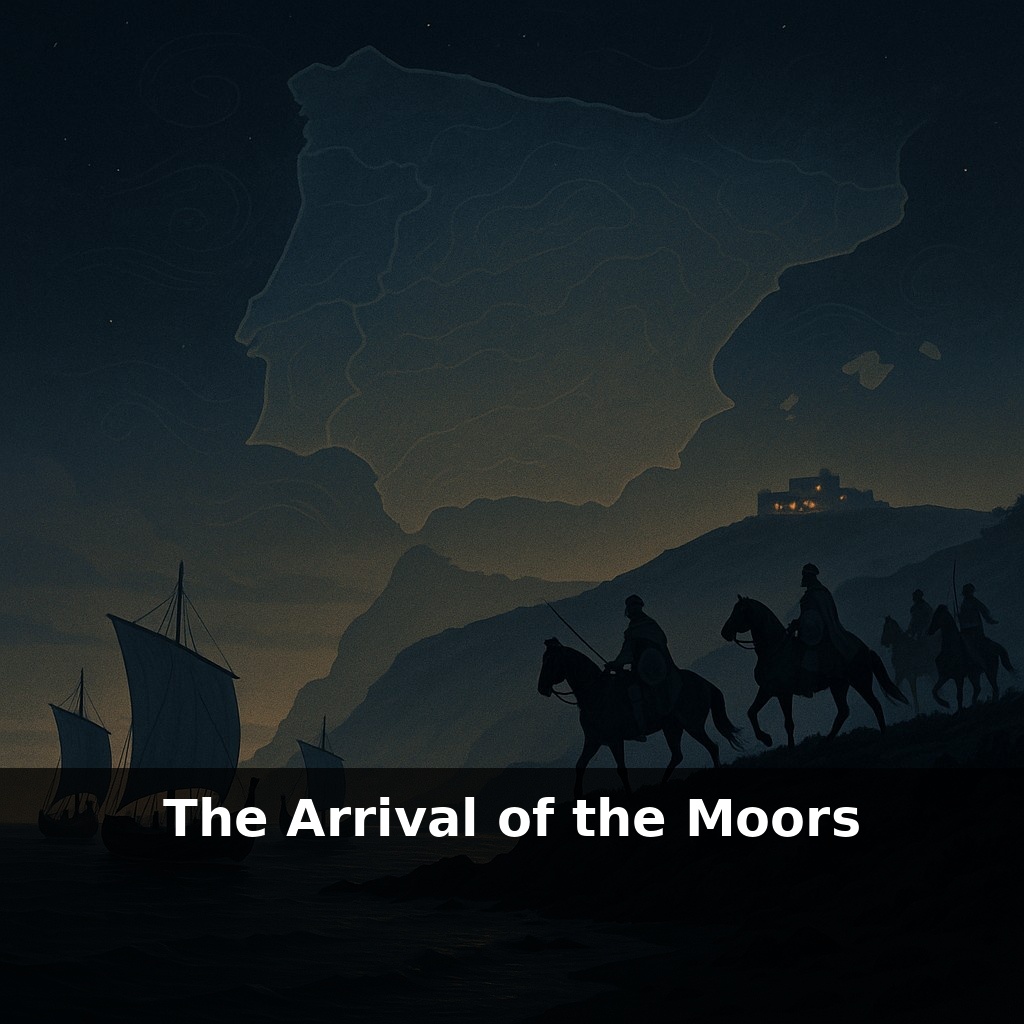
A Muslim army stepped onto Iberian shores with fewer fighters than a modern football stadium crowd—yet within a few years, the old kingdom had collapsed. How does a force that small redraw a continent’s map and its future? Let’s rewind to the moment their ships landed.
Cordoba would one day glow with lamps along paved streets, but the story begins far from city lights—with rumors. In 711, what spread first across Iberia wasn’t armies; it was news. Whispers of unfamiliar horsemen, of commanders with strange names, moved faster than marching feet. Local nobles, already feuding like rival CEOs in a collapsing company, listened carefully: who were these newcomers, and could they be turned into leverage against their neighbors?
As Tariq ibn Ziyad’s forces pushed inland, their real advantage wasn’t only on the battlefield; it was in negotiation halls and council chambers. Some cities opened their gates under treaties rather than siege, trading tax and loyalty for security and a surprising degree of autonomy. Instead of smashing every existing structure, the newcomers often repurposed them—like renovating an old building by keeping its strongest walls and redesigning the interior to fit a new vision.
Yet beneath those political deals, a slower, quieter shift began in fields, workshops, and markets. New crops—citrus, rice, sugarcane, aubergines—started to appear like unfamiliar icons on a phone screen after a major update: confusing at first, then quickly indispensable. Irrigation channels carved across dry land, turning patches of Iberia into experimental gardens where farmers mixed techniques the way chefs blend regional cuisines. In port cities, translators, merchants, and jurists formed a kind of “adapter layer” between cultures, ensuring that ideas, not just goods, could cross boundaries and take root.
Power in this new landscape didn’t come from brute force alone; it came from timing and flexibility. Tariq’s landing coincided with a Visigothic civil war, so instead of facing a united foe, he met rivals who hated each other more than they feared outsiders. One faction would rather see a newcomer win than let a domestic enemy keep the crown. That fracture let a modest force move like a needle through torn fabric, stitching together a fresh political pattern where an older one was already unraveling.
Above Tariq stood another figure: Musa ibn Nusayr, the governor of North Africa. While Tariq advanced, Musa followed with reinforcements and a broader vision, extending control over key cities and routes rather than chasing every last fortress. By targeting economic arteries—mines, fertile valleys, trading hubs—they locked in long-term leverage. Gold, grain, and people now flowed under a different banner, and with them, influence.
Inside growing urban centers, a new hierarchy crystallized. At the top were Arab elites tied to the Umayyad world; just beneath them, Berber commanders and soldiers whose numbers had made the invasion possible. Local Iberian Christians who cooperated often slipped into roles as administrators, translators, or landholders under new terms. Jews, long constrained under Visigothic rule, could gain positions in finance and diplomacy, carefully navigating shifting expectations. Status wasn’t fixed by ethnicity alone; language skills, legal knowledge, and networks suddenly became currencies as valuable as coin.
Religious life adjusted without disappearing. Churches and synagogues continued to function, their communities now counted as protected but unequal. Legal categories shaped everything from taxes to court access, and over time some families converted to Islam for reasons that mixed belief with pragmatism—better opportunities, fewer fiscal burdens, or a desire to rise in the new order. Conversion here was often a gradual slope, not a cliff.
Meanwhile, the political center of gravity tilted south. When an Umayyad prince, ʿAbd al-Raḥmān, escaped the dynasty’s massacre in the East and arrived in Iberia, he found not an empty stage but a crowded one. Arab factions, Berber groups, and local strongmen all claimed pieces of authority, like competing developers branching the same codebase in different directions. His eventual success in Córdoba would depend on reconciling those branches into something stable enough to last.
Some shifts were subtle, visible only in daily habits. Think of a village where the calendar quietly fills with new market days tied to distant trade rhythms; suddenly, local weavers adjust patterns to suit buyers from hundreds of miles away. Textile colors change as imported dyes seep into looms. Bakers experiment with unfamiliar ingredients arriving in sacks with foreign seals, and new tastes reshape what counts as “traditional” within a single lifetime.
Legal habits evolved too. A land dispute might now be argued first before a local notable, then—if it crossed religious or linguistic lines—before a specialist in multiple legal traditions, someone who could quote different codes the way a modern developer switches between programming languages. Those intermediaries didn’t just solve conflicts; they translated expectations, making coexistence workable when written rules lagged behind social reality.
Over generations, family stories encoded this complexity. A surname hinting at a craft, a quarter of a city associated with a faith, an accent picked up in childhood—all became quiet archives of this layered world.
Córdoba’s scholars turned this new order into a kind of intellectual port, where ideas docked, refitted, and sailed on. Medical texts from Baghdad met commentaries from Jewish physicians and notes by Latin-educated clerics, layering insight like transparent maps. Today, Iberia’s climate labs and urban planners quietly echo that spirit—testing drought-resistant crops, reviving terrace farming, and mining medieval manuscripts like old hard drives for forgotten, low-energy ways to live with heat and scarcity.
In the end, the real shockwave wasn’t on battlefields but in habits: how people cooked, counted time, measured land, healed bodies. Al-Andalus turned borderlands into a kind of laboratory, where trial and error across languages and laws slowly rewrote “normal.” Those experiments outlived dynasties, like background code still running beneath today’s Spain.
Try this experiment: Pull up two maps of early 8th‑century Europe and North Africa—one just before 711 and one showing the territories after the Moorish arrival in Iberia—and spend 10 minutes tracing exactly how far Muslim-ruled lands extended into the peninsula. Then, pick one everyday thing the episode mentioned (like algebra, citrus fruits, or architectural arches) and deliberately “hunt” for it in your own city or online photo archives of Spain—note where you see clear Islamic or Moorish influence. Finally, talk through your findings with a friend or family member as if you’re correcting the old “Moors just invaded and left” story, and pay attention to how much more concrete and nuanced your explanation feels after doing this.
From this course
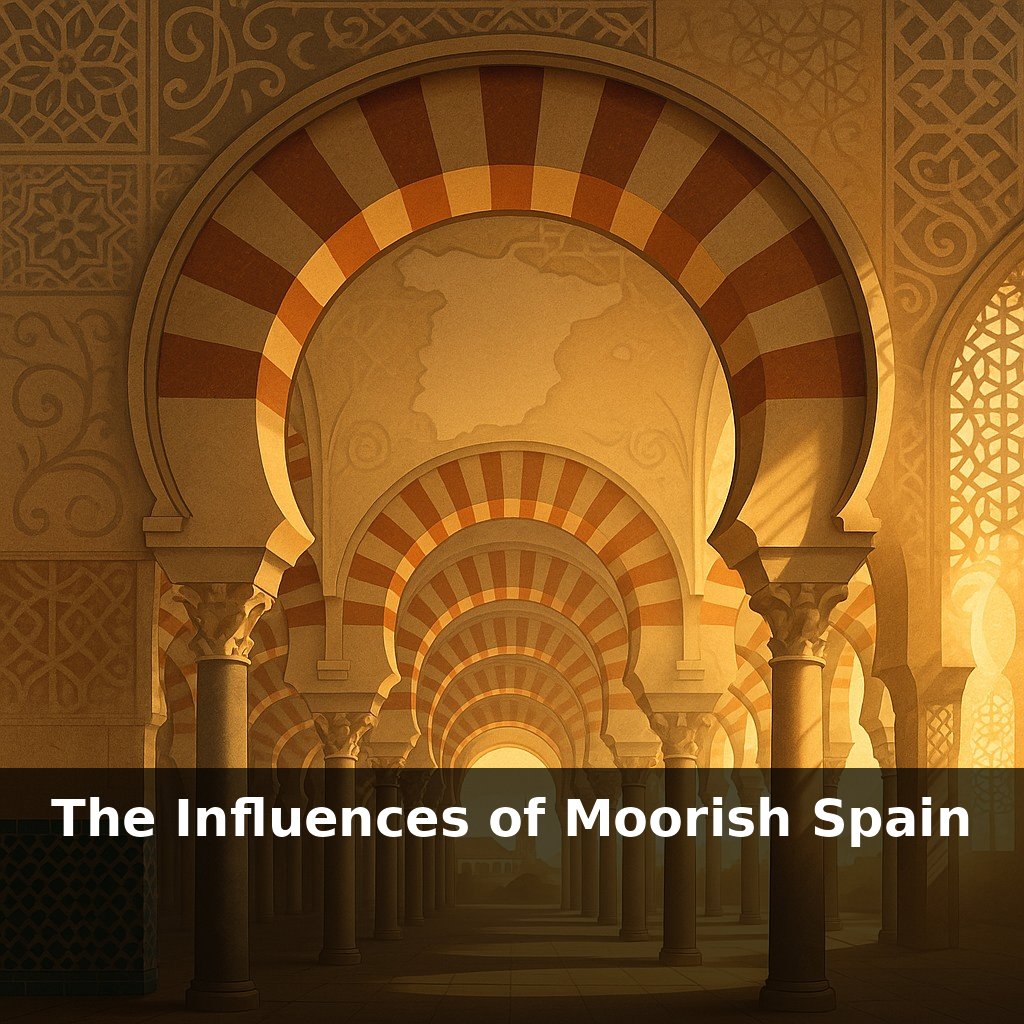
The Influences of Moorish Spain
8 episodesUnlock all episodes
Full access to 8 episodes and everything on OwlUp.
Subscribe — $1.99/monthLess than a coffee ☕ · Cancel anytime