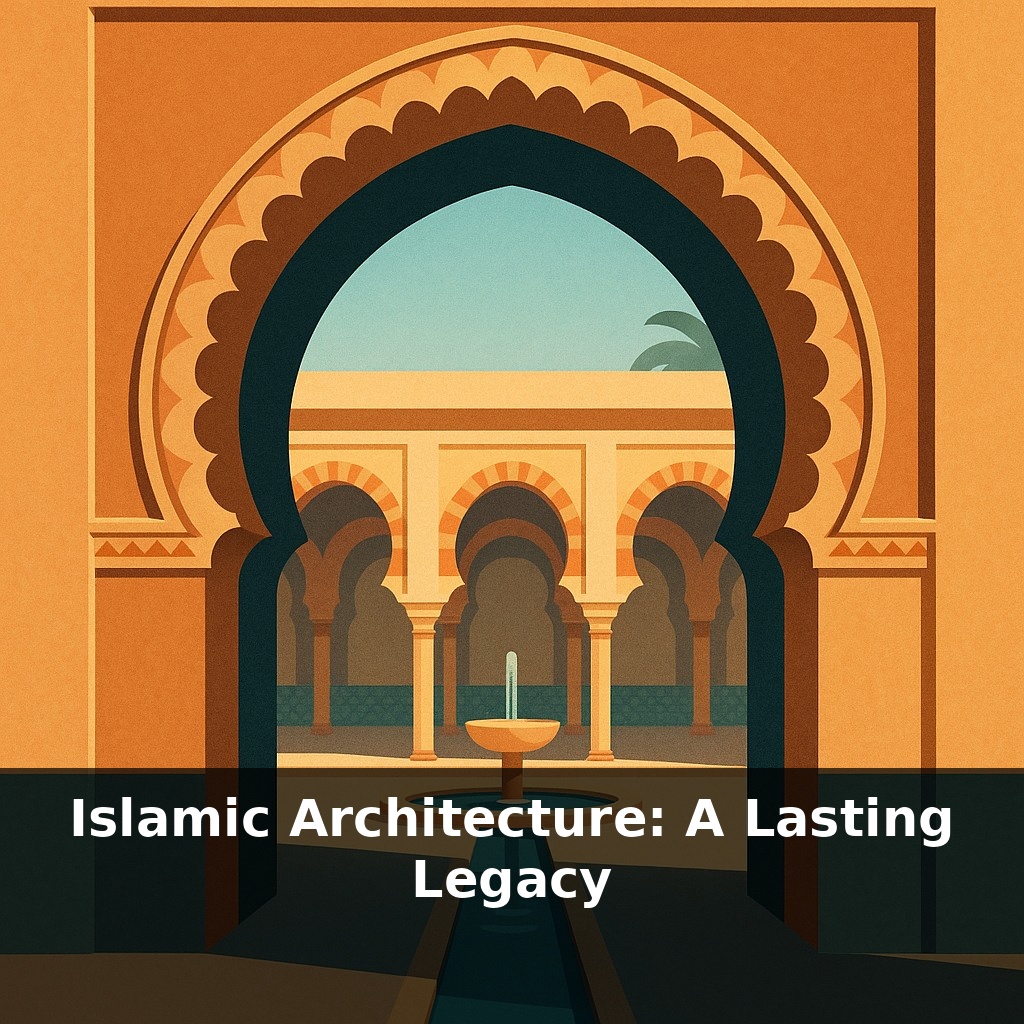
Water from a medieval canal still rushes through the Alhambra fast enough to fill a small pool every few seconds. Today, step into a cool courtyard, hear a quiet fountain, feel shade on your skin—and you’re touching design ideas that began over a thousand years ago.
Those same builders who mastered water and shade were also solving problems we still struggle with: heat, crowding, and how to make dense cities feel human. In Córdoba, a forest of columns breaks up space the way a good city park breaks up concrete—creating pockets of calm, clear routes to move, and endless sightlines that never feel monotonous. In Teruel, a slender brick tower rises not just as decoration, but as a vertical landmark you can navigate by, like a trusted street corner you always recognize. Across Spain, Islamic, Roman, and Christian craftspeople experimented side by side, layering materials, patterns, and techniques. Their work wasn’t about nostalgia; it was cutting‑edge urban innovation. Today, architects quietly borrow those lessons when they design cooler streets, shared plazas, and mixed neighborhoods that invite different cultures to coexist.
Step closer and those spaces become less like “old monuments” and more like early laboratories. Builders in al‑Andalus were testing how brick, water, light, and proportion could shape daily behavior—who lingers, who meets, who passes through. Their experiments gave us climate‑aware walls thick enough to mute heat and noise; lattice screens that let in light but protect privacy; and columned interiors that handle crowds the way a well‑tuned transit hub does at rush hour: distributing movement smoothly while still allowing moments of pause, reflection, and quiet encounter.
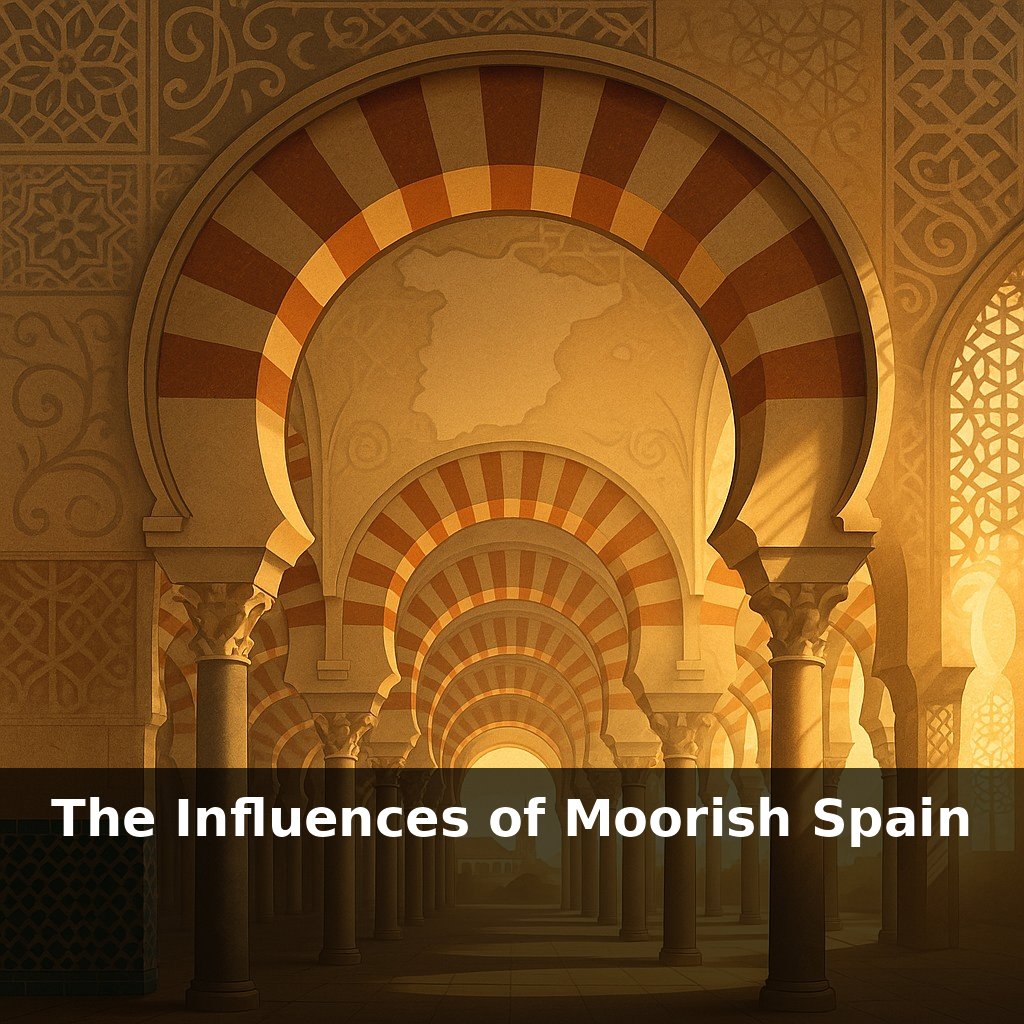
Walk into the Mezquita de Córdoba and the “forest” of 856 columns does something subtle to your body before your brain catches up. The alternating red‑and‑white arches rhythm your steps, slowing and orienting you without a single signboard. Here, geometry is doing crowd management: low arches compress space into human scale, while repeating bays mean the building can expand almost indefinitely without losing coherence. That same logic underpins flexible offices and museums today—modular grids that can grow, shrink, or be repurposed without tearing everything down.
Climate thinking is similarly embedded in structure. High, layered roofs trap hot air above head height; shaded ambulatories skim cooler air along the floor. In Córdoba and other Andalusian mosques, simple tricks—orienting prayer halls to catch prevailing breezes, placing dense masses on sun‑exposed sides, clustering activity around shared, semi‑outdoor spaces—created comfort before electricity. Contemporary “passive house” design quietly revives those tactics with different materials and software instead of chisels and string.
Mudéjar builders, working under Christian rule but with Islamic training, pushed this synthesis further. In Aragon, brick became the main medium: cheap, local, and light enough for tall towers like Teruel’s to rise from modest foundations. Patterns are not mere ornament; they reveal how the tower is stitched together, denser lattice where more strength is needed, looser where weight can drop. Glazed ceramics double as data: color and shine catch distant light, turning the tower into a visual signal system for the town long before street lighting.
Beneath these visible choices sits a shared toolkit: proportional ratios repeated across arches, windows, and wall panels; geometric fields that can accept Christian iconography or Quranic calligraphy without breaking their internal logic; structural solutions refined over centuries, then re‑wrapped in new symbolism as power shifted. The continuity is mathematical and material, even when the language on the walls changes. Think of the Alhambra’s layered geometric designs like a complex piece of orchestral music: once the underlying score exists, different “instruments”—Islamic, Romanesque, Gothic—can enter and exit, yet the composition still holds together.
This is why “Moorish” architecture feels strangely contemporary. It isn’t just surviving stone; it’s a durable set of strategies—modularity, thermal performance, visual communication—that modern architects can and do plug into radically different contexts, from museums in Doha to social housing in southern Spain.
In a hot Moroccan medina, a riad hotel updates these strategies with misting nozzles and solar pumps: guests feel “luxury spa,” but the real work is careful airflow and water choreography that keeps energy use low. In Seville, contemporary social housing borrows the quiet logic of columned halls by using slim pilotis and semi‑open galleries to turn tight plots into small, shared “neighborhoods in the sky,” where chance meetings happen on the way home. Barcelona’s superblock plans echo old mosque courtyards flipped inside‑out: cars pushed to the edge, people and trees claiming the center. Even tourism economies plug into this legacy—guided night routes in Córdoba rely on illuminated arches and towers as wayfinding tools, letting visitors cross the city with minimal signage. Meanwhile, digital modeling tools now simulate how patterned brick skins and deep‑set openings, inspired by Mudéjar towers, shave degrees off interior temperatures—an aesthetic decision quietly doubling as urban climate tech.
These spaces hint at a future where historic districts behave like quiet laboratories. VR walks through InnovaMoor’s models could test crowd flows before a festival, or simulate heatwaves to plan shading and planting without touching a stone. School groups might “switch layers on and off,” seeing how each era edited the same canvas. Your challenge this week: pick one familiar building and ask, “If this had to last 800 years, what would I change in its design?”
Moorish builders weren’t just shaping walls; they were scripting daily life—where people paused, met, cooled down, or looked up. Their legacy hints that future cities might borrow more from them: buildings tuned like radios to light, breeze, and sound, public spaces layered like shared playlists, mixing cultures without forcing them into one melody.
Before next week, ask yourself: How might you look differently at a nearby mosque, museum, or public building today if you deliberately tried to spot features discussed in the episode—like courtyards, domes, muqarnas, calligraphy bands, or geometric tilework—and what do those choices seem to say about the community’s values? If you stood for five quiet minutes in a space influenced by Islamic architecture (even just via Google Street View or a virtual tour of the Alhambra, the Mosque–Cathedral of Córdoba, or the Süleymaniye Mosque), what emotions or thoughts does the light, symmetry, and proportion actually trigger in you—and why? When you compare a modern glass-and-steel building you pass this week with a historic Islamic structure from the episode, which design principles (shade, water, human scale, orientation, courtyards) would you borrow for your own city or home, and what would that change in how people live and interact there?